Citra Sasmita: Exhibition Film
Project
12 March – 16 September 2026
This website uses cookies
By continuing to use this website, you agree to our Privacy Policy, Terms of Use, and Disclaimer.
This website uses cookies
By continuing to use this website, you agree to our Privacy Policy, Terms of Use, and Disclaimer.
Analytics
Google Analytics uses a set of cookies to collect information and report site usage statistics without personally identifying individual visitors to Google. ‘_ga’, the main cookie used by Google Analytics, enables a service to distinguish one visitor from another and lasts for 2 years. Any site that implements Google Analytics, including Google services, uses the ‘_ga’ cookie. Each ‘_ga’ cookie is unique to the specific property, so it cannot be used to track a given user or browser across unrelated websites.
Google services also use ‘NID’ and ‘ENID’ cookies on Google Search, and ‘VISITOR_INFO1_LIVE’ and ‘YEC’ cookies on YouTube, for analytics.
Managing Cookies
Most browsers allow you to manage how cookies are set and used as you’re browsing, and to clear cookies and browsing data. Also, your browser may have settings letting you manage cookies on a site-by-site basis. For example, Google Chrome’s settings at chrome://settings/cookies allow you to delete existing cookies, allow or block all cookies, and set cookie preferences for websites. Google Chrome also offers Incognito mode, which deletes your browsing history and clears cookies on your device after you close your Incognito windows.
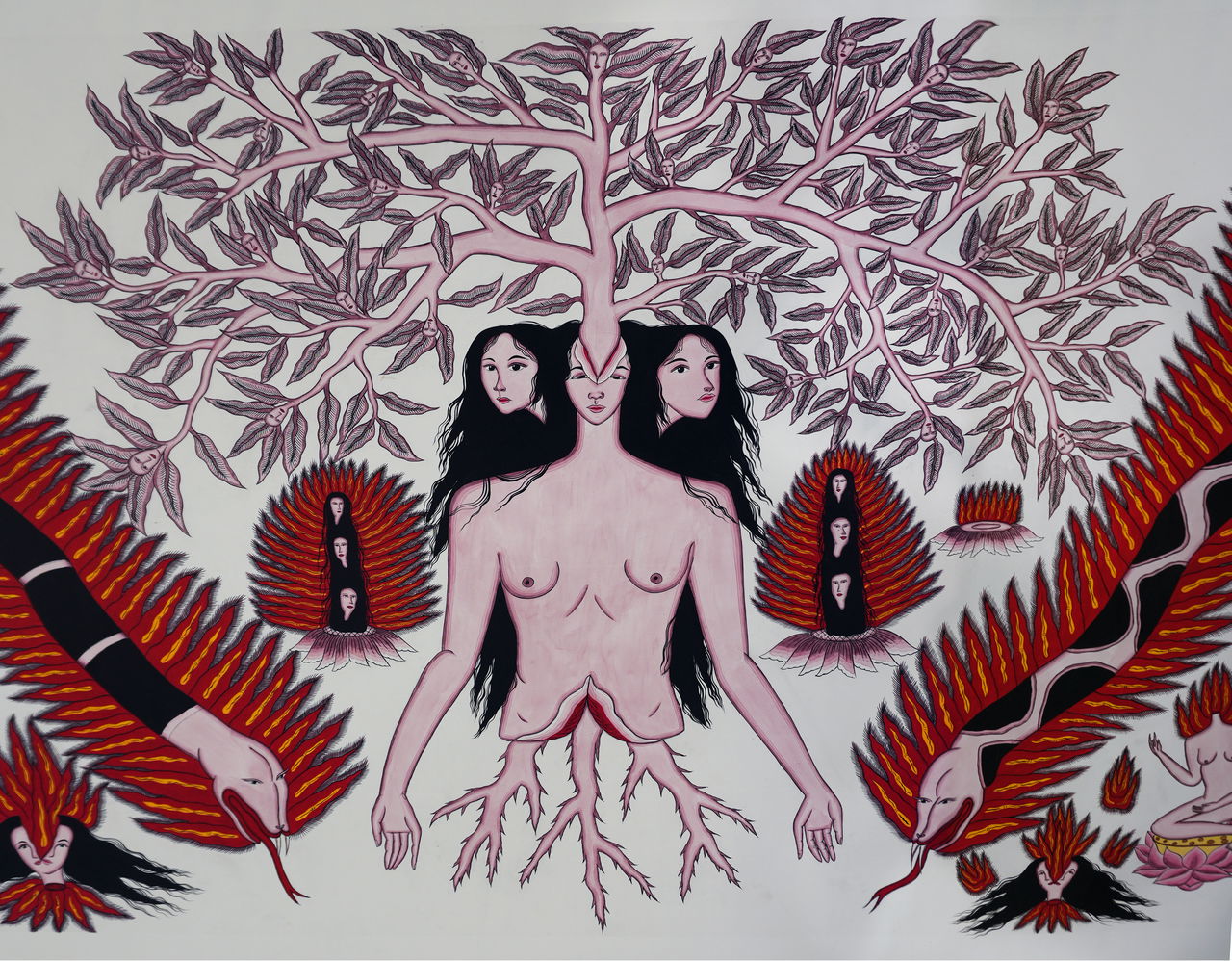
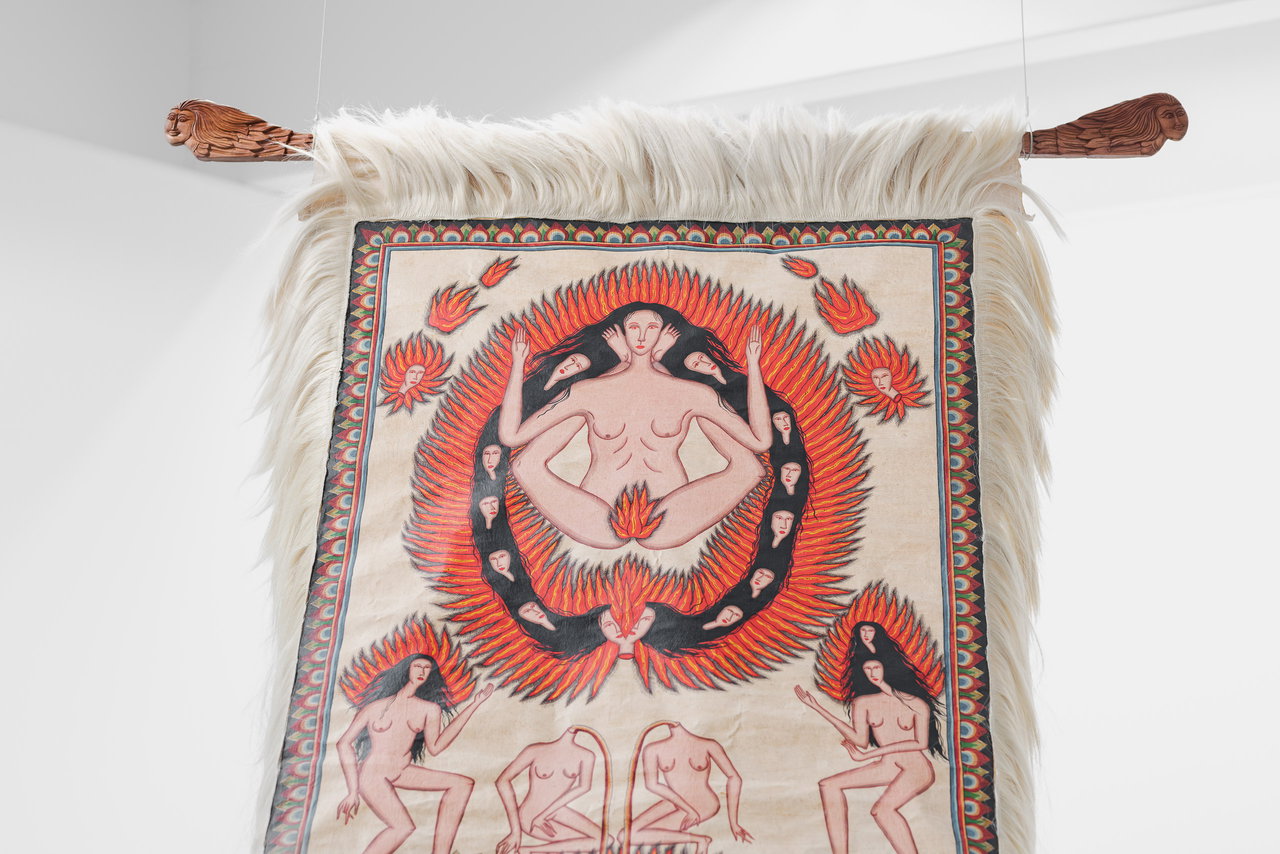
Citra Sasmita, The Rites of Creation, 2025.
Kunsthall Stavanger was proud to present Who Stole the Sky, the first solo exhibition in the Nordic region by Balinese artist Citra Sasmita. For the Kunsthall, Sasmita had created a new body of work that unfolded as a multisensory meditation on ancestral memory, humanity’s relationship to nature, and spirituality. Moving across painting, textile, sculpture, and installation, the exhibition proposed art as a ritual space that invited the viewer to encounter history, cosmology, and the body not as separate, but as deeply entangled realms.
Sasmita is a self-taught artist with a background in physics, illustration, and poetry. She has trained with traditional Kamasan painters and priestesses and is one of only two women globally to have been taught this technique, which has historically been passed down through male lineages. Her practice engages with ancient Balinese myths, rituals, and iconography while reinserting female narratives into histories from which they have
Kunsthall Stavanger was proud to present Who Stole the Sky, the first solo exhibition in the Nordic region by Balinese artist Citra Sasmita. For the Kunsthall, Sasmita had created a new body of work that unfolded as a multisensory meditation on ancestral memory, humanity’s relationship to nature, and spirituality. Moving across painting, textile, sculpture, and installation, the exhibition proposed art as a ritual space that invited the viewer to encounter history, cosmology, and the body not as separate, but as deeply entangled realms.
Sasmita is a self-taught artist with a background in physics, illustration, and poetry. She has trained with traditional Kamasan painters and priestesses and is one of only two women globally to have been taught this technique, which has historically been passed down through male lineages. Her practice engages with ancient Balinese myths, rituals, and iconography while reinserting female narratives into histories from which they have long been excluded. Through this reclamation, Sasmita also confronts the enduring effects of colonialism on land, education and belief systems, and artistic production, reimagining tradition not as a static inheritance, but as an evolving and critical force for transformation.
At the heart of Who Stole the Sky was a desire to build a bridge between Balinese cosmology and Norse belief systems. Both traditions understand reality as layered and relational, structured through multiple realms that coexist rather than oppose one another. In Balinese cosmology, these realms are articulated through the Sanga Mandala: nine directions inhabited by gods, spirits, and ancestral forces. Norse mythology similarly describes a universe composed of nine interconnected worlds, connected by the world tree Yggdrasil. By drawing these parallels, Sasmita activates a shared mythic language that transcends geography, suggesting that collective memory and spiritual knowledge move across borders and cultures.
The exhibition unfolded as a ritualistic journey rather than a sequence of discrete artworks. While it may been entered from any direction, Sasmita structured the space according to a ceremonial flow, where thresholds mark transitions between bodily, spiritual, and cosmological states. The works was not presented as autonomous objects, but as interdependent elements within a holistic cosmology. Viewers was invited to move slowly, engaging not only visually but through breath, scent, tactility, and bodily presence.
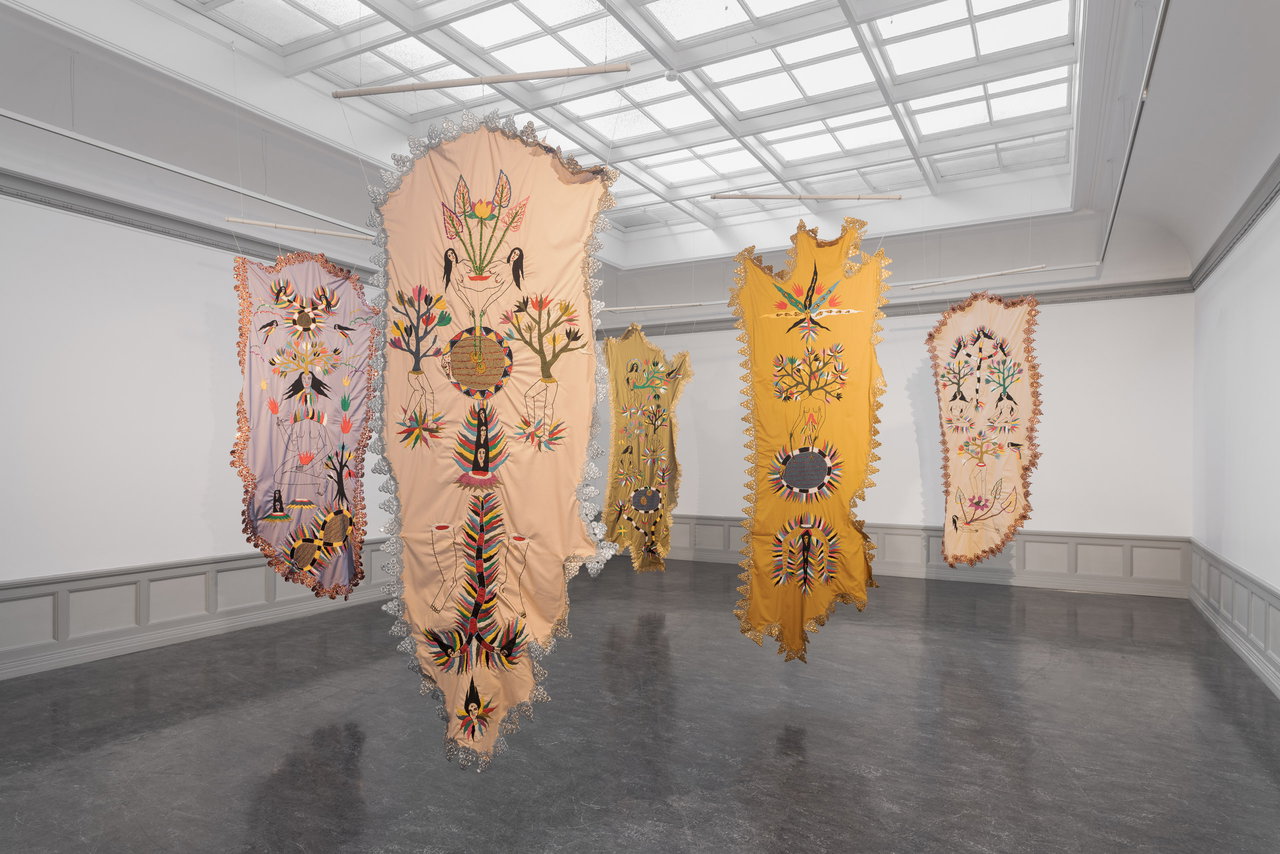
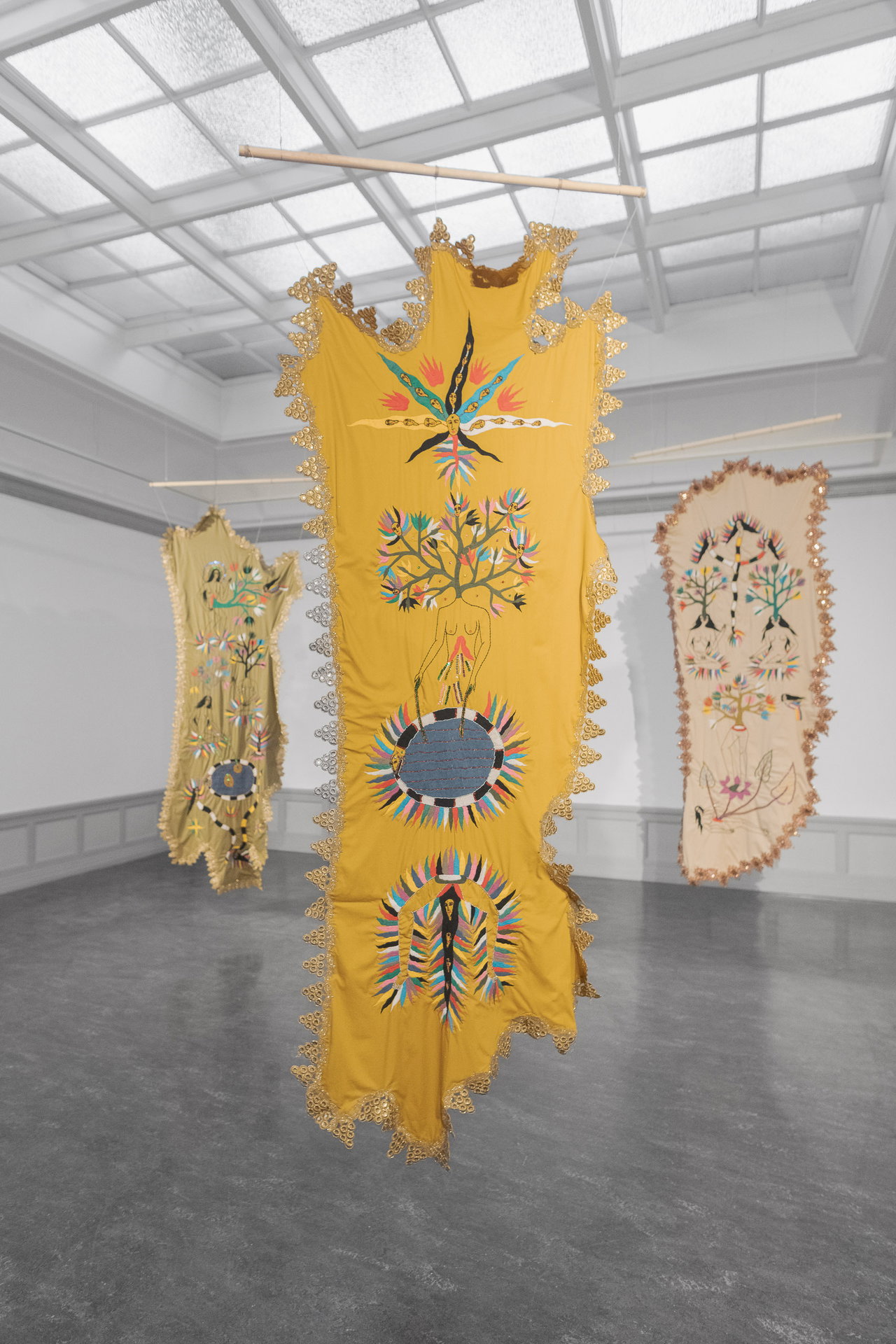
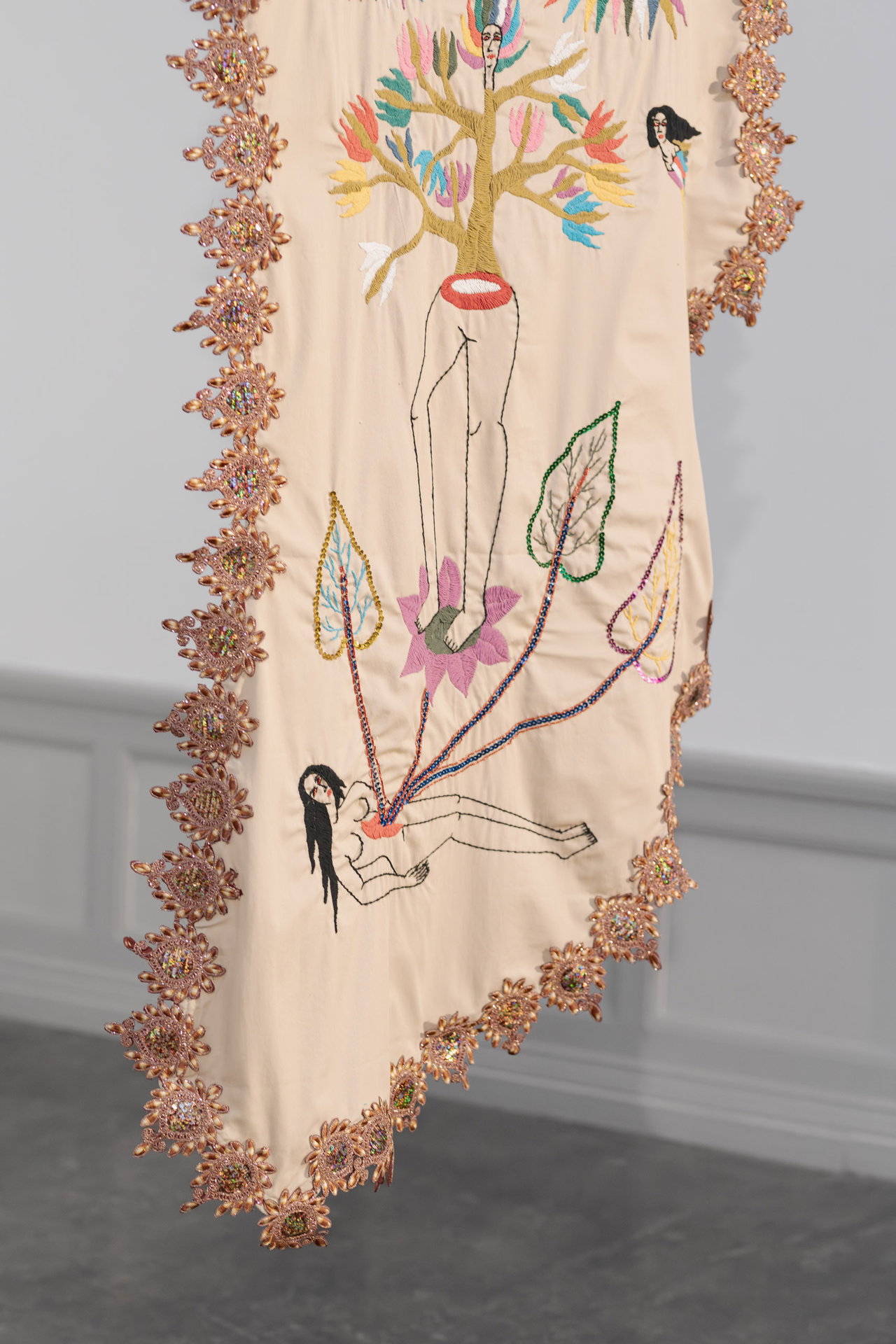
Gallery 4 served as a prologue. Here, embroidered textile ‘hides’ referenced animal skins traditionally used in ritual sacrifice. In Balinese culture, such sacrifices are not acts of violence alone, but part of a broader system of redistribution, communal gathering, and shared sustenance. By translating hides into embroidered textiles, Sasmita introduces the skin as the first threshold of the body, a surface through which ritual and transformation begin. The works were produced in collaboration with master embroiderers from Western Bali, who selected colours based on spiritual and energetic significance. The installation also reflects on how artistic traditions in Bali emerge in direct relation to the land. While Western Bali is known for embroidery due to the availability of cloth and thread, Eastern Bali is associated with weaving traditions shaped by different material conditions.
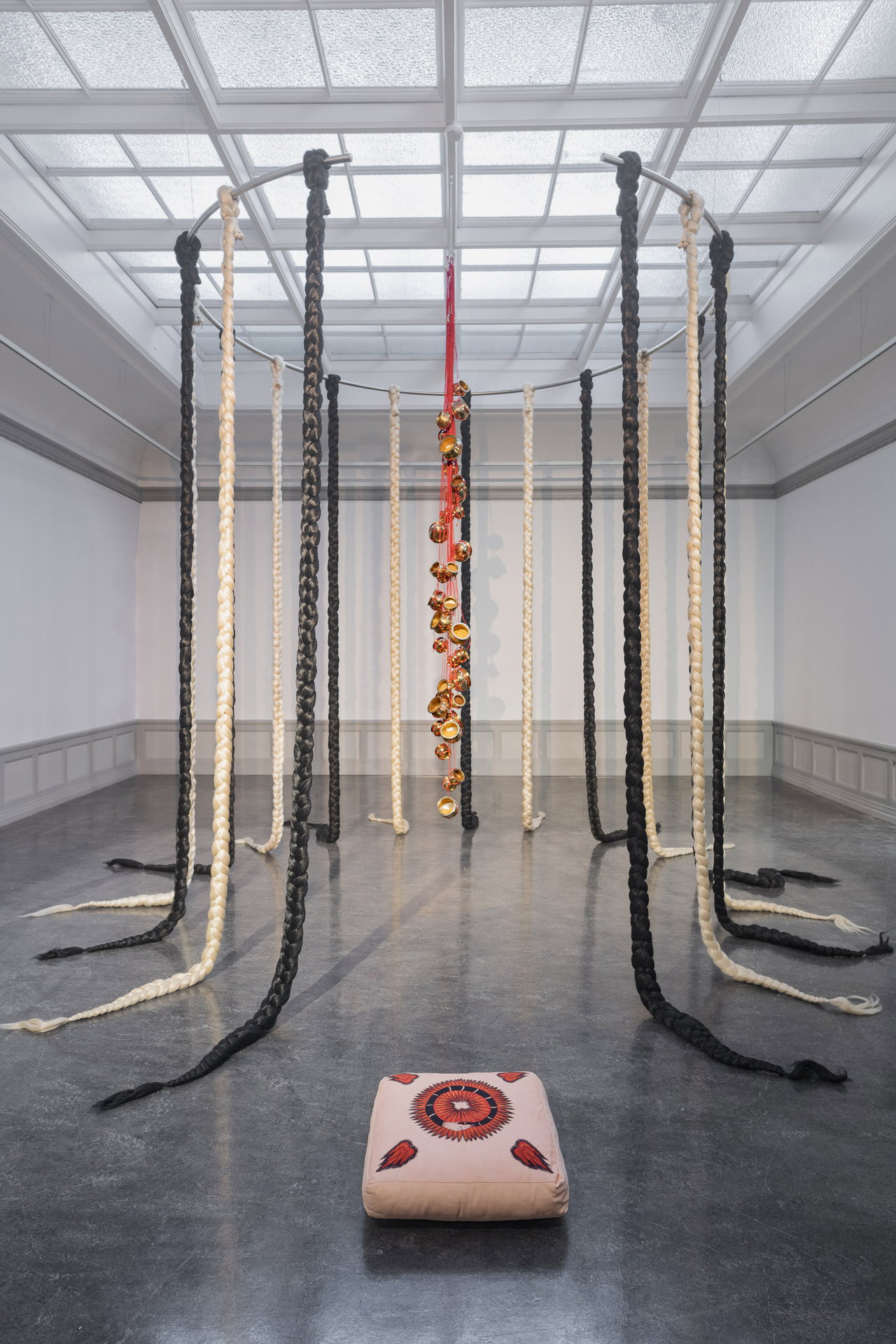
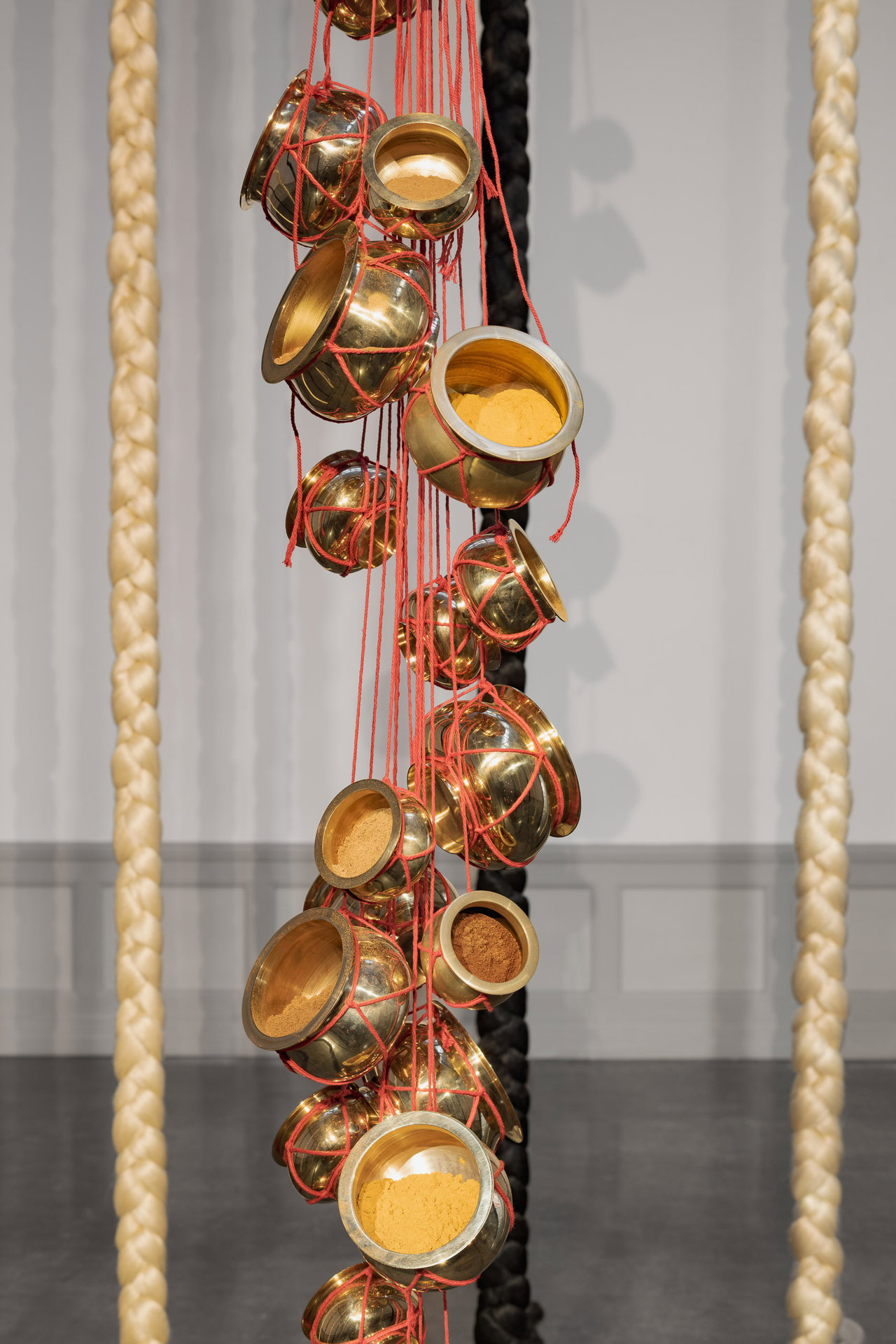
A second threshold appeared in Gallery 5, where braided hair installations and vessels of ground spices form The Temple of the Amygdala. Here, hair becomes a metaphor for veins, nerves, DNA, and hormonal pathways; an internal architecture through which knowledge, memory, and instinct circulate. The spices activate the senses, engaging smell and breath while gesturing toward forms of knowledge historically transmitted through nature rather than formalised education. Prior to the introduction of Western schooling systems, such knowledge was received directly from the land, elders, and ancestors. The braided hair also invokes the gathering of ancestral and particularly female knowledge, emphasising relationality over hierarchy.Visitors were invited to sit on a meditation cushion and reflect on their connection to nature and their own embodied ways of knowing.
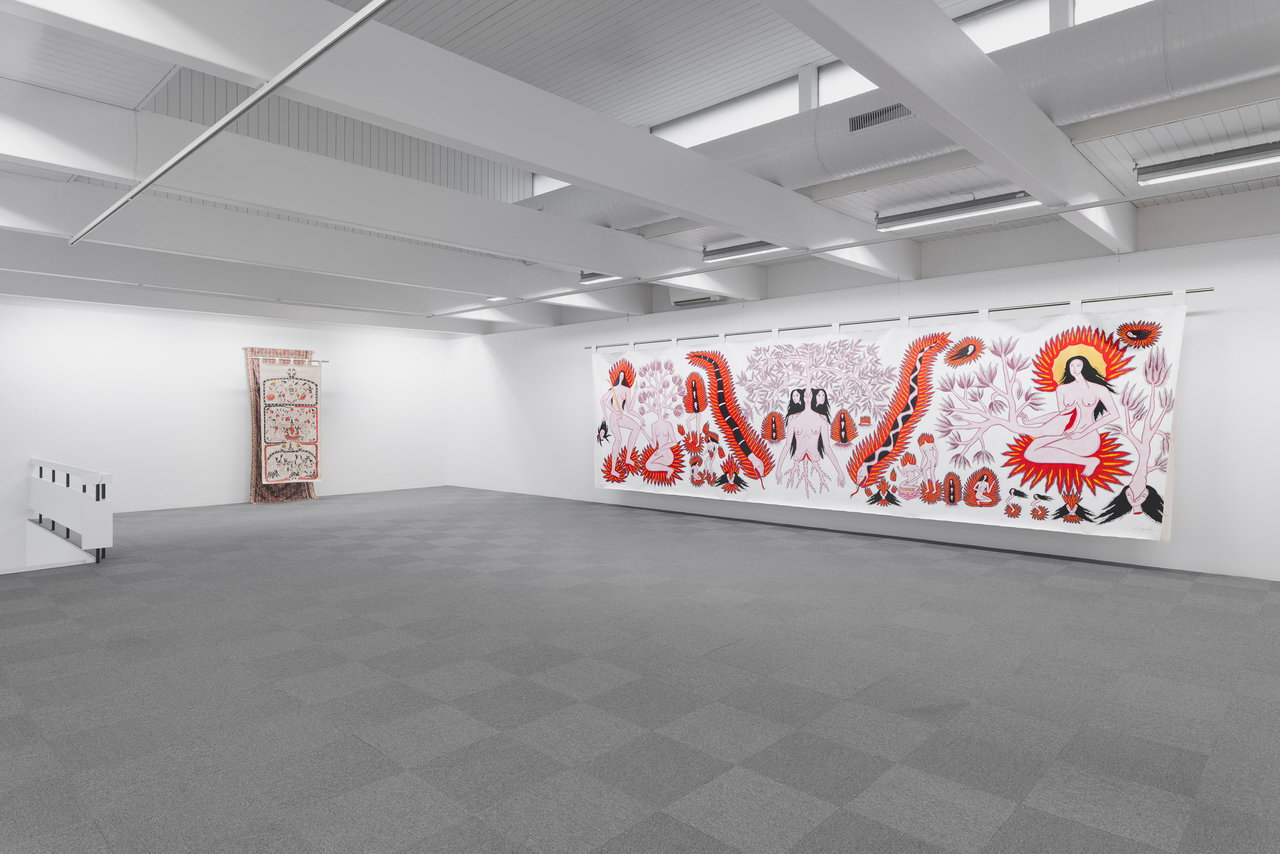
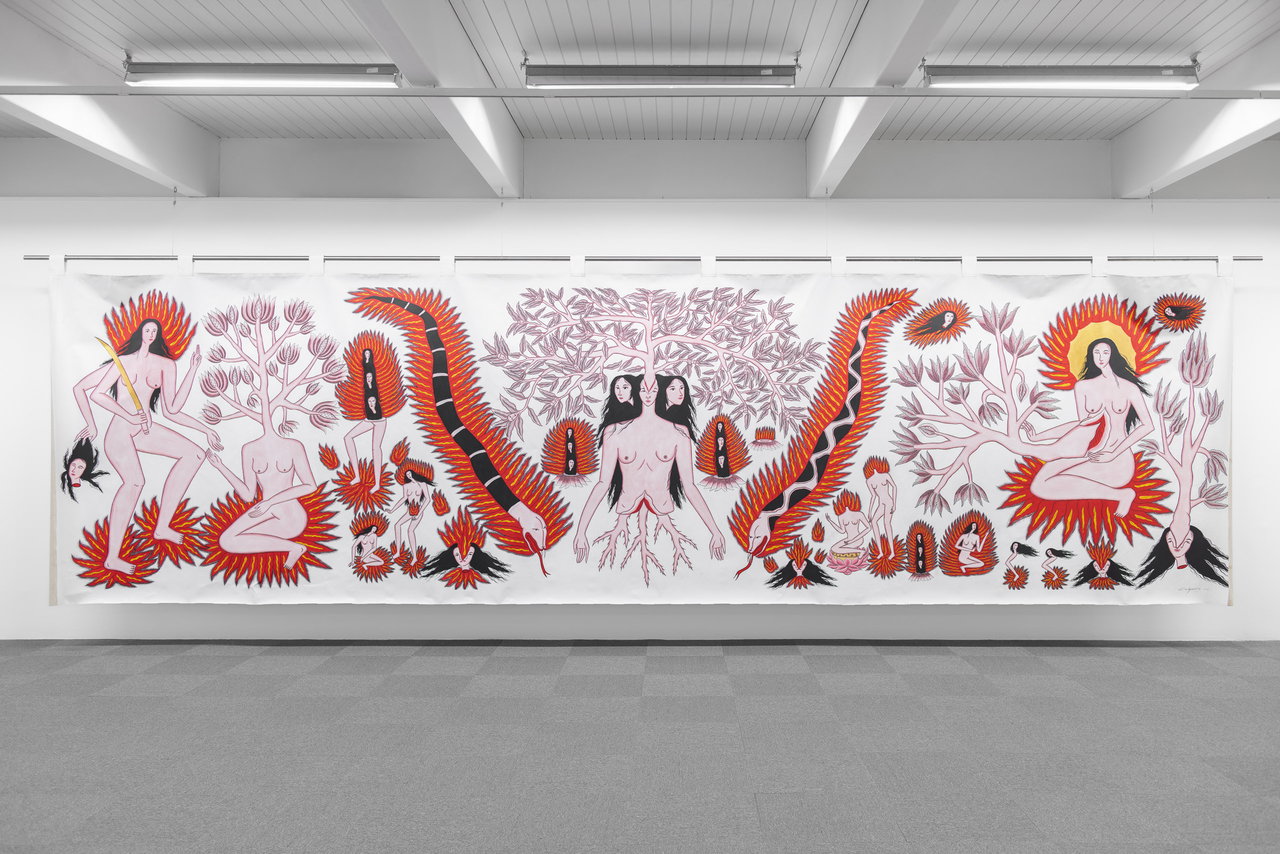
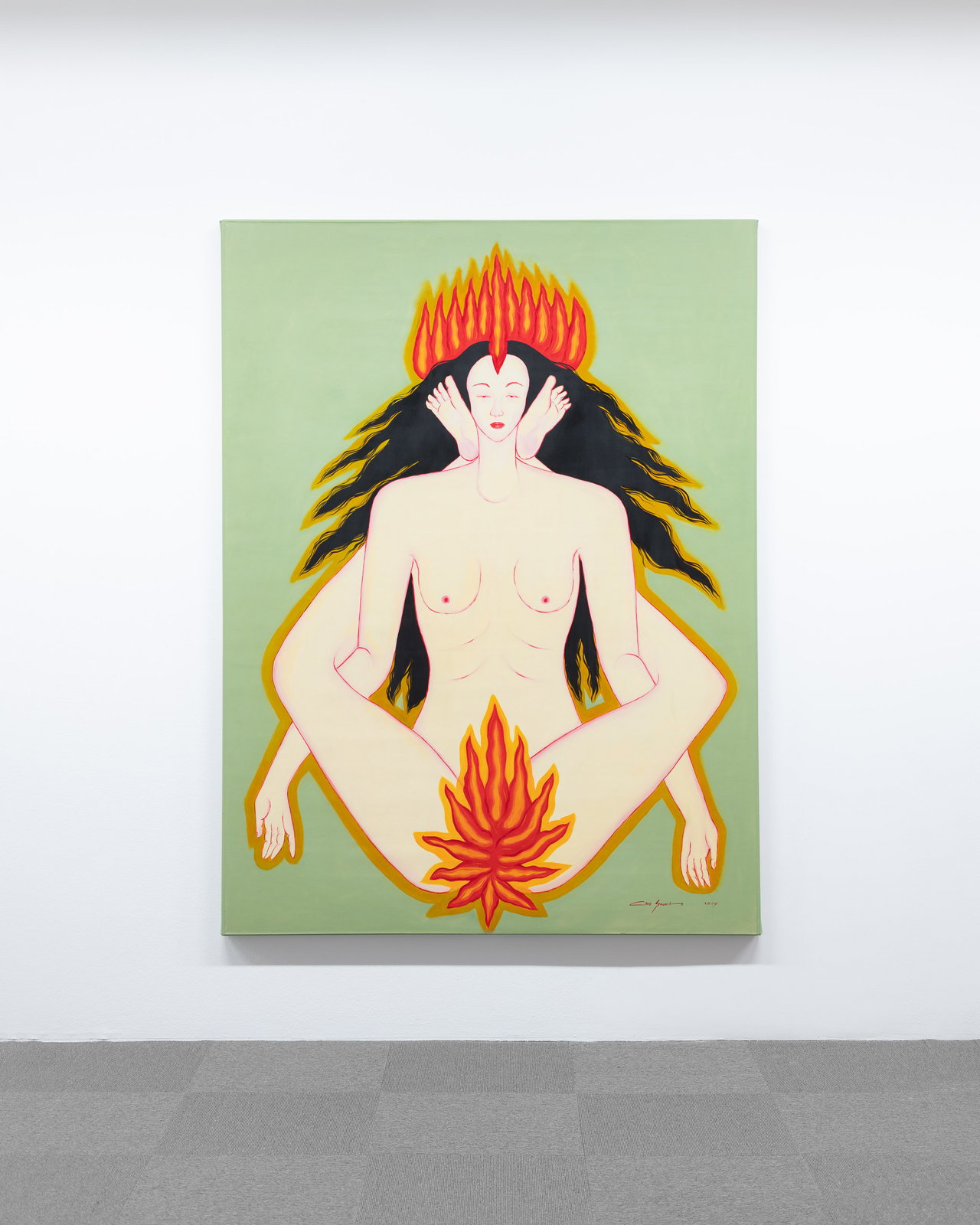
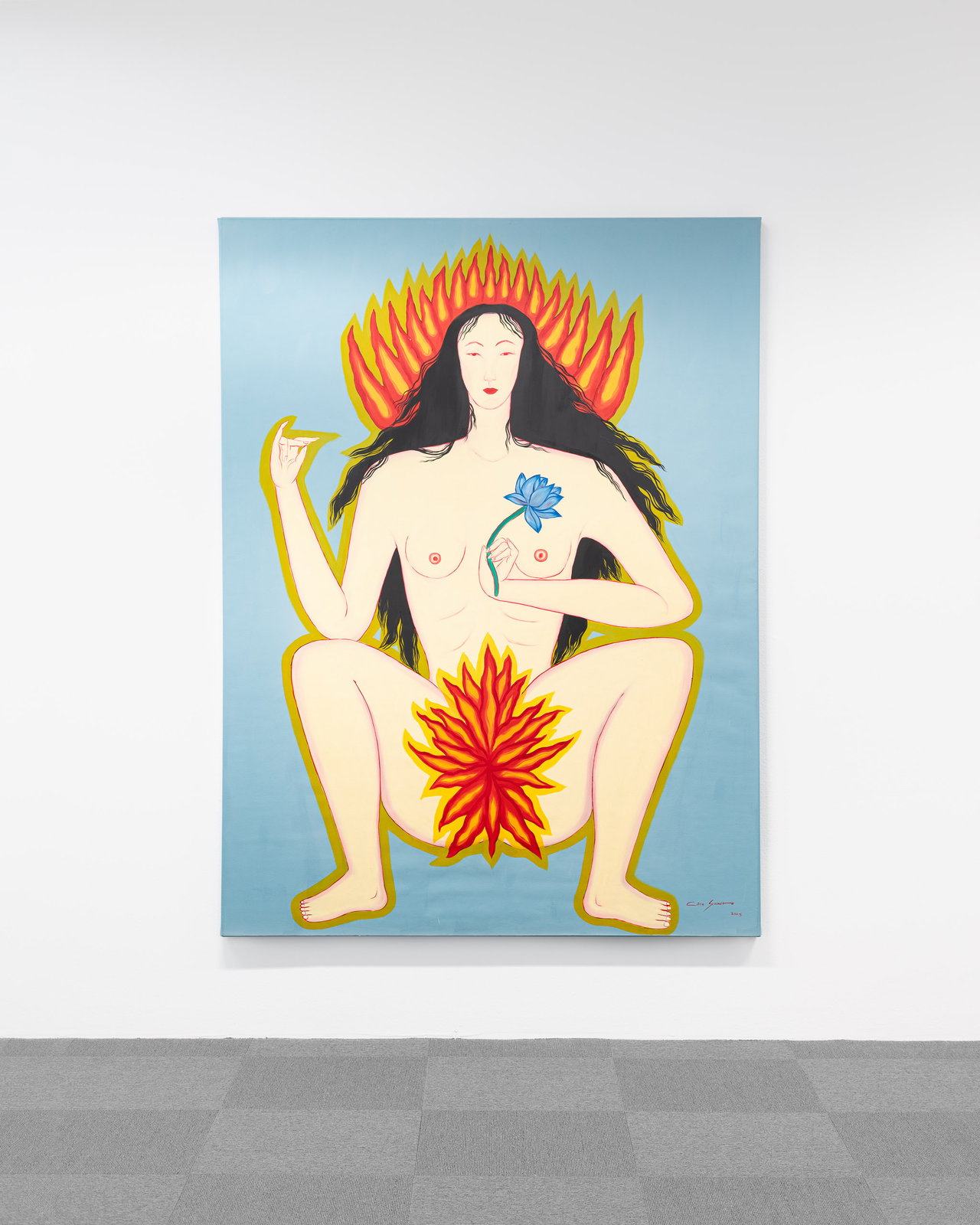
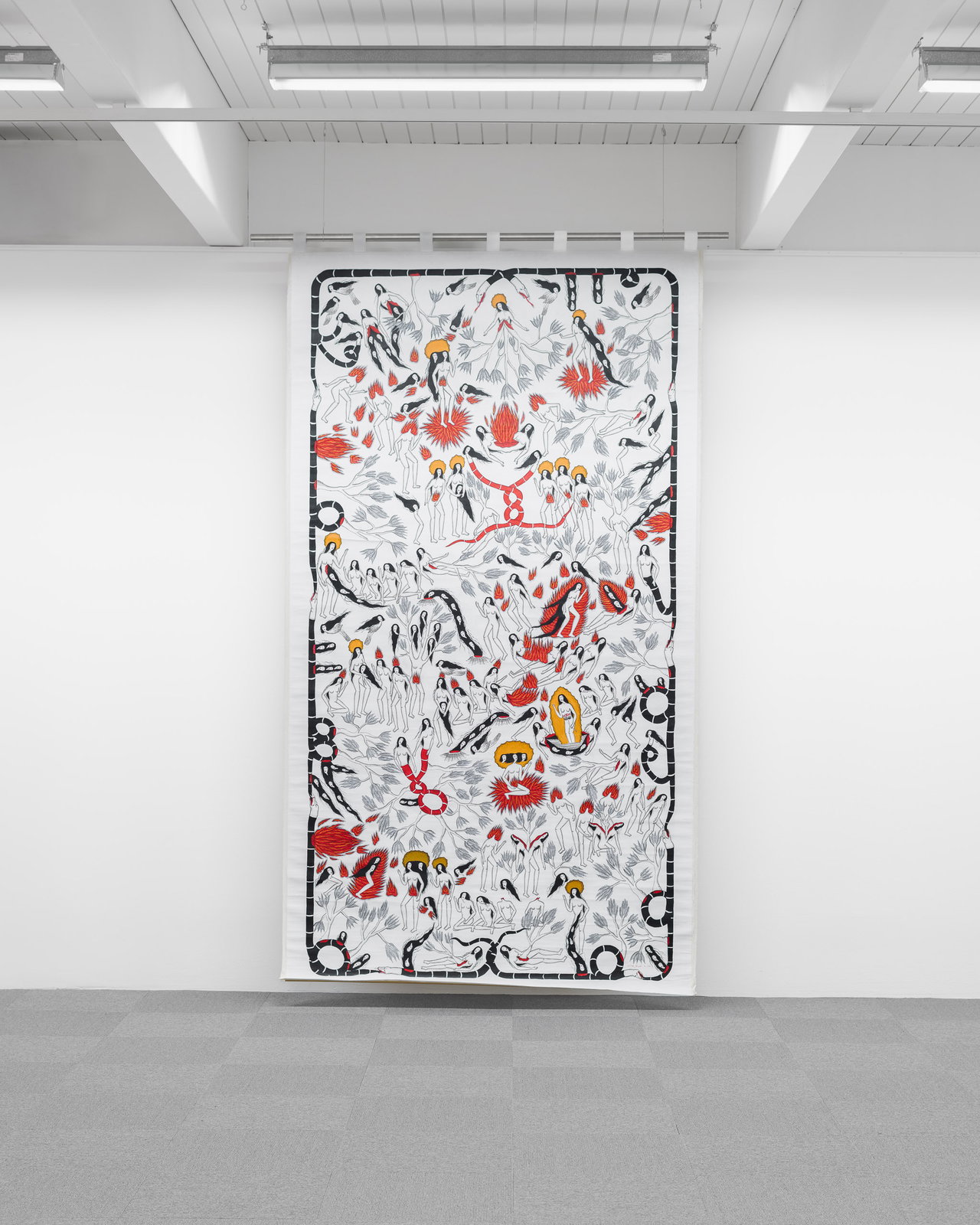
The Kunsthall’s main gallery was filled with Kamasan scroll paintings, a tradition historically dominated by heroic patriarchal narratives. Sasmita radically reclaims this form by placing women at the centre of each cosmology. Her figures are often pregnant, on fire, split open, or bleeding; images that insist on the body as a site of creation, destruction, and renewal. Here, nature was not an external resource but a relative, reflected within the human body itself. Drawing on Christian cosmology and Dante’s Divine Comedy, Sasmita reconfigures heaven, hell, and purgatory as internal states located respectively in the heart, mind, and stomach, emphasising self-realisation over transcendence.
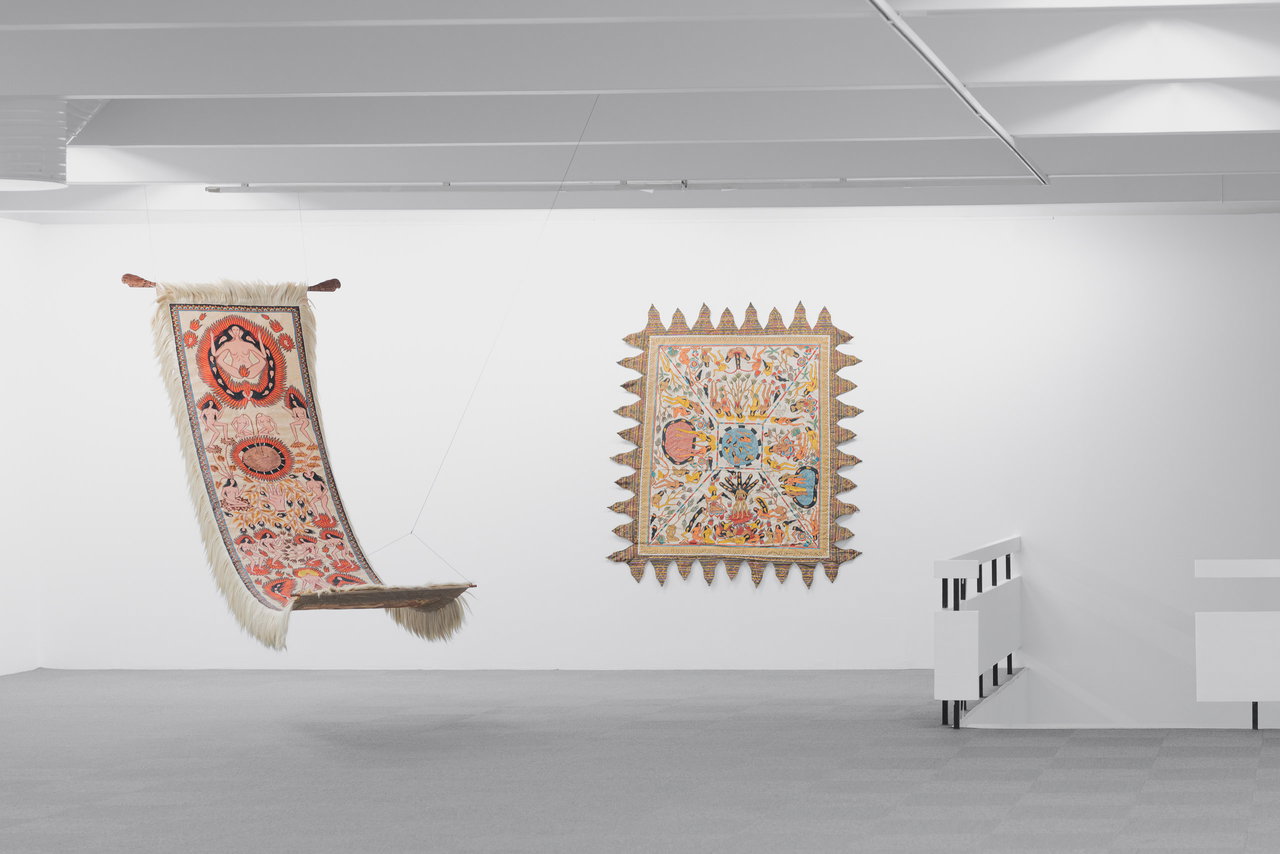
At the centre of the gallery, two monumental scrolls, Into Eternal Land Act One (Scroll 3) and (Scroll 4), form an immersive passageway that visitors could physically enter. These works invite an intimate encounter with a narrative that unfolds across states of heaven, hell and purgatory. Again, Sasmita directs attention inward, to the triadic movement between heart, mind, and stomach, while foregrounding the porosity of the body in relation to its earthly environments. Backed with antique fabric depicting a Balinese temple gate, the scrolls invoke spiritual ritual and underscore the devotional dimension of Sasmita’s practice.
Throughout the exhibition, sacred symbols recurred: snakes, trees, fire, blood, and female anatomy form a universal pictorial language that speaks across cultures. The sacred world tree appears in The Rites of Creation, resonating with both Balinese cosmology and the Norse Yggdrasil. Another suspended scroll, The Rites of Revelation, draws on the Lamak, ritual hangings that function as stairways between worlds, reinforcing the exhibition’s vertical movement between divine and earthly realms.
Installed nearby are three large paintings on canvas that together echo the trinity of Western religious doctrine while offering an alternative creation narrative rooted in feminine cosmology. Tree of Eden shows multiple figures emerging from a single hand, symbolising ancestral connection and shared lineage. In Cosmic Rebirth, a woman in a birth pose erupts in flames from crown and root chakras, embodying the nurturing feminine God birthing the universe; a blue lotus in her hand signifies medicine and spirituality. Rise of the Mountain and the Sea depicts a divine figure with fire radiating from womb and head, evoking both creative womb knowledge and the destructive power of Bali’s volcanic mountains. Throughout the exhibition, fire emerged repeatedly as both destructive and generative force, symbolising purification, volcanic power, blood, and rebirth.
Memorabilia from Far Away Land and Enigma trace Sasmita’s transition between traditional Kamasan painting and Western canvas formats. Enigma explicitly addresses colonial violence, with lions symbolising Dutch imperial power in Bali during the nineteenth and twentieth centuries.
Ultimately, Who Stole the Sky was an invitation to reconciliation: between humans and nature, creativity and devotion, tradition and contemporary practice. As many Balinese rituals depended on dance, movement, and continual artistic creation, Sasmita reminded us that art was not merely a commodity but a condition of being human. ‘Our religion is art,’ the artist noted. ‘Art is intrinsic to our spirituality. We need to keep creating art to be human.’ In this exhibition, art became a shared ritual space that asked us to remember, to sense, and to imagine new ways of living together with our human and non-human relations.
Curators: Kristina Ketola Bore and Heather Jones
Exhibition text: Heather Jones
Exhibition technicians: Matt Bryans and Frank Åasnes
Embroidery: Jero Mangku Istri Rini
Kamasan painter: Ni Wayan Sukartini
The exhibition is generously supported by Fritt Ord and Norske kunstforeninger.
Citra Sasmita (b. 1990, Bali, Indonesia) is a self-taught artist. She studied literature and physics, and worked as a short story illustrator for the Bali Post before she began developing her artistic practice.
Sasmita focuses on unravelling the myths and misconceptions of Balinese art and culture, whilst shedding light on the Dutch colonial history which had shaped notions of authenticity in Bali. She is also deeply invested in questioning a woman’s place in social hierarchy and seeks to upend normative constructs of gender by reimagining mythical and classical narratives of war and romance to exalt female resistance instead.
Sasmita employs the Kamasan painting technique, which originates from a small village in Klungkung, East Bali since the 15th century and is traditionally exclusively practised by men to narrate Hindu epics. She engages with it as a reclamation of female agency, reimagining narratives drawn from ancient Balinese literature, rituals, mythologies and iconography. In recent years, she has expanded her practice to include sculpture and installation, incorporating various materials such as braided hairs, antique wooden pillars and ancient textiles to create her universe of empowered and divine cosmology.
Her work has been shown in several notable biennales and triennales such as ALOHA NŌ, Hawai’i Triennial (Hawai’i, 2025), to carry, Sharjah Biennial (United Arab Emirates, 2025); Precarious Joys, Toronto Biennial of Art (Canada, 2024); After Rain, Diriyah Contemporary Art Biennale (Saudi Arabia, 2024); Ten Thousand Suns, 24th Biennale of Sydney (Australia, 2024); Choreographies of the Impossible, 35th São Paulo Biennale (Brazil, 2023); The Open World, 3rd Thailand Biennale, Mae Fah Luang Art and Cultural Park, Chiang Rai (Thailand, 2023); Garden of Ten Seasons, Savvy Contemporary, Berlin (Germany, 2022); Kathmandu Triennale (Nepal, 2021-2022); ARTJOG MMXXII, Time To Wonder, Jogja National Museum, Yogyakarta (Indonesia, 2021); and the Biennale Yogyakarta (Indonesia, 2019). Recent solo exhibitions include Into Eternal Land, Barbican The Curve, (London, 2025); Atlas of Curiosity, Yeo Workshop (Singapore, 2023); Ode To The Sun, Yeo Workshop (Singapore, 2020); and Tales of Nowhere, Museum MACAN, Jakarta (Indonesia, 2020).
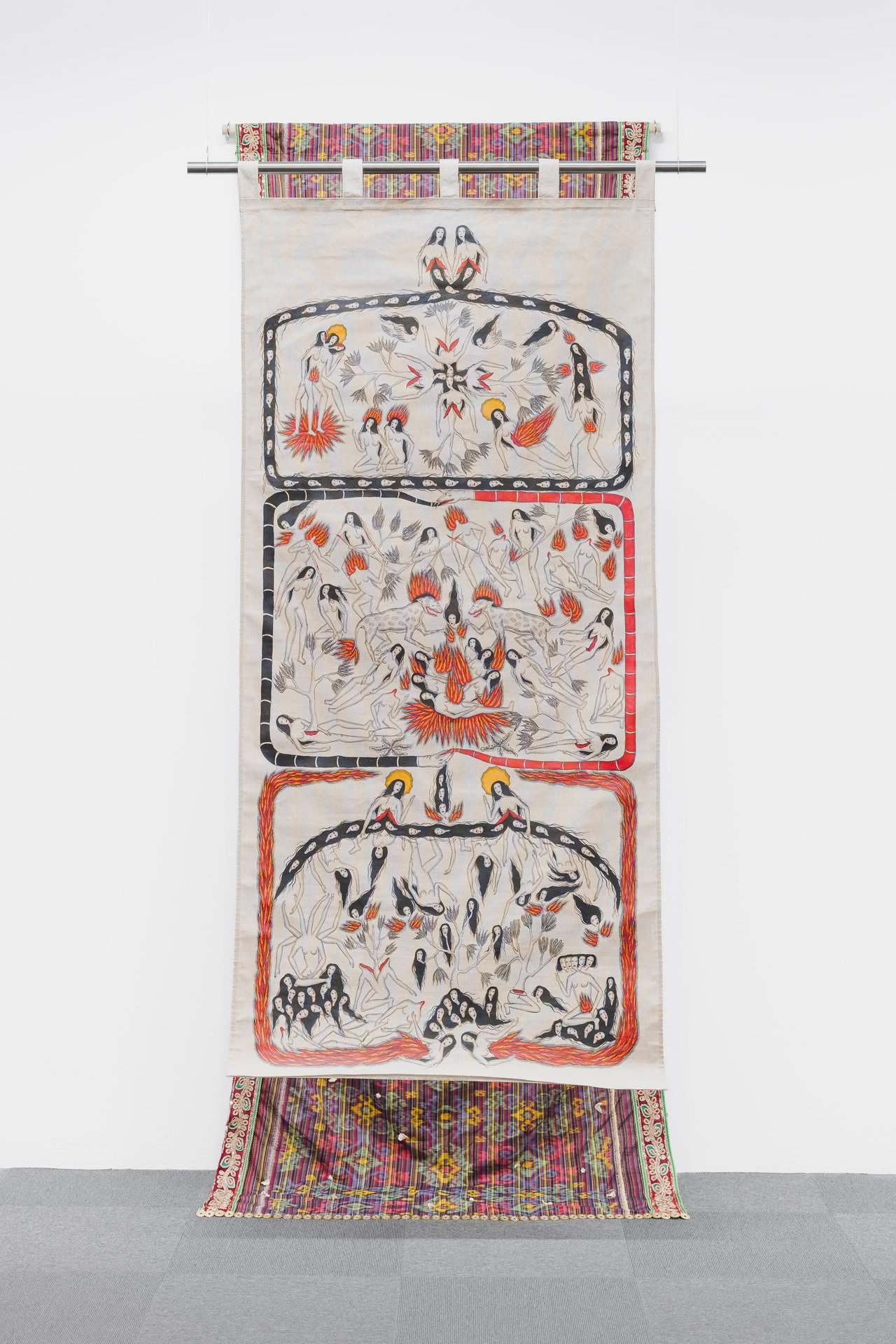
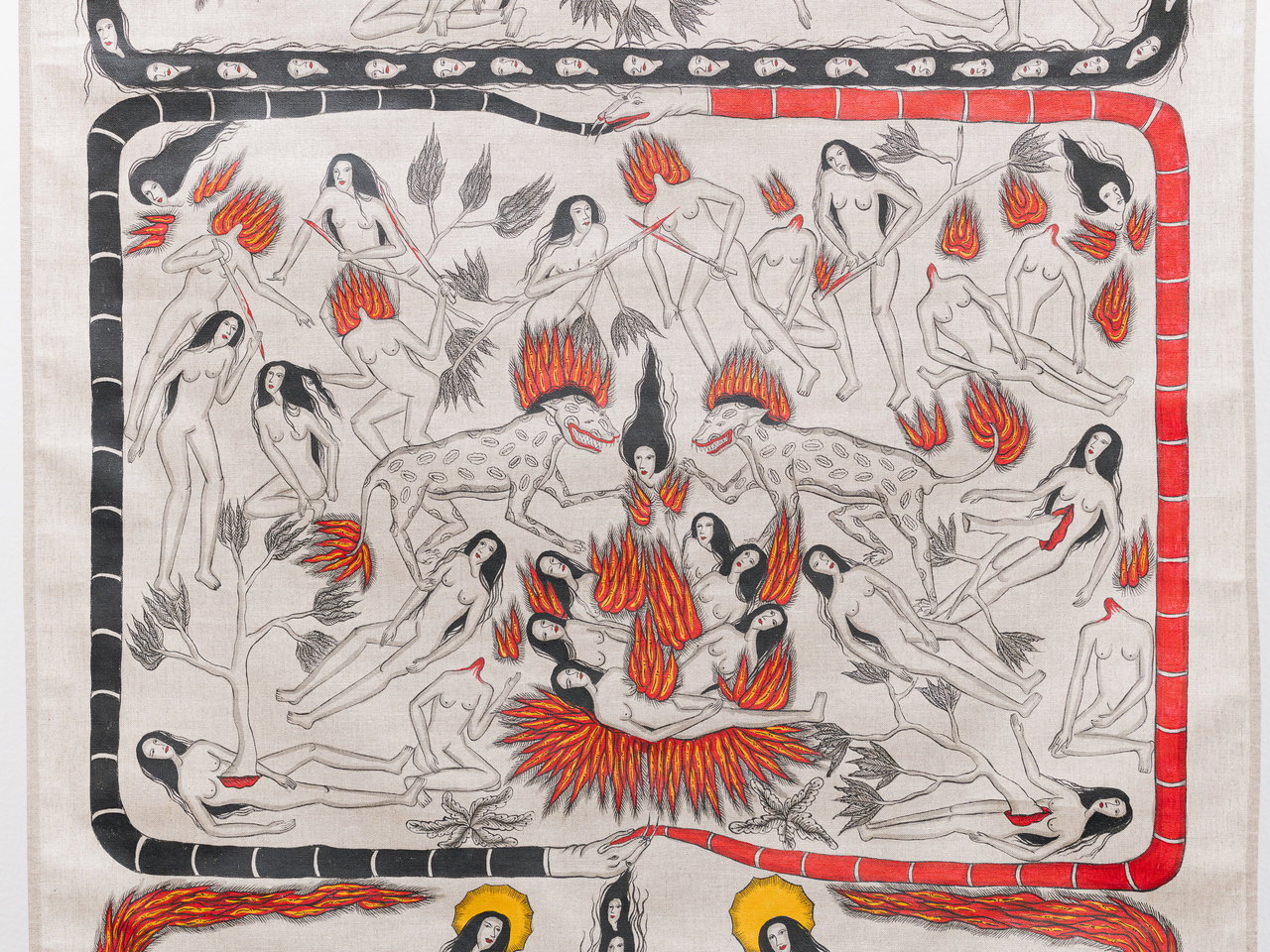
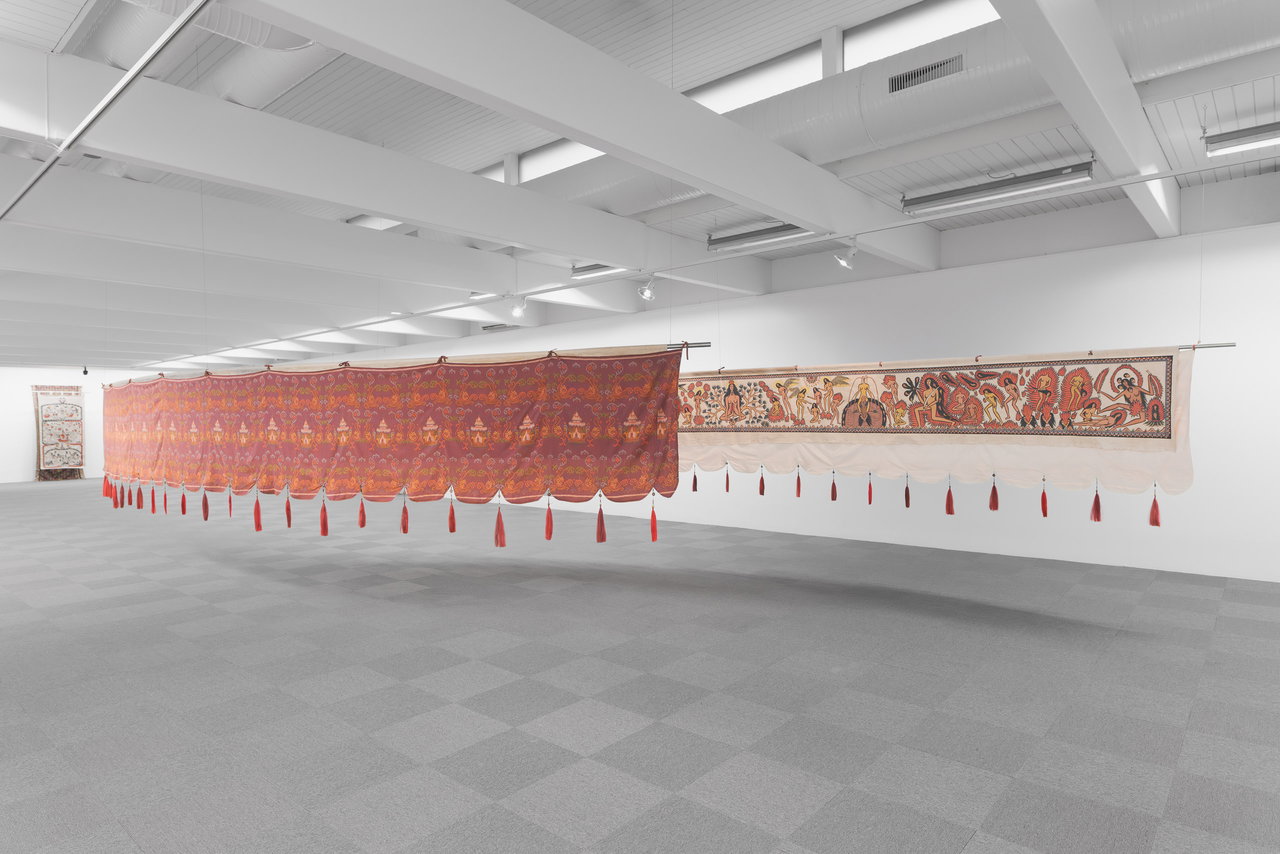
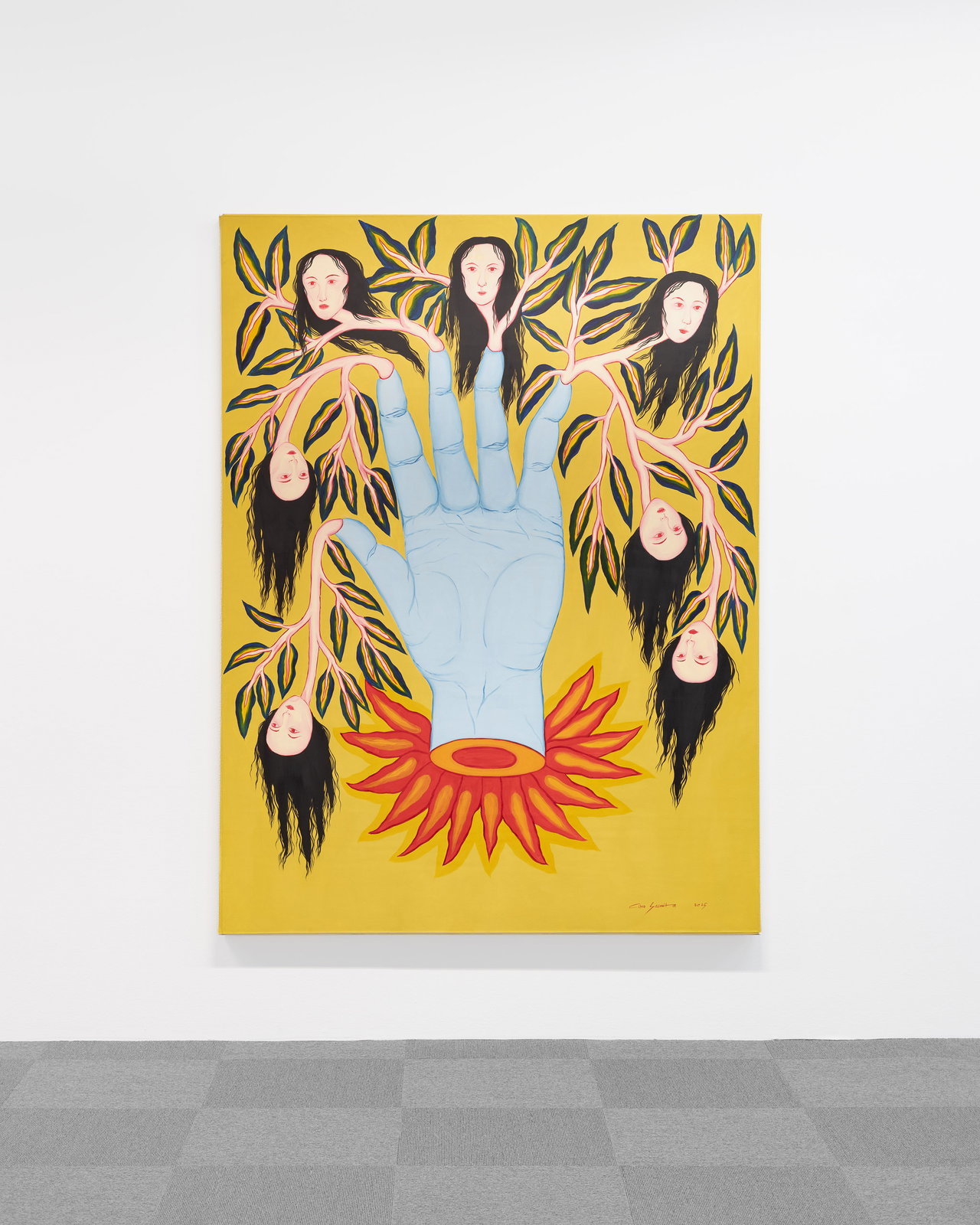
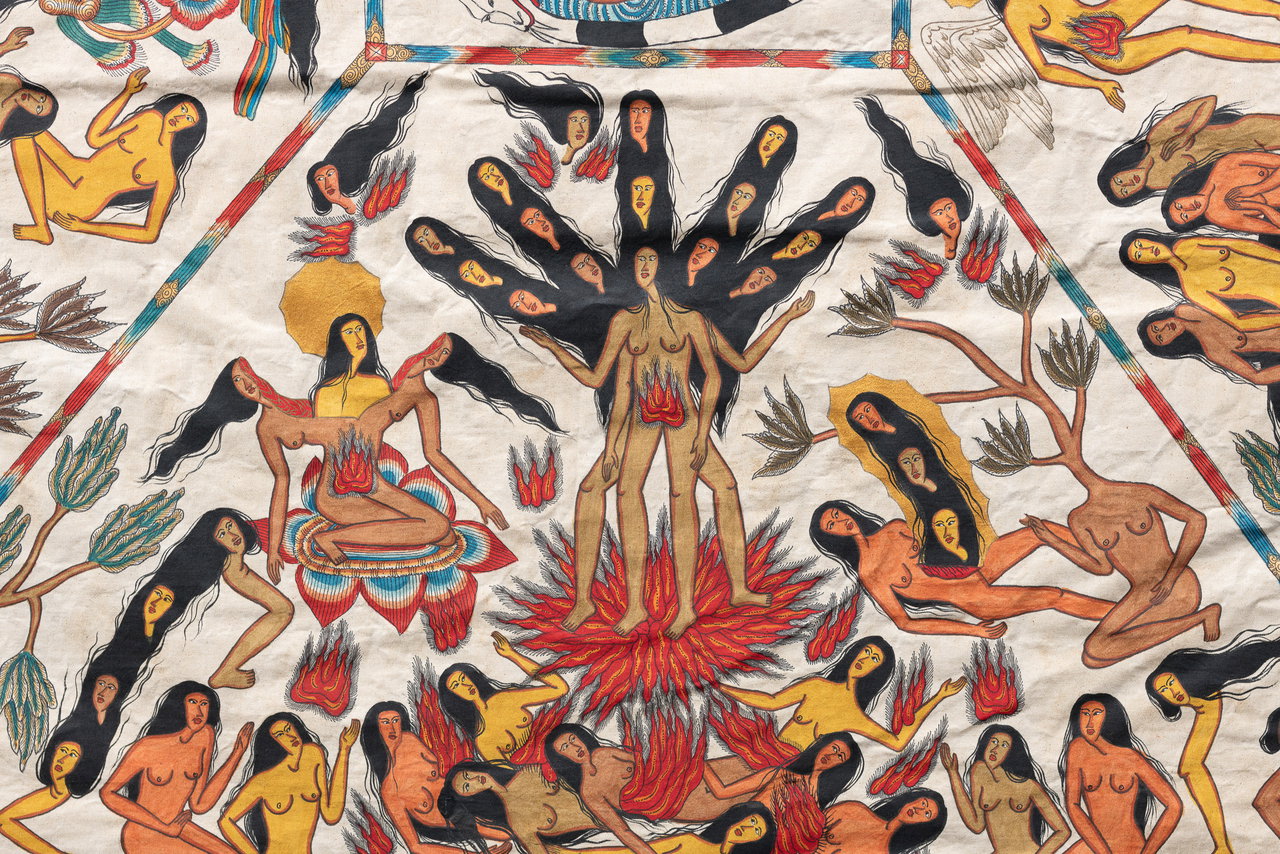
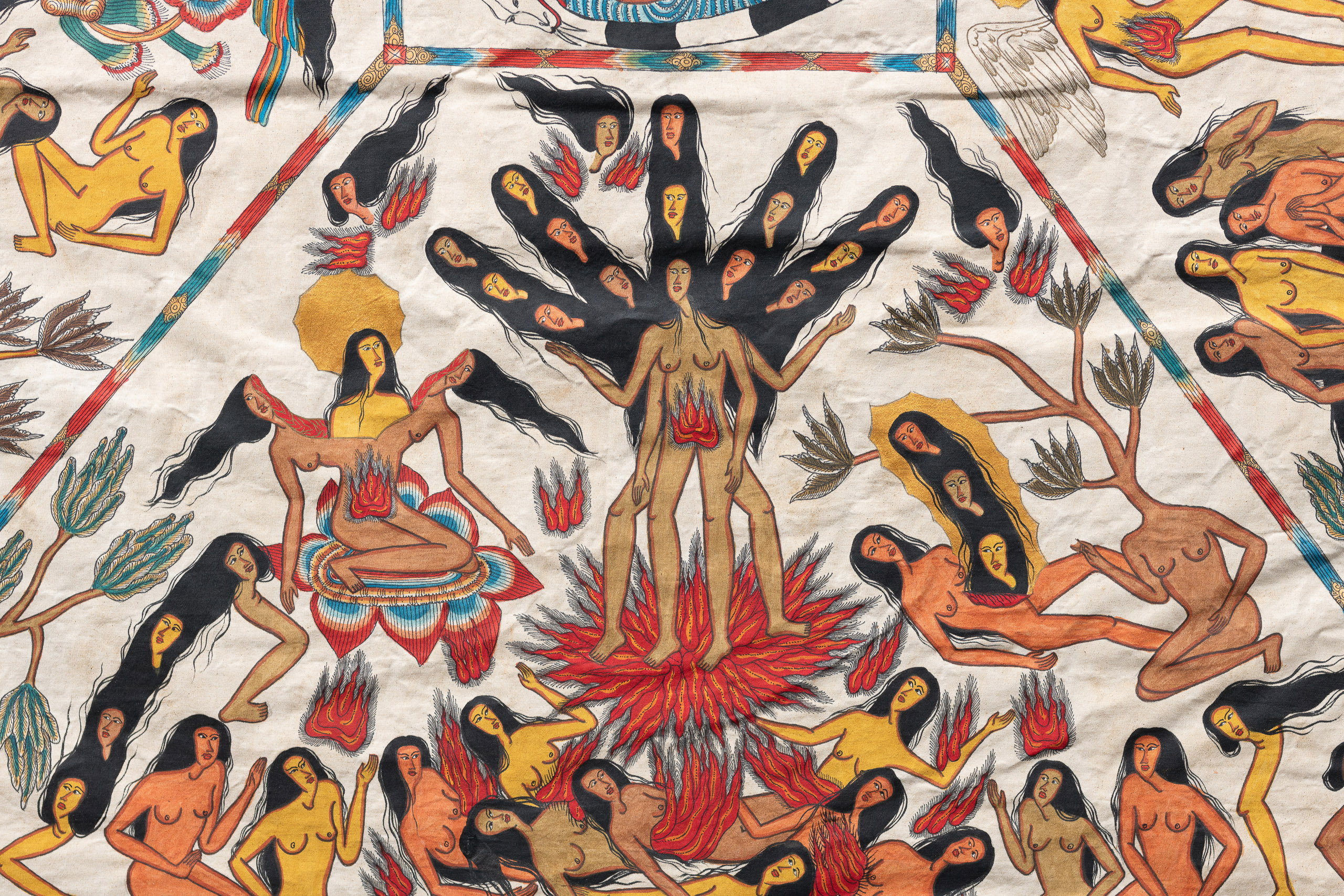
Citra Sasmita, Oracle of the Sea (2022), detail. Photo: Erik Sæter Jørgensen.
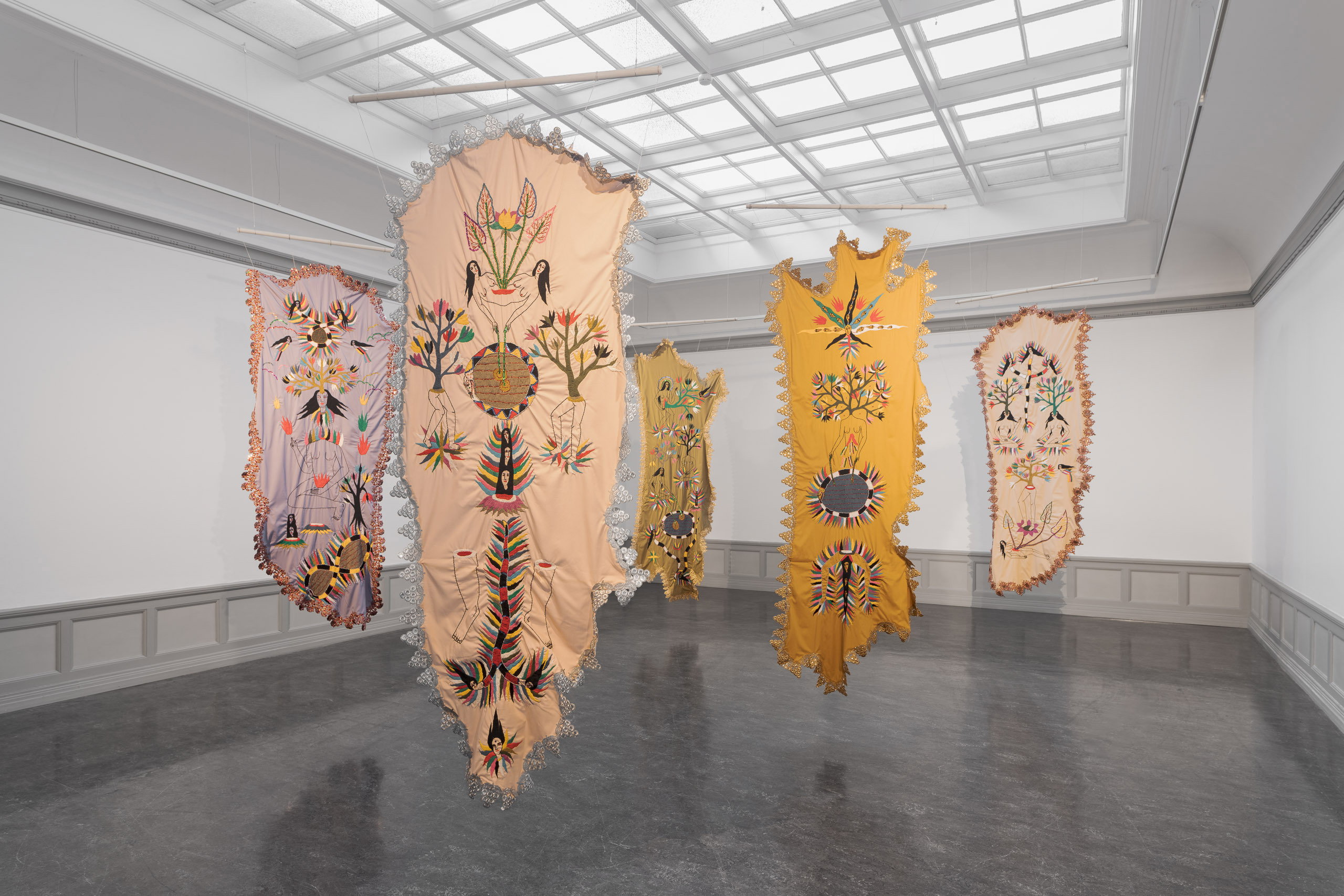
Citra Sasmita, The Beginning of the Flesh (2025), installation view. Photo: Erik Sæter Jørgensen.
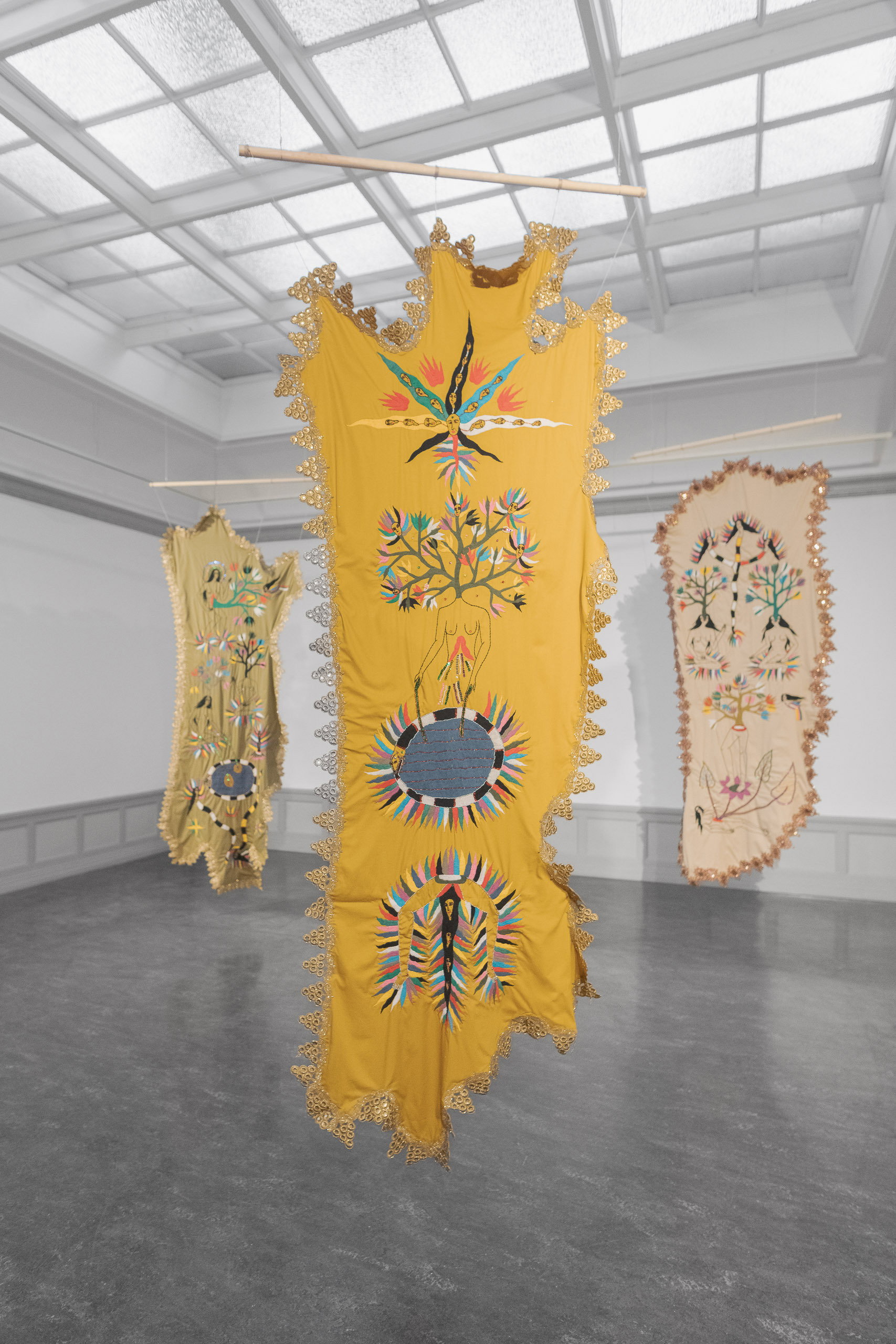
Citra Sasmita, The Beginning of the Flesh (2025), installation view. Photo: Erik Sæter Jørgensen.
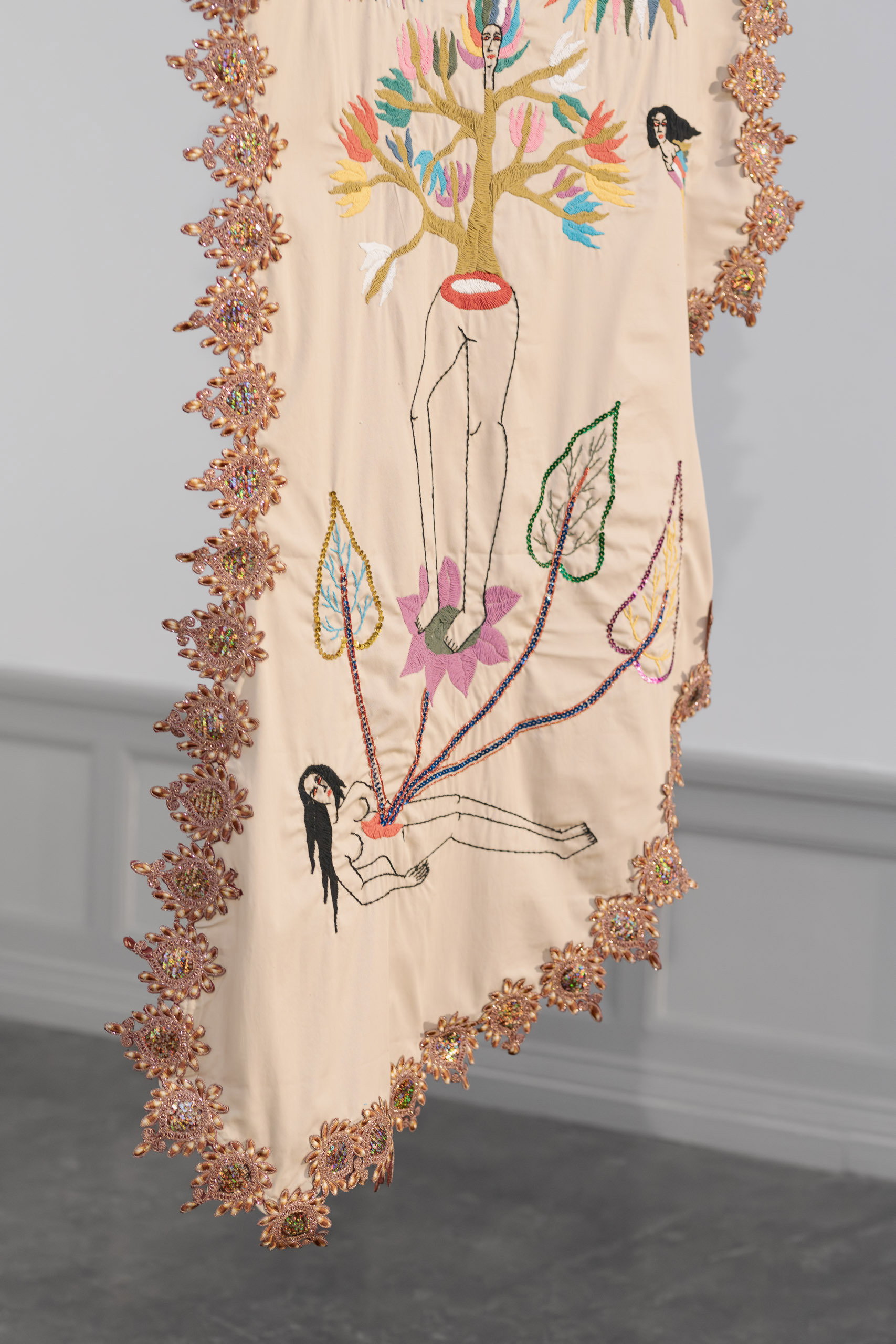
Citra Sasmita, The Beginning of the Flesh (2025), detail. Photo: Erik Sæter Jørgensen.
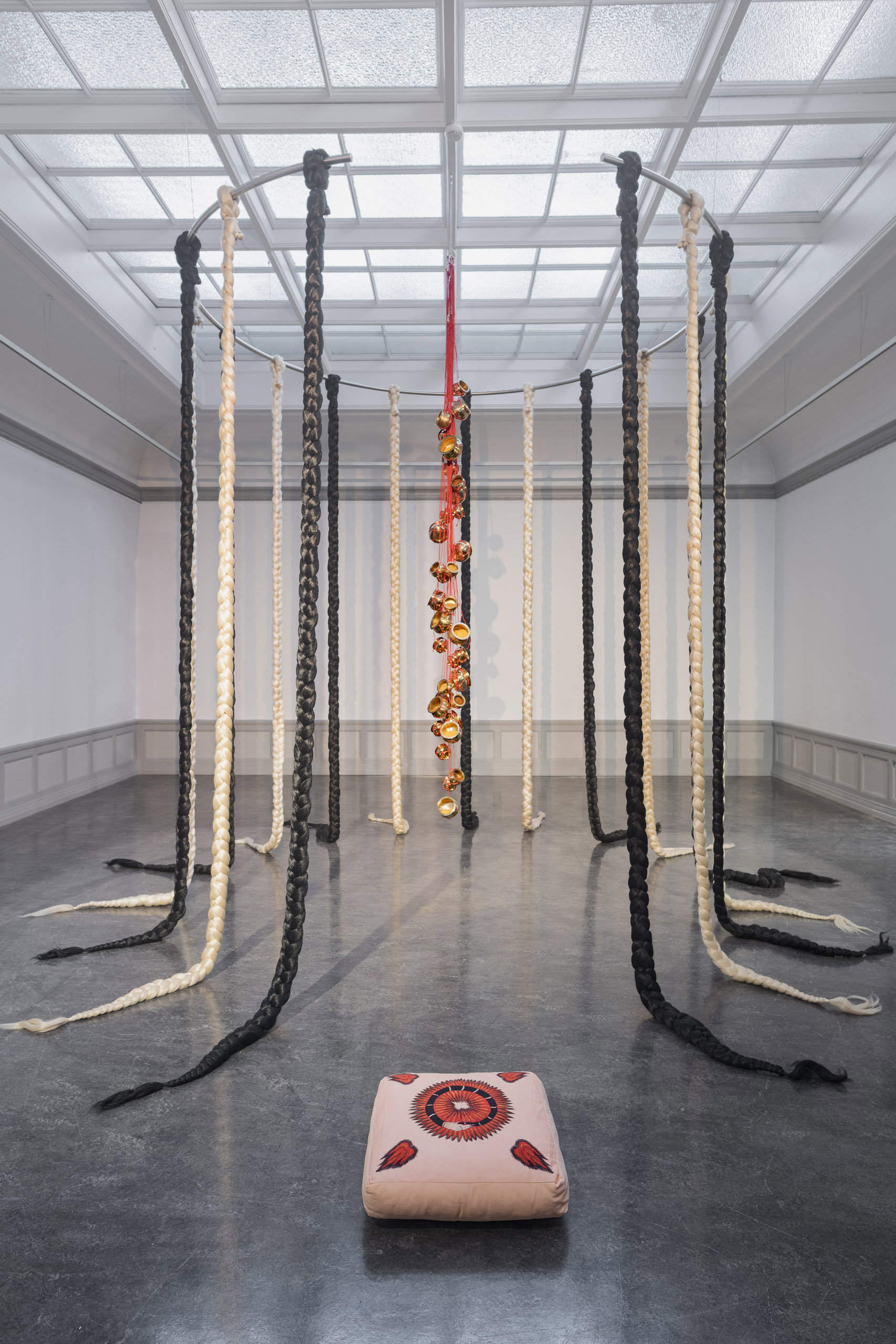
Citra Sasmita, Temple of Amygdala (2025), installation view. Photo: Erik Sæter Jørgensen.
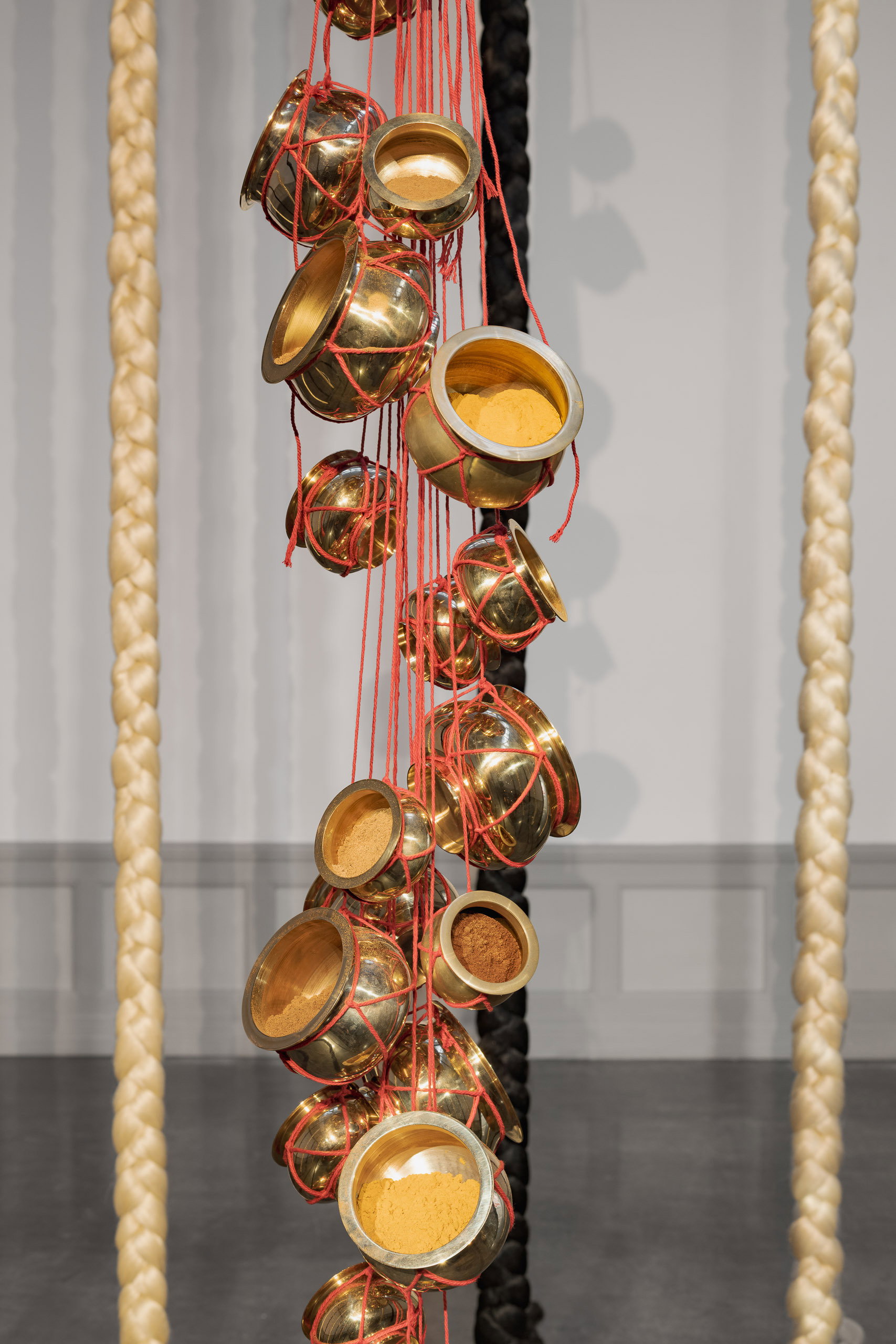
Citra Sasmita, Temple of Amygdala (2025), detail. Photo: Erik Sæter Jørgensen.
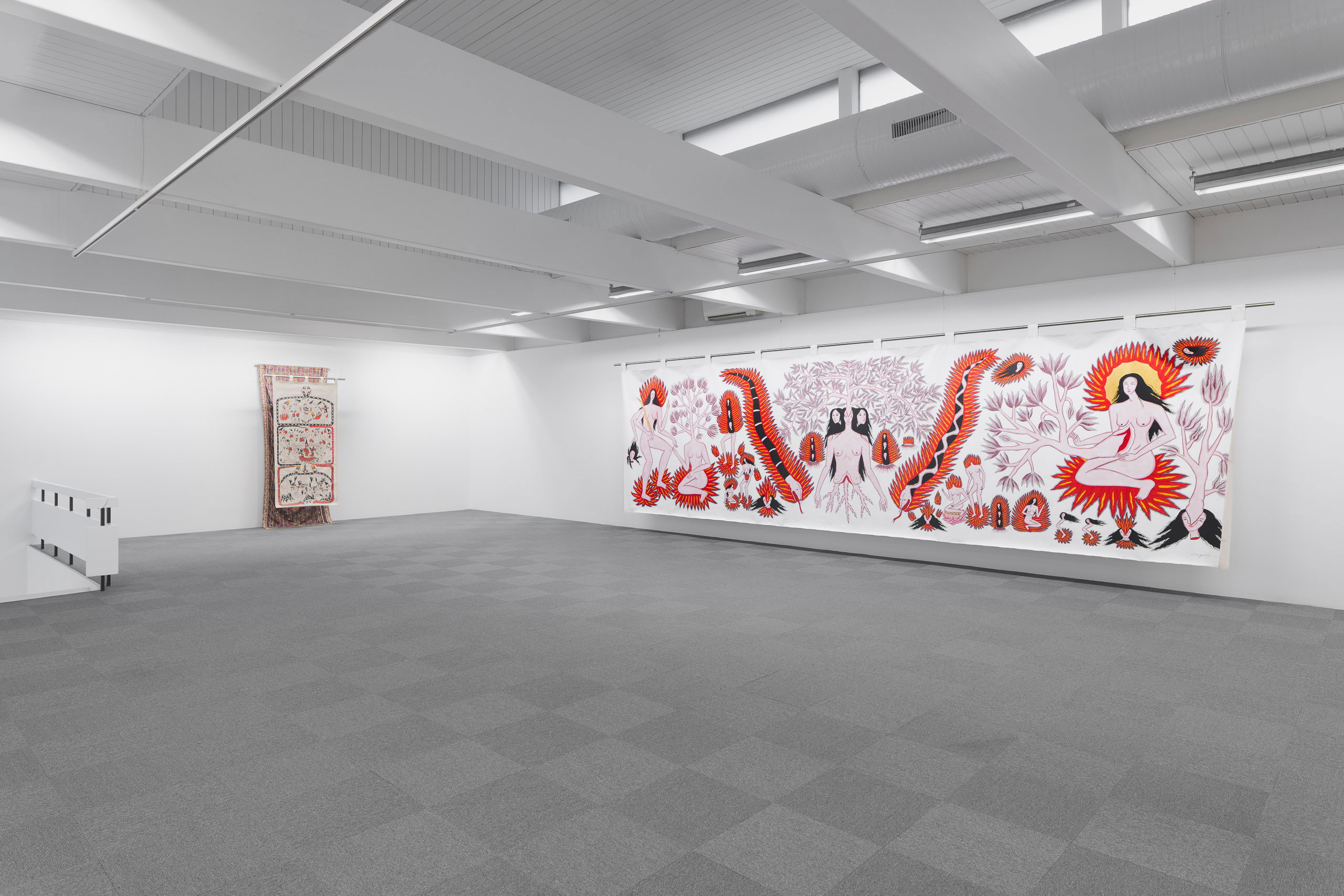
Citra Sasmita, Who Stole the Sky, installation view. Photo: Erik Sæter Jørgensen.
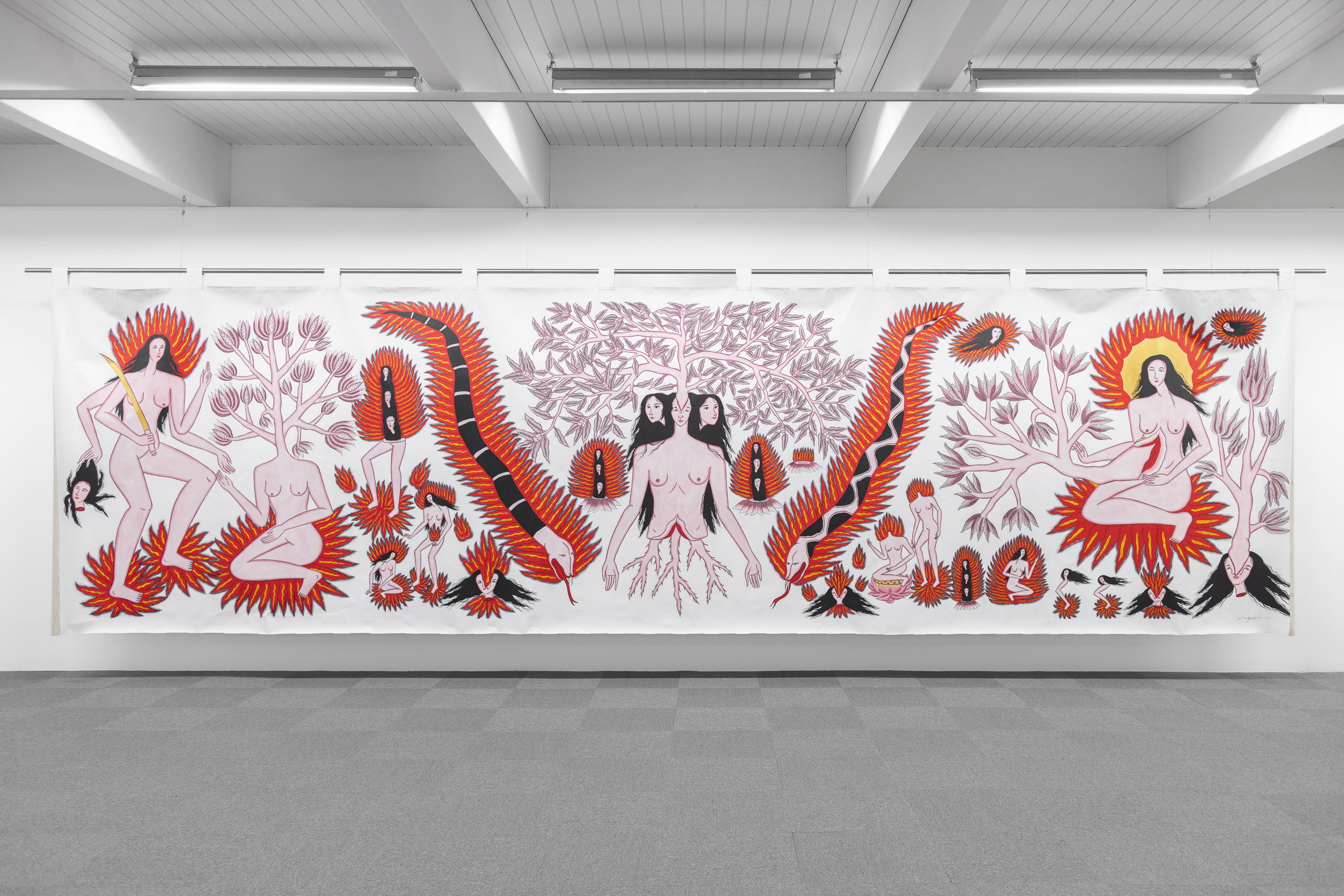
Citra Sasmita, The Rites of Creation (2025). Photo: Erik Sæter Jørgensen.
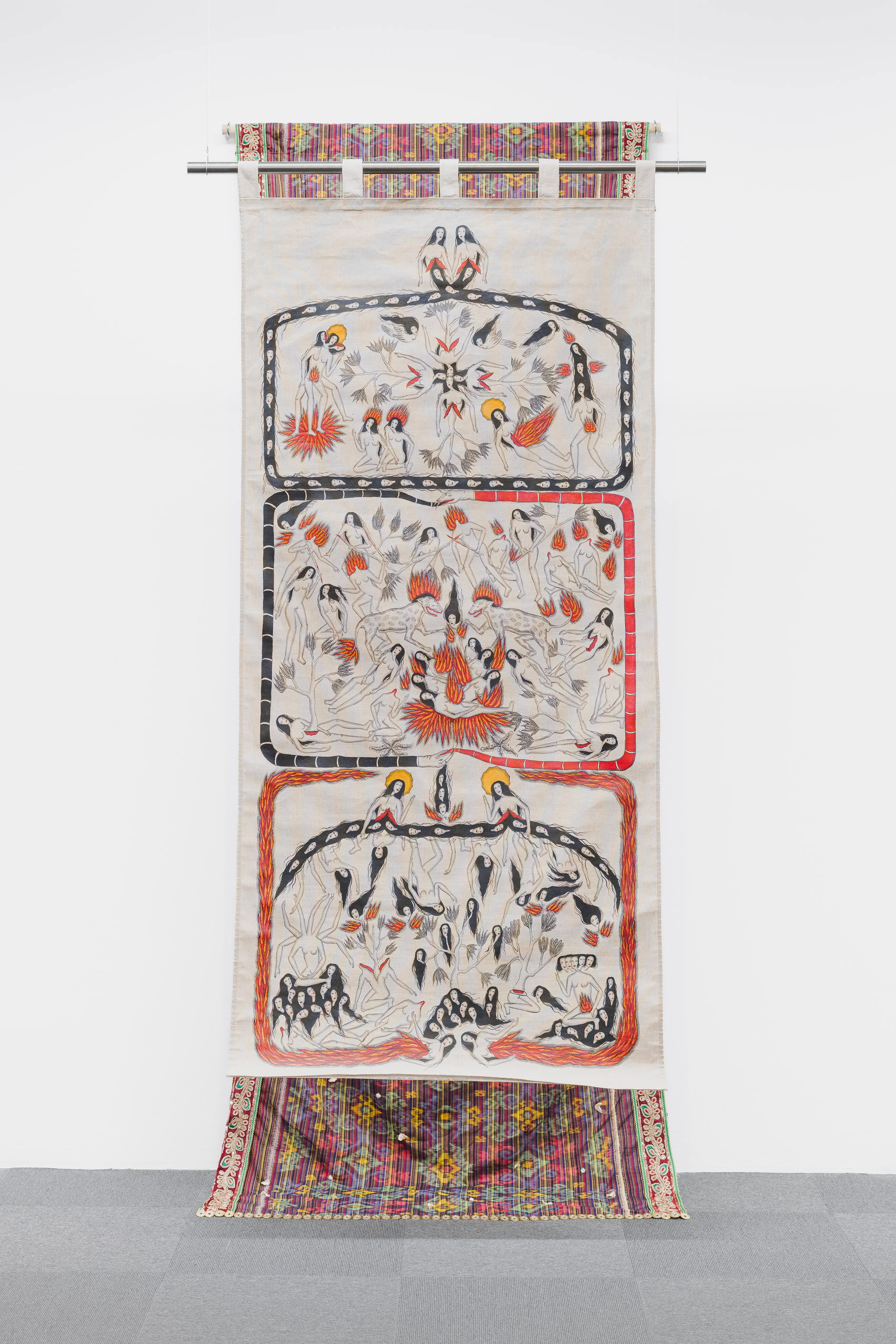
Citra Sasmita, Enigma (2022). Photo: Erik Sæter Jørgensen.
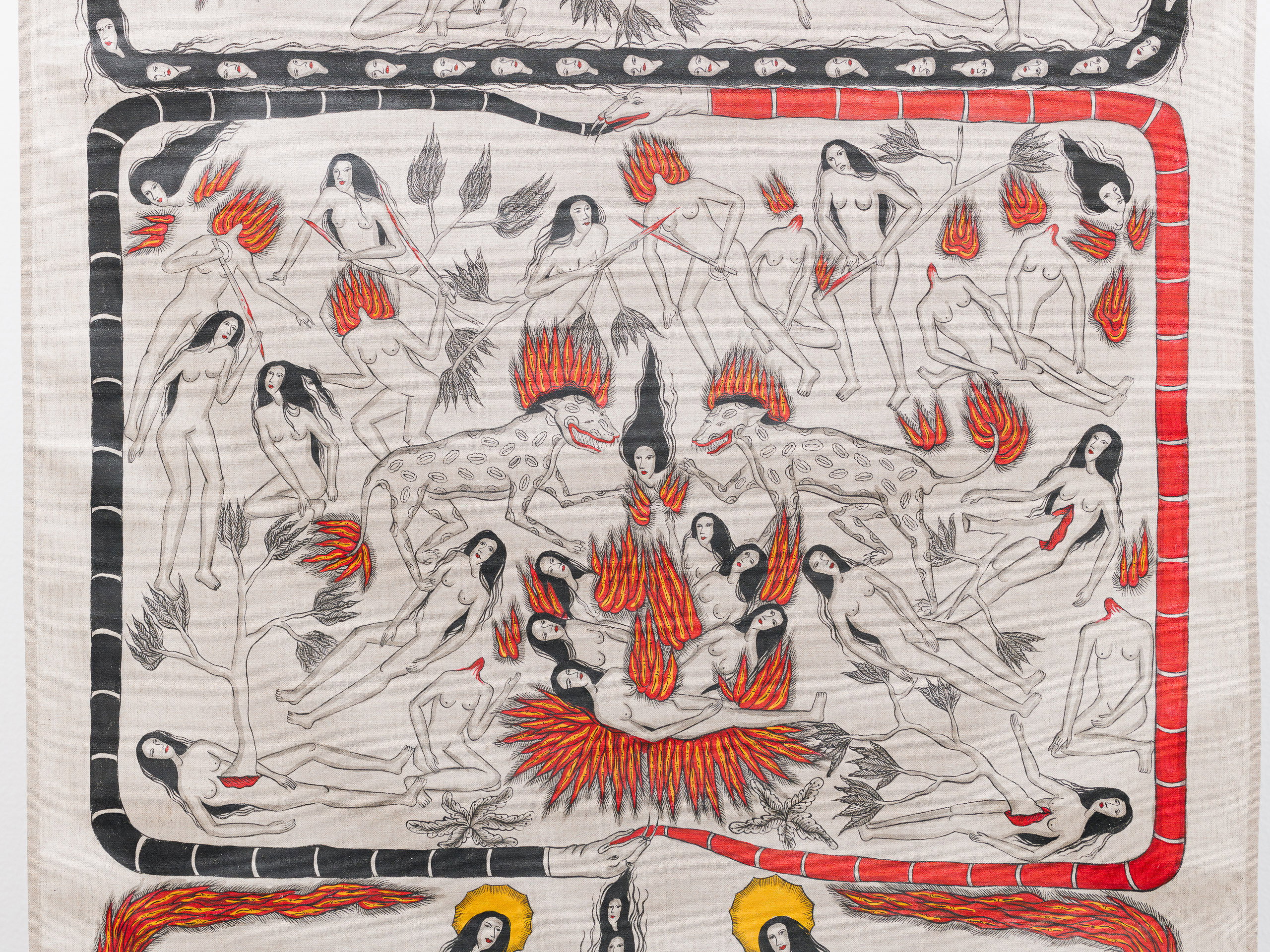
Citra Sasmita, Enigma (2022), detail. Photo: Erik Sæter Jørgensen.
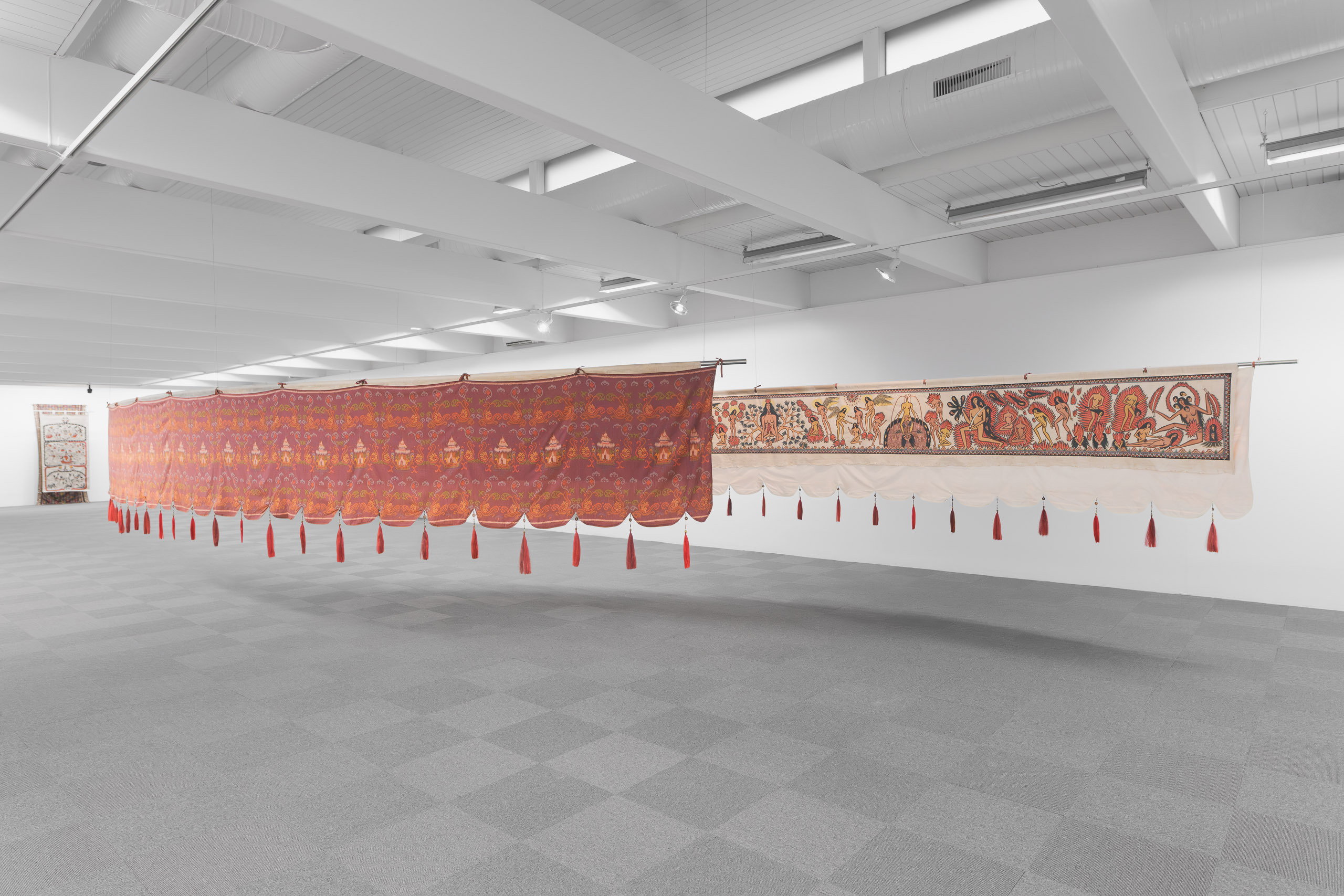
Citra Sasmita, Into Eternal Land Act One (Scroll 3) and (Scroll 4) (2025), installation view. Photo: Erik Sæter Jørgensen.
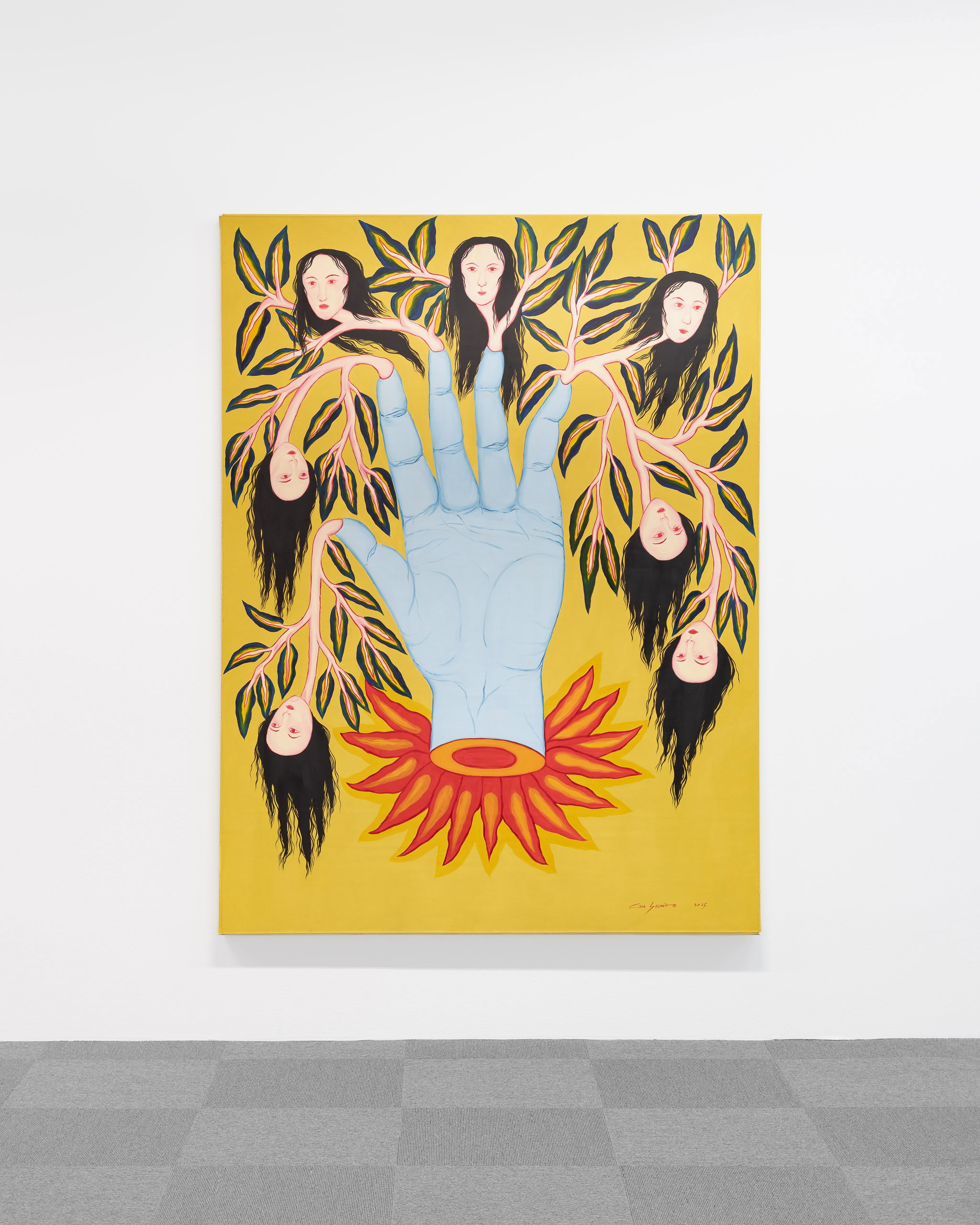
Citra Sasmita, Tree of Eden (2025). Photo: Erik Sæter Jørgensen.
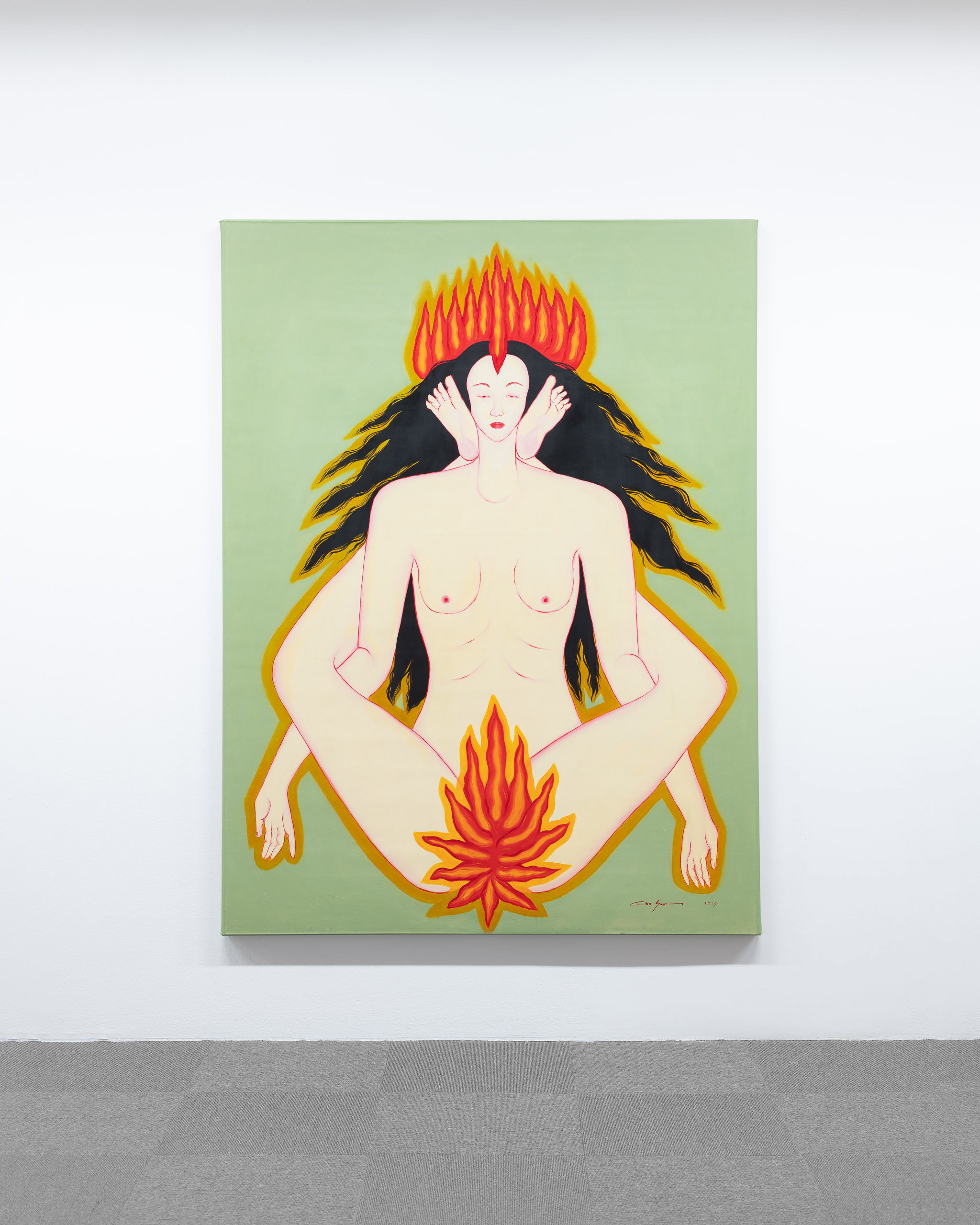
Citra Sasmita, Rise of the Mountain and Sea (2025). Photo: Erik Sæter Jørgensen.
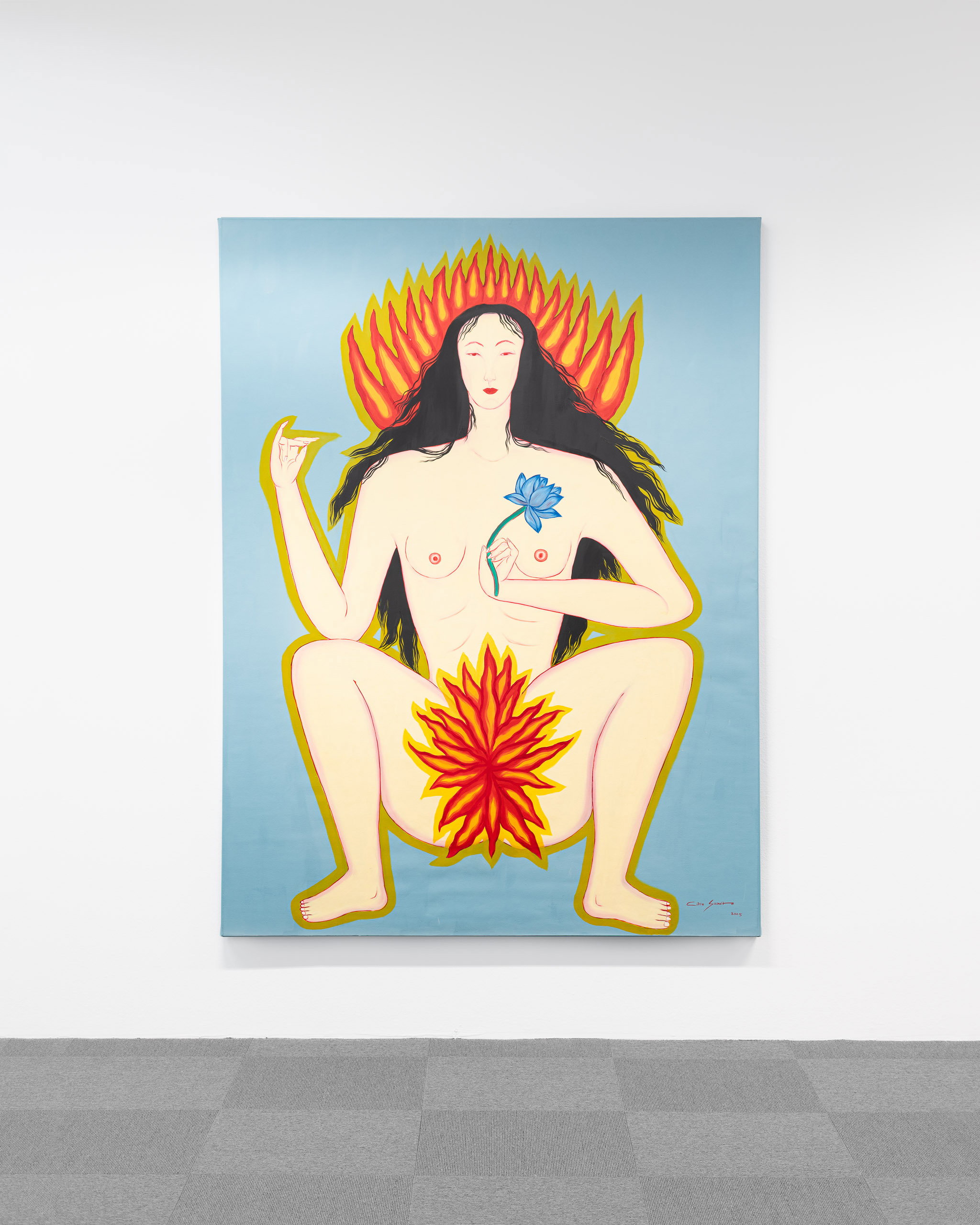
Citra Sasmita, Cosmic Rebirth (2025). Photo: Erik Sæter Jørgensen.
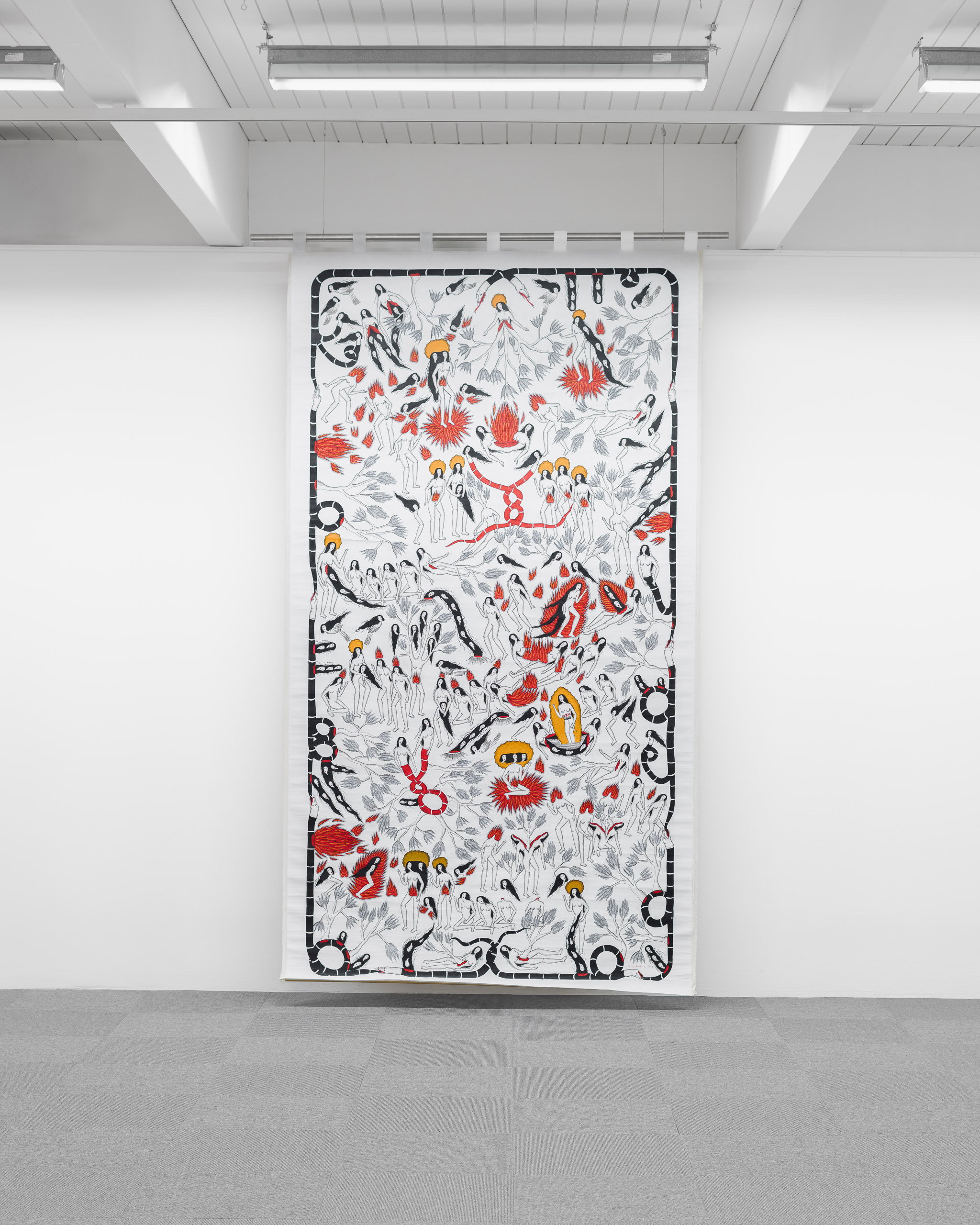
Citra Sasmita, Memorabilia from Far Away Land (2022). Photo: Erik Sæter Jørgensen.
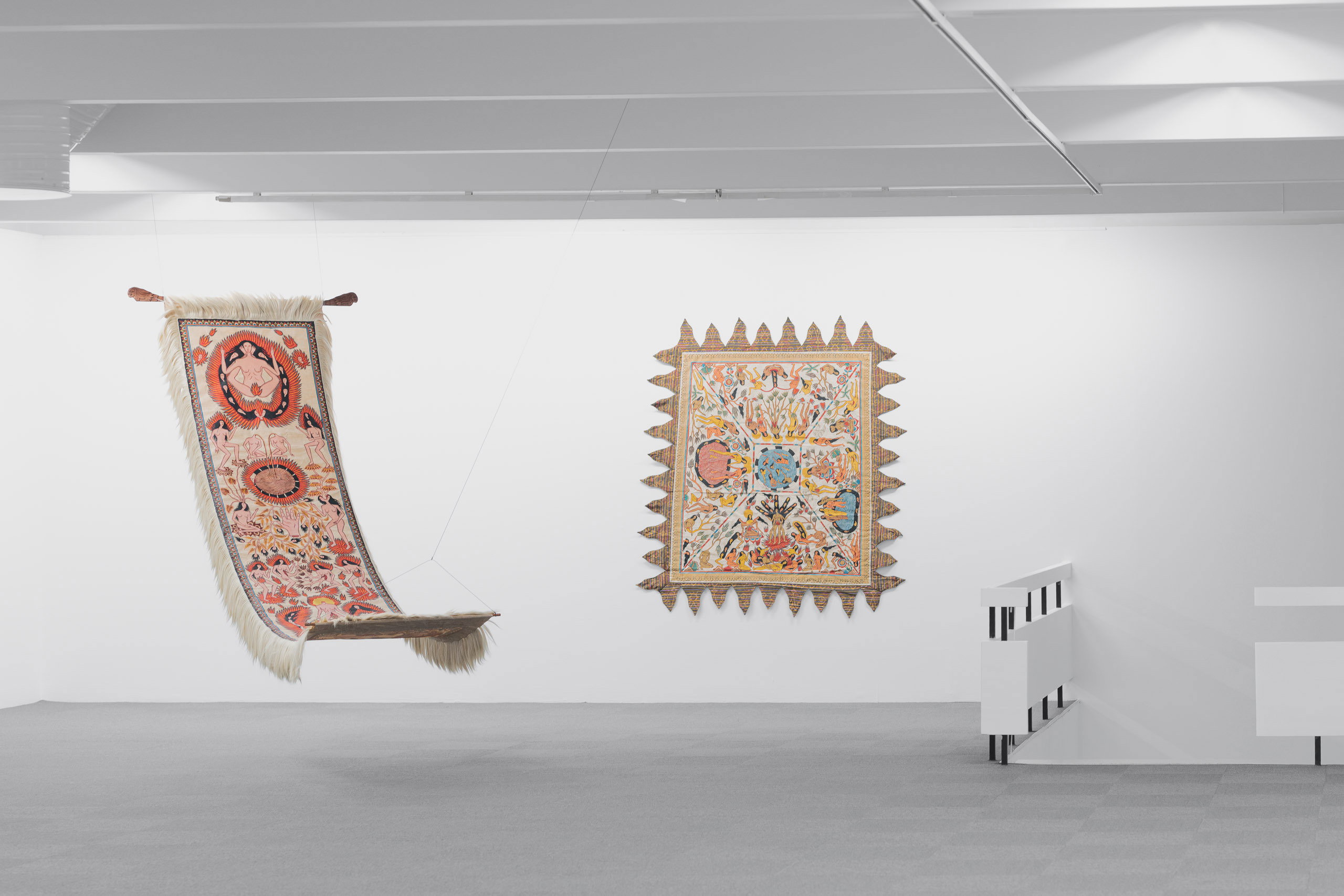
Citra Sasmita, Who Stole the Sky, installation view. Photo: Erik Sæter Jørgensen.
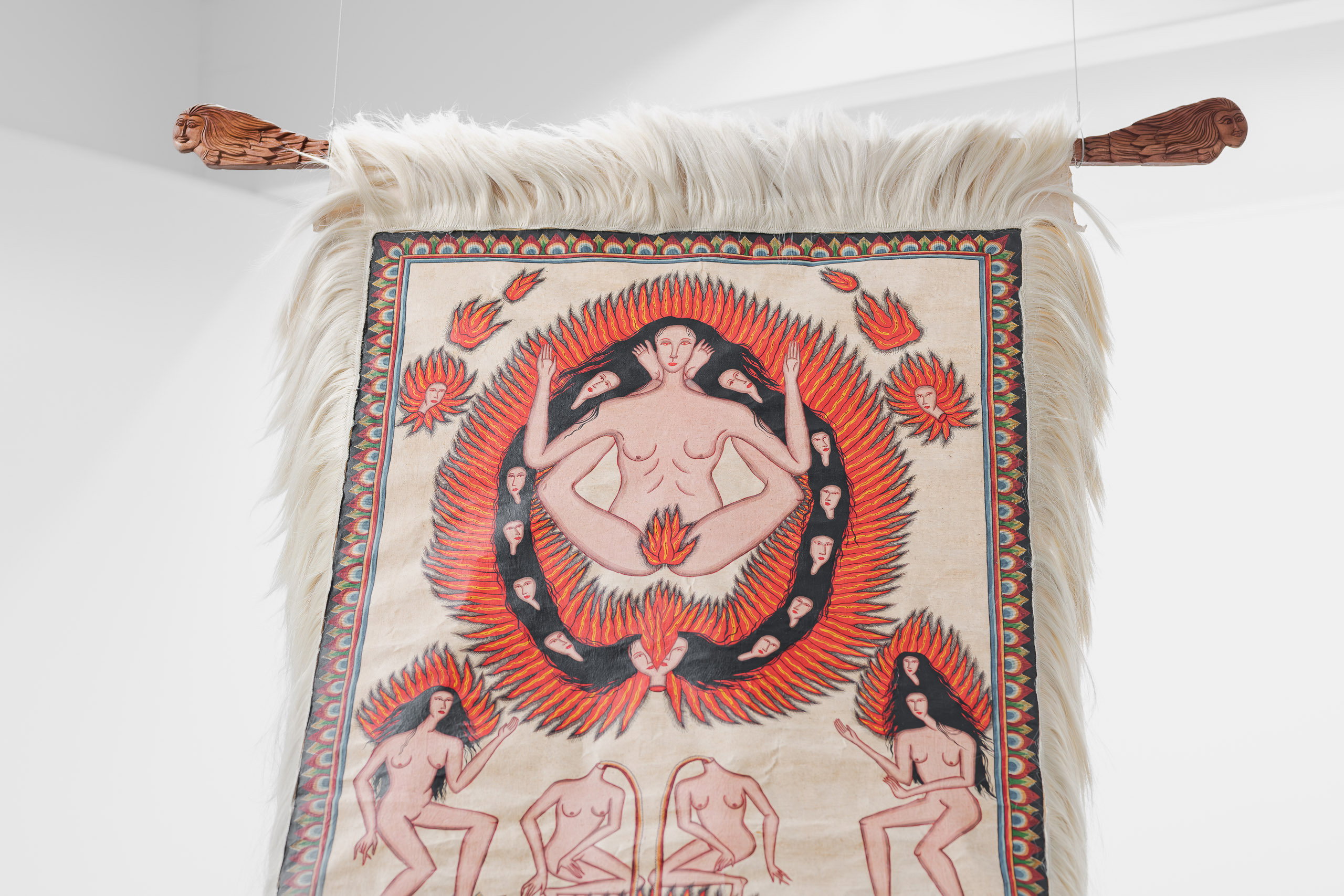
Citra Sasmita, The Rites of Revelation (2025), detail. Photo: Erik Sæter Jørgensen.
From the seventh heaven, mother calls
Through the rumble and thuds upon the earth
Her message travels through the veins of rivers and the open seas
We are thousands of miles apart,
Yet her longing is
The mountain’s held breath that breaks with the wind's roar behind the hills
The hard soil that refuses trees and shrubs, withstanding the blast
Only the wise tundra grows, rooting deep within transience
Sending dreams of green fields that melt the eyes
"Become a wanderer, my child," she hums as I unfold the long pages of my canvas
A canvas once submerged in the stony rivers of my homeland
And forged by the relentless, merciless heat of noon
From the seventh heaven, mother cries
We are women who give birth to stones, to trees, to the streams,
Our wombs are the universe that births all living things upon the world
Paint us with joy!
Mother, mountain, earth, and the river I worship
I have uprooted myself to become a walking tree
I will give the sky I promised, handed down from old, forgotten fables.
Who Stole the Sky is an exhibition by Balinese artist Citra Sasmita. She has transformed the Kunsthall’s galleries into a space for reflection and ritual. The works explore the relationships between body, mind and spirit. Sasmita highlights our deep connection to nature and to people who came before us. She asks how art can help us think about our place in a larger story – across generations, cultures, and belief systems.
The main themes in Sasmita’s exhibition include:
The relationship between humans and nature
The role of women in creation and spirituality
Creativity as an act of connection
This is a brief introduction to the exhibition. If you would like to read more, you can pick up the full exhibition text at the reception desk.
Who Stole the Sky bridges Balinese and Norse belief systems. Both cultures believe the world has many layers, and Sasmita’s artworks suggest that different realms – the visible and the invisible – can exist at the same time. The artist shows how spiritual ideas can travel across cultures and times.
Inspired by ritual, the exhibition has been designed as one complete experience. You are invited to move slowly and notice your breath, your body, and even the scent in the air. .
In Gallery 4, embroidered textile works are inspired by animal skins used in Balinese ritual sacrifice. These ceremonies bring people together to share food and mark important moments. Each fabric ‘skin’ suggests that the surface of the body is a place of change and transformation.
In Gallery 5, braided hair and bowls of ground spices hang from the ceiling. For the artist, the use of hair represents memory, instinct, and knowledge passed down from elders and ancestors, especially women. You are invited to sit and reflect on your connection to nature and those who came before you.
In the main gallery, Sasmita reimagines traditional Kamasan scroll paintings by placing women at the centre of the stories. The depicted bodies show creation, destruction, and renewal. Nature appears as part of the human body, not separate from it.
In this exhibition, Sasmita reminds us that art is part of being human – a shared experience. Who Stole the Sky invites us to reconnect to nature, with tradition, and each other.
Bio
Sasmita is a self-taught artist with a background in physics, illustration, and poetry. She has trained with traditional Kamasan painters and priestesses and is one of only two women globally to have been taught this technique, which has historically been passed down through male lineages. Her practice engages with ancient Balinese myths, rituals, and iconography while reinserting female narratives into histories from which they have long been excluded. Through this reclamation, Sasmita also confronts the enduring effects of colonialism on land, education and belief systems, and artistic production, reimagining tradition not as a static inheritance, but as an evolving and critical force for transformation.
Her work has been shown in several notable biennales and triennales such as ALOHA NŌ, Hawai’i Triennial (Hawai’i, 2025), to carry, Sharjah Biennial (United Arab Emirates, 2025); Precarious Joys, Toronto Biennial of Art (Canada, 2024); After Rain, Diriyah Contemporary Art Biennale (Saudi Arabia, 2024); Ten Thousand Suns, 24th Biennale of Sydney (Australia, 2024); Choreographies of the Impossible, 35th São Paulo Biennale (Brazil, 2023); The Open World, 3rd Thailand Biennale, Mae Fah Luang Art and Cultural Park, Chiang Rai (Thailand, 2023); Garden of Ten Seasons, Savvy Contemporary, Berlin (Germany, 2022); Kathmandu Triennale (Nepal, 2021-2022); ARTJOG MMXXII, Time To Wonder, Jogja National Museum, Yogyakarta (Indonesia, 2021); and the Biennale Yogyakarta (Indonesia, 2019). Recent solo exhibitions include Into Eternal Land, Barbican The Curve, (London, 2025); Atlas of Curiosity, Yeo Workshop (Singapore, 2023); Ode To The Sun, Yeo Workshop (Singapore, 2020); and Tales of Nowhere, Museum MACAN, Jakarta (Indonesia, 2020).
The exhibition is curated by Kristina Ketola Bore and Heather Jones.
The exhibition is generously supported by Fritt Ord.
Kunsthall Stavanger would like to thank Yeo Workshop.