Digital Project: How to Approach Art by Artists with Learning Disabilities
Project
June 2025 – December 2026
This website uses cookies
By continuing to use this website, you agree to our Privacy Policy, Terms of Use, and Disclaimer.
This website uses cookies
By continuing to use this website, you agree to our Privacy Policy, Terms of Use, and Disclaimer.
Analytics
Google Analytics uses a set of cookies to collect information and report site usage statistics without personally identifying individual visitors to Google. ‘_ga’, the main cookie used by Google Analytics, enables a service to distinguish one visitor from another and lasts for 2 years. Any site that implements Google Analytics, including Google services, uses the ‘_ga’ cookie. Each ‘_ga’ cookie is unique to the specific property, so it cannot be used to track a given user or browser across unrelated websites.
Google services also use ‘NID’ and ‘ENID’ cookies on Google Search, and ‘VISITOR_INFO1_LIVE’ and ‘YEC’ cookies on YouTube, for analytics.
Managing Cookies
Most browsers allow you to manage how cookies are set and used as you’re browsing, and to clear cookies and browsing data. Also, your browser may have settings letting you manage cookies on a site-by-site basis. For example, Google Chrome’s settings at chrome://settings/cookies allow you to delete existing cookies, allow or block all cookies, and set cookie preferences for websites. Google Chrome also offers Incognito mode, which deletes your browsing history and clears cookies on your device after you close your Incognito windows.
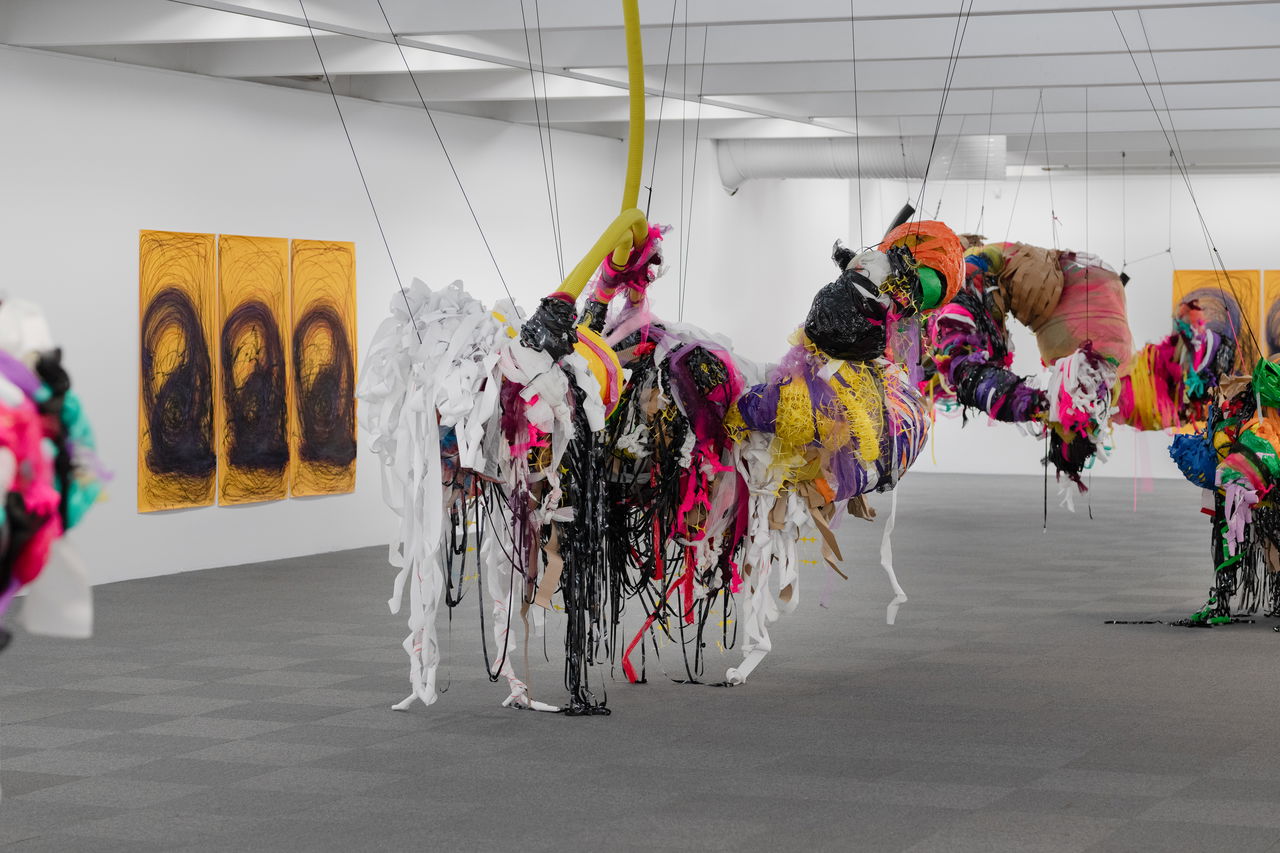
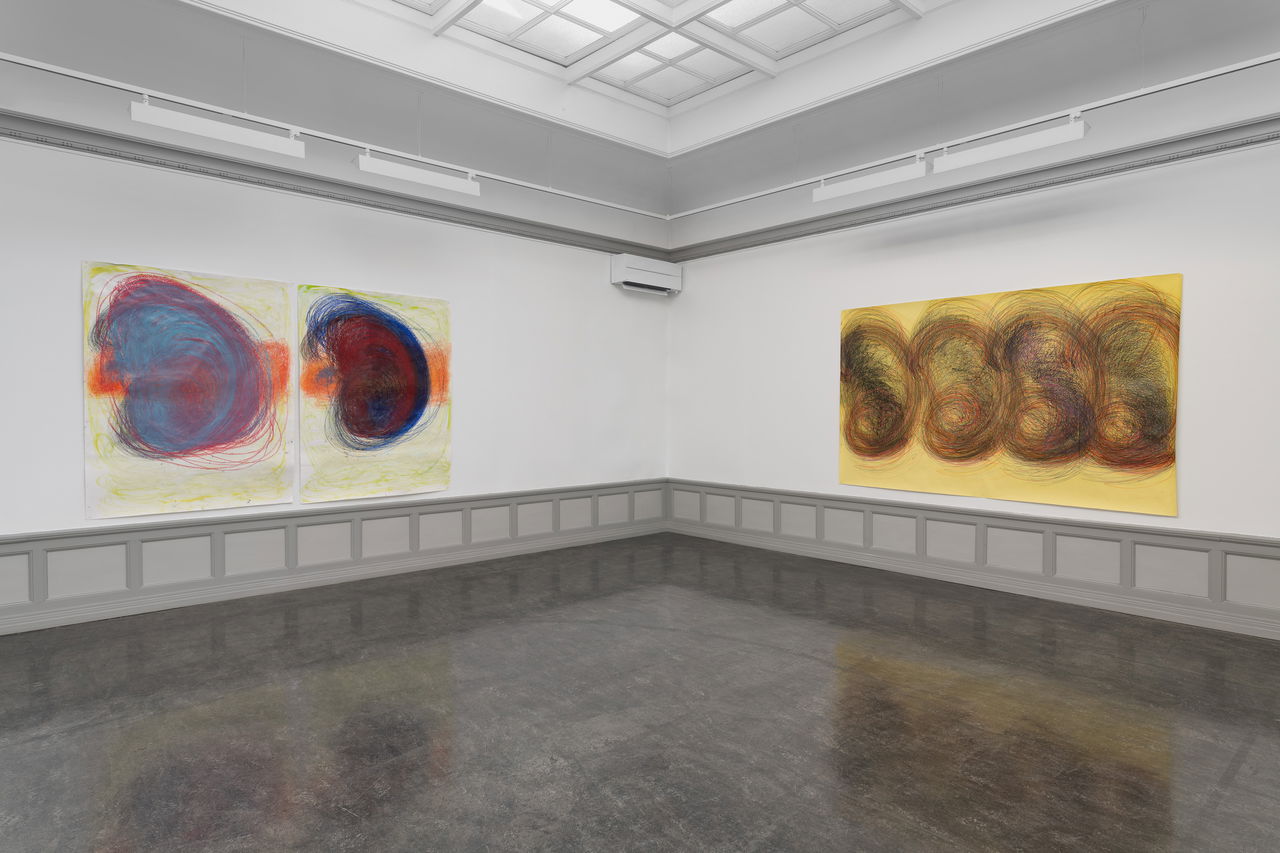
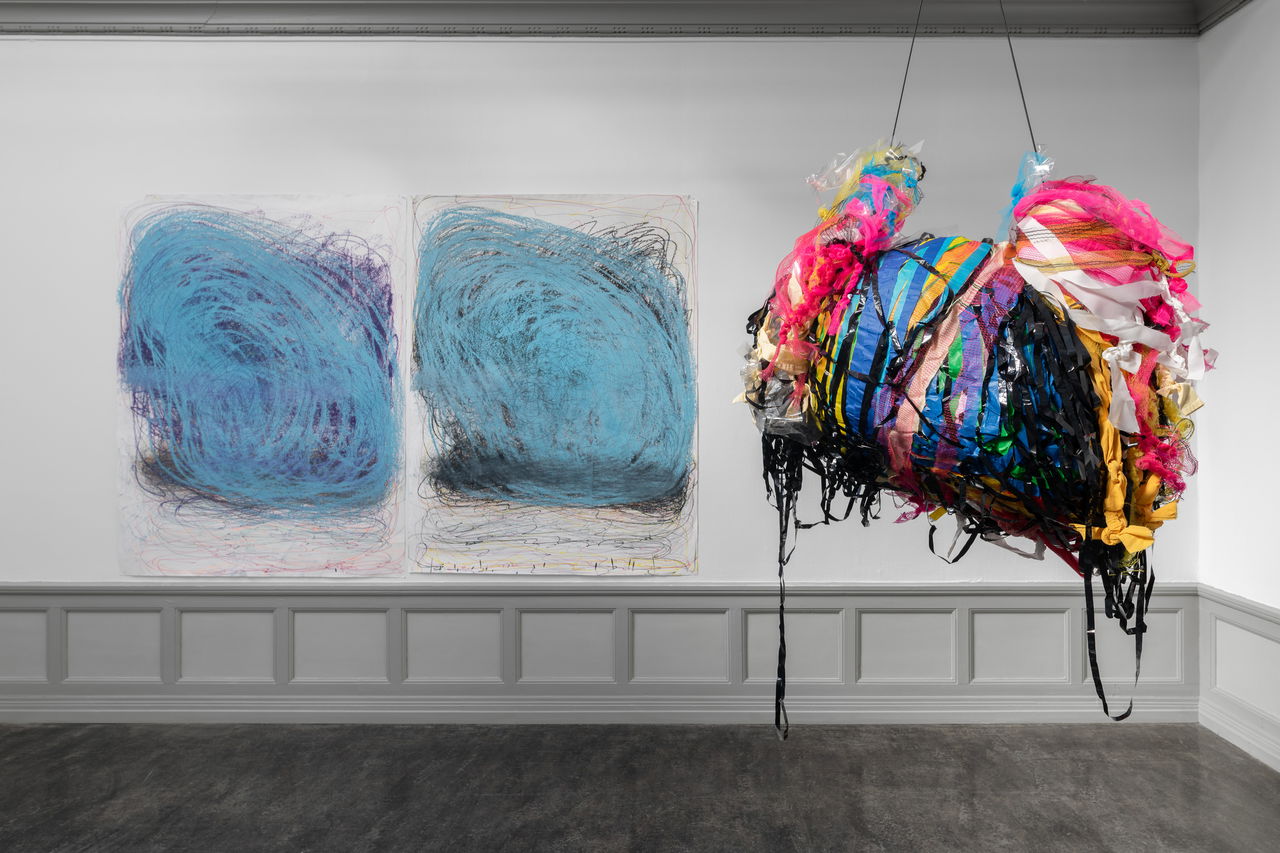
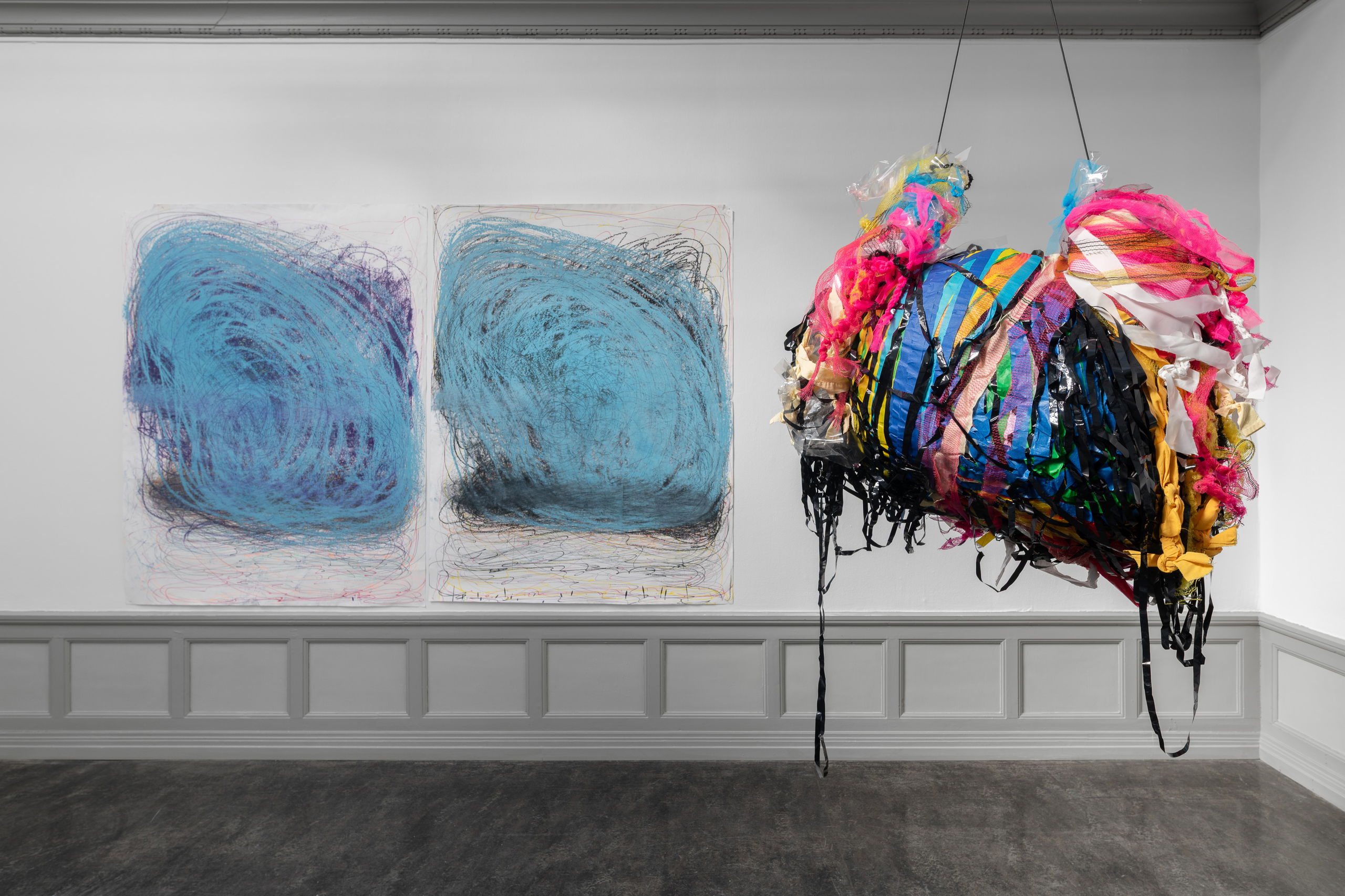
Nnena Kalu, Creations of Care (2025), installation view. Photo: Erik Sæter Jørgensen / Kunsthall Stavanger.
Kunsthall Stavanger presented Creations of Care, the first solo exhibition of British artist Nnena Kalu outside the UK. In the year of the exhibition, Kalu was nominated for the prestigious Turner Prize and was later announced as the 2025 winner. We warmly congratulate Nnena Kalu on this remarkable achievement and are proud to have presented her work at Kunsthall Stavanger.
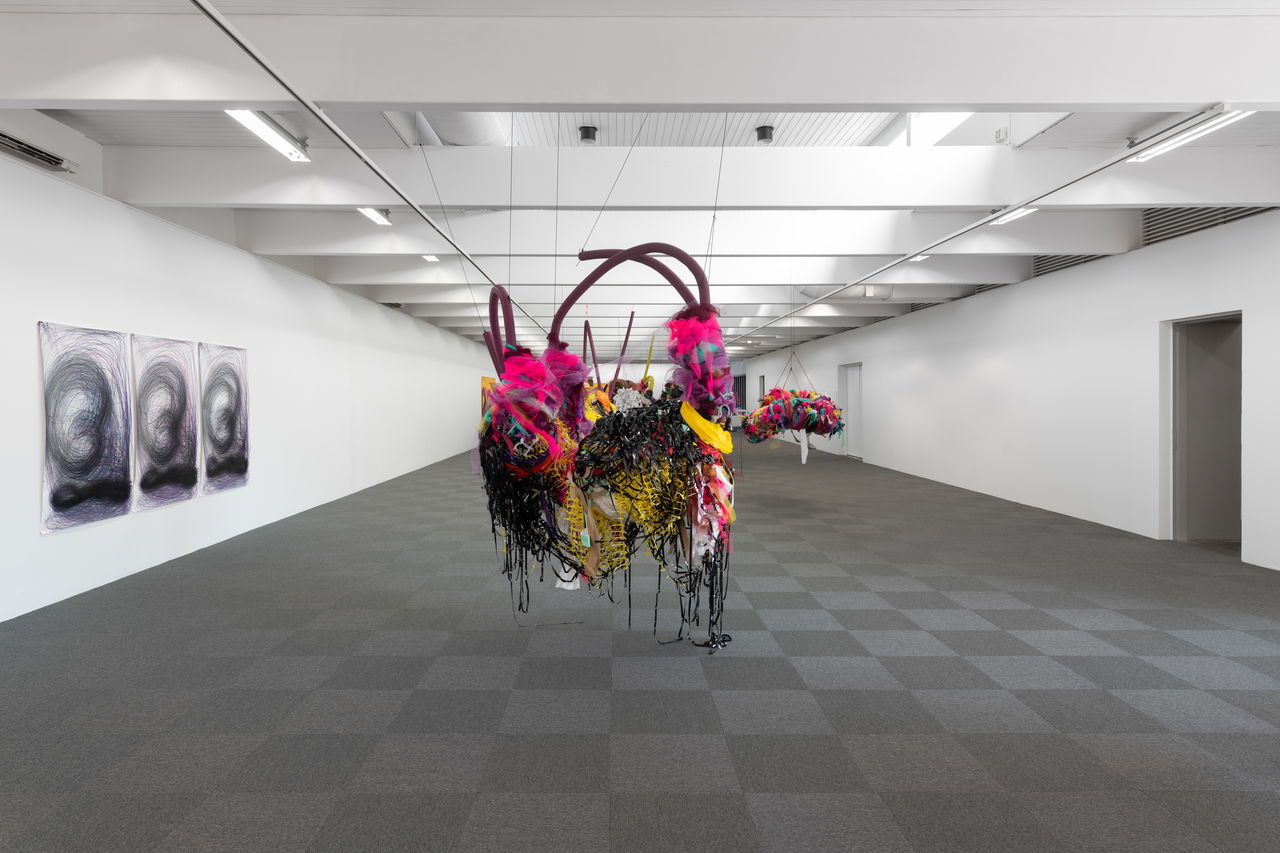
Kalu’s work took the form of large-scale sculptures and series of drawings. At Kunsthall Stavanger, Kalu took over all galleries in her largest exhibition to date. Here, she presented a new series of sculptures created specifically for the space and finished on-site. Her practice is a dynamic interplay of expressive gestures, explosive energy, and meticulous care. Through their immediacy and approachability, these works invited audiences to engage, encouraging personal interpretations and introspection. As viewers, we were generously offered a window through which to contemplate the world from her
Kunsthall Stavanger presented Creations of Care, the first solo exhibition of British artist Nnena Kalu outside the UK. In the year of the exhibition, Kalu was nominated for the prestigious Turner Prize and was later announced as the 2025 winner. We warmly congratulate Nnena Kalu on this remarkable achievement and are proud to have presented her work at Kunsthall Stavanger.
Kalu’s work took the form of large-scale sculptures and series of drawings. At Kunsthall Stavanger, Kalu took over all galleries in her largest exhibition to date. Here, she presented a new series of sculptures created specifically for the space and finished on-site. Her practice is a dynamic interplay of expressive gestures, explosive energy, and meticulous care. Through their immediacy and approachability, these works invited audiences to engage, encouraging personal interpretations and introspection. As viewers, we were generously offered a window through which to contemplate the world from her unique perspective.
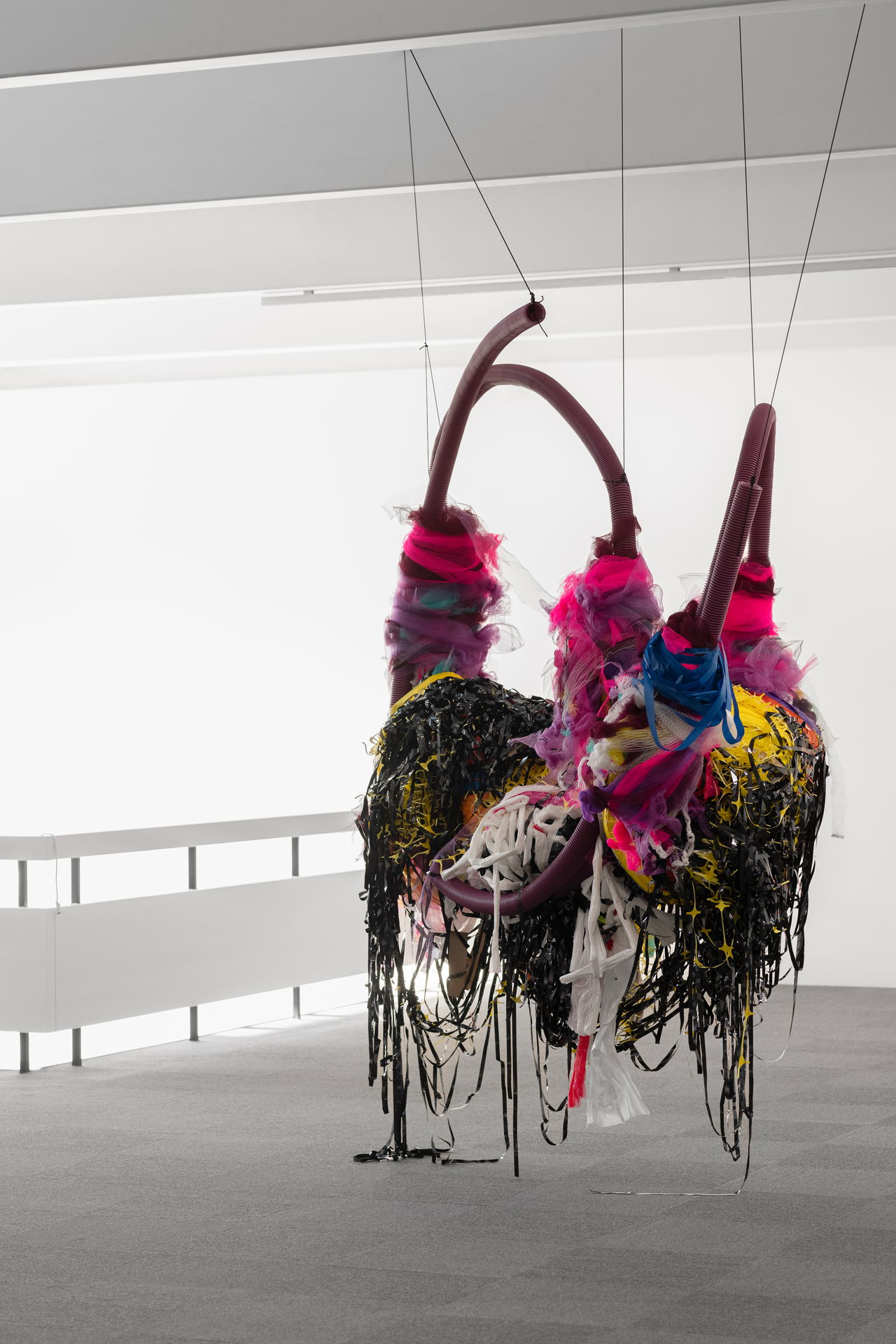
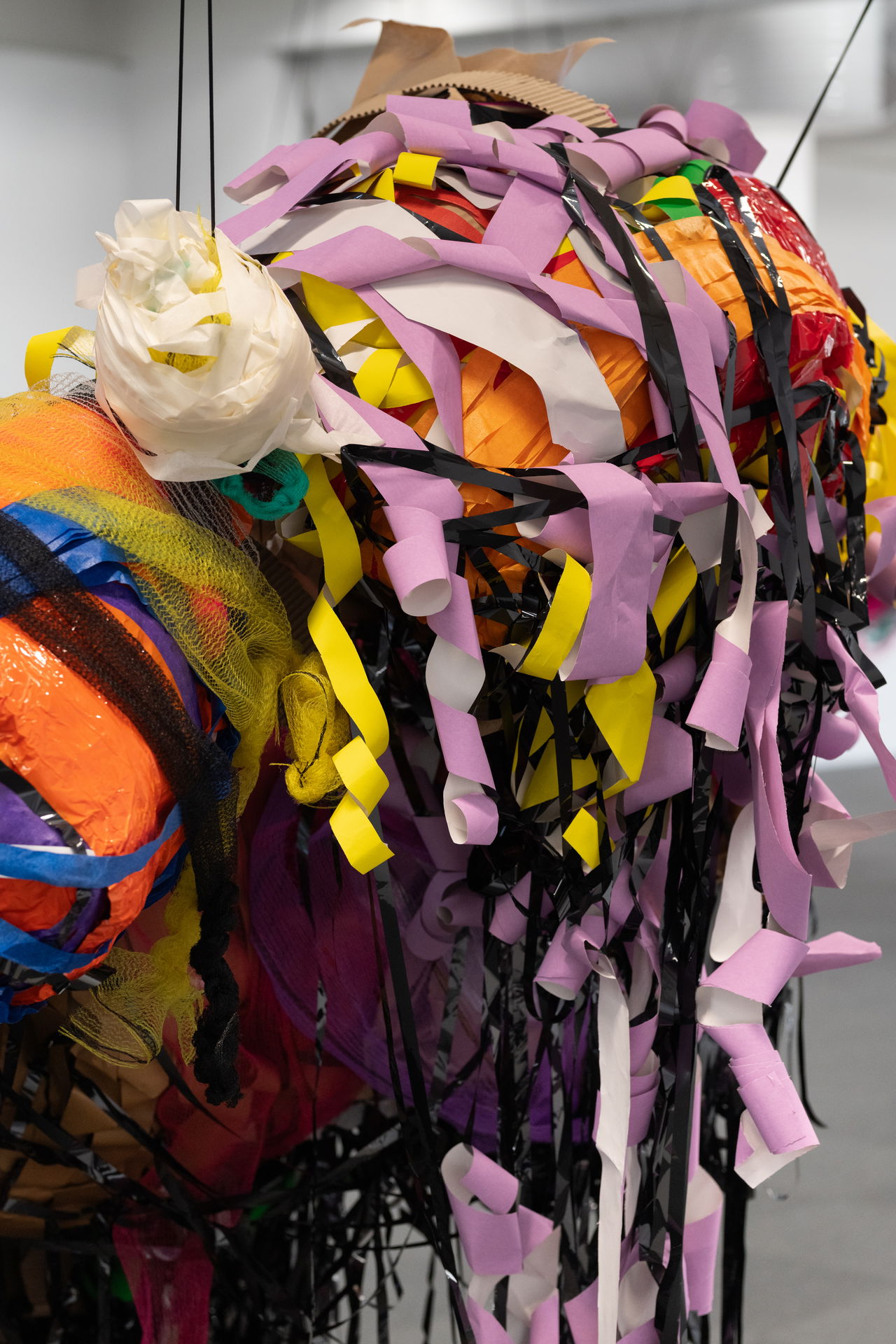
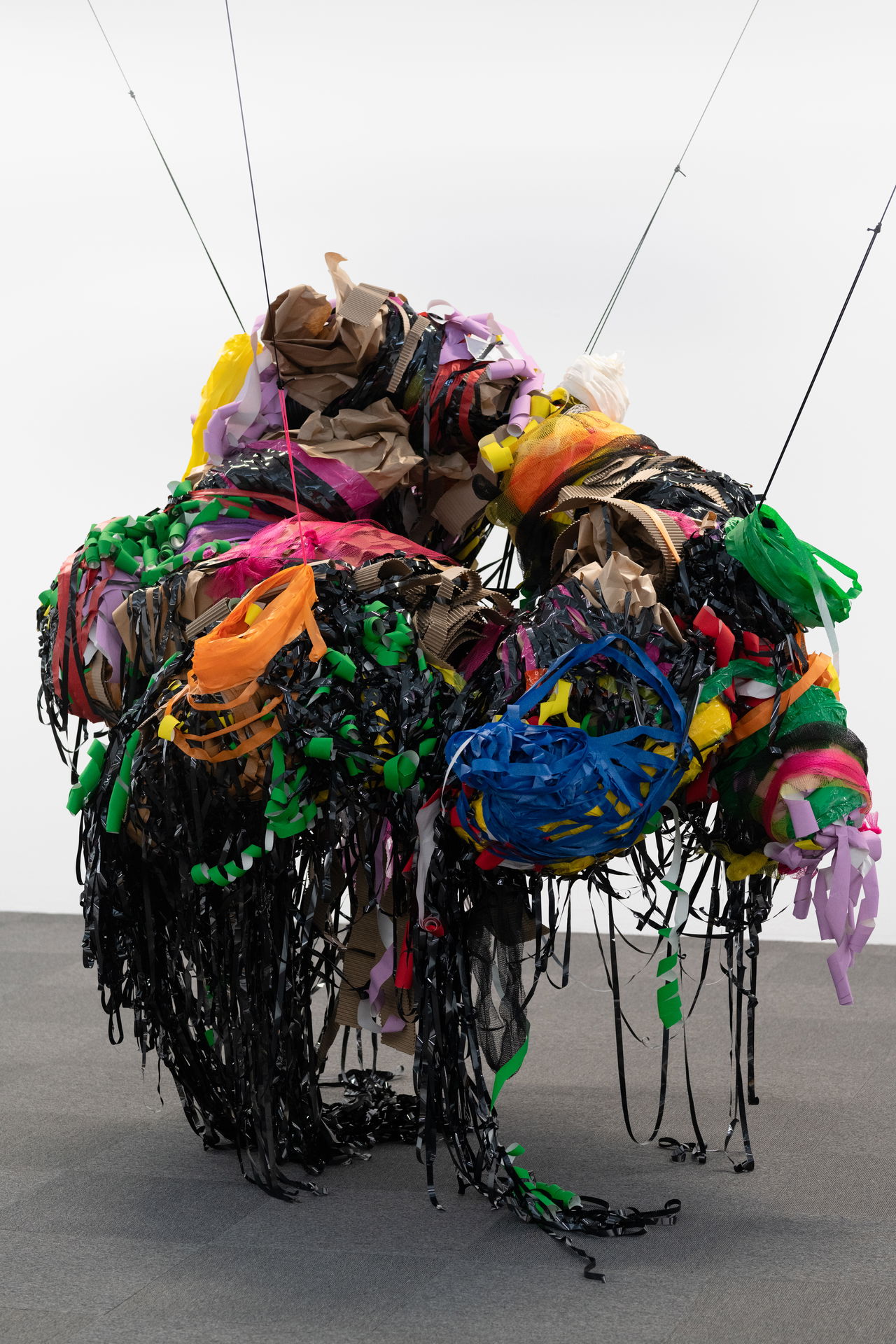
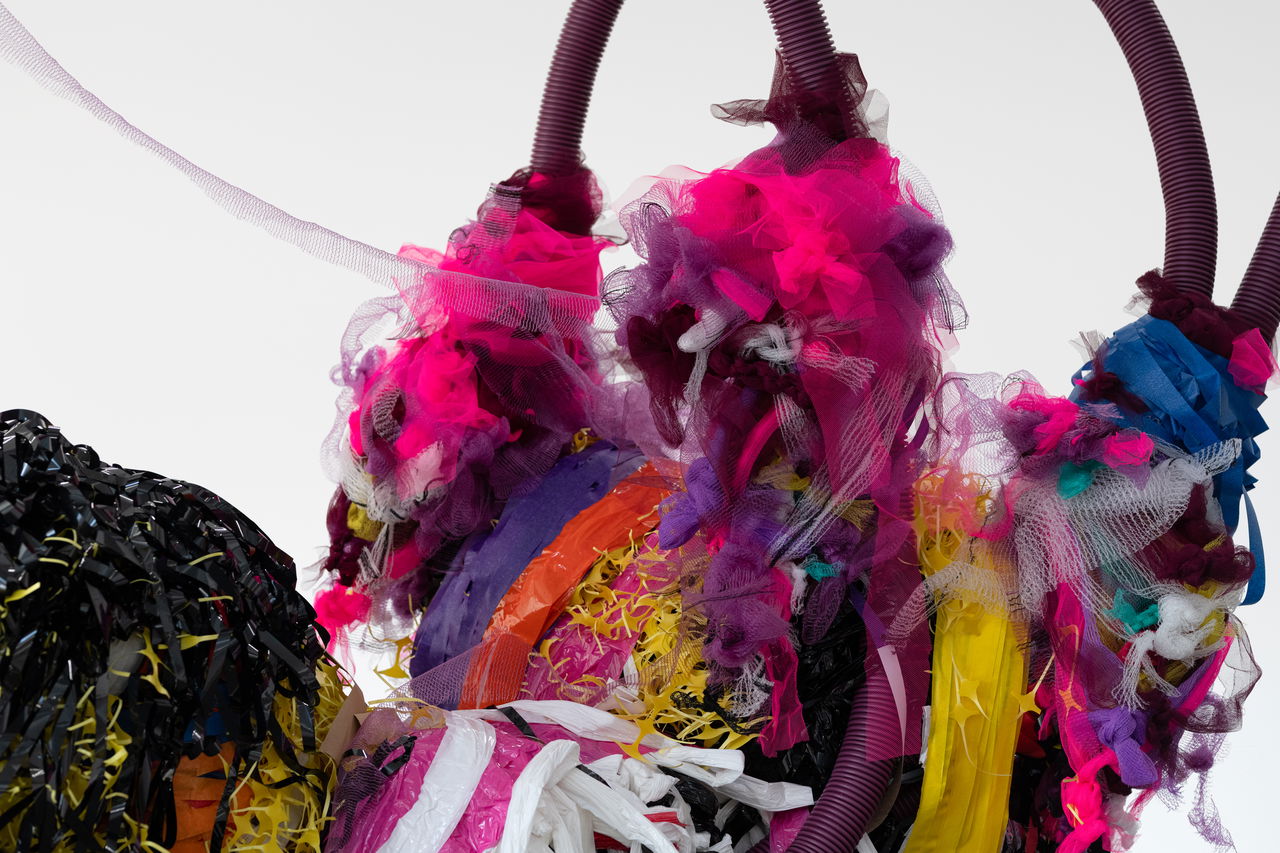
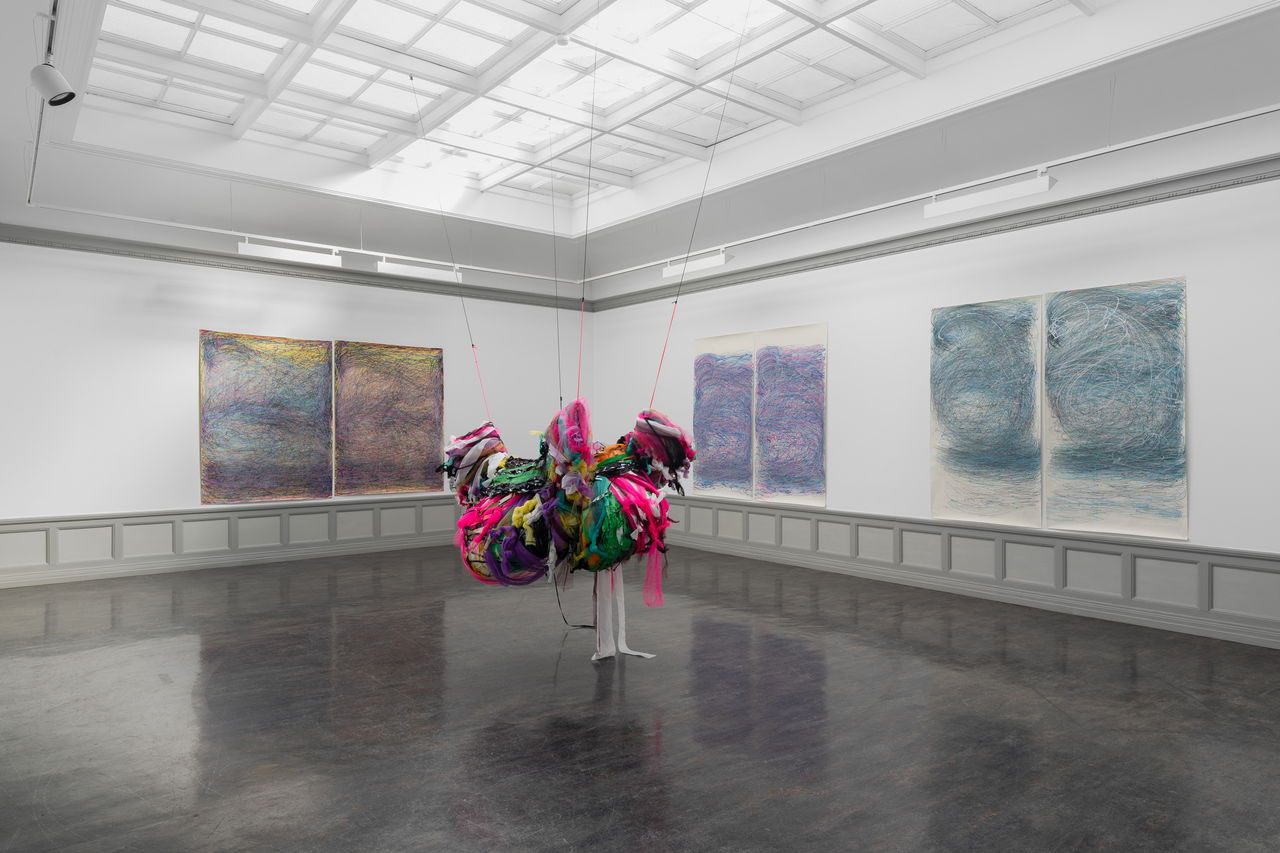
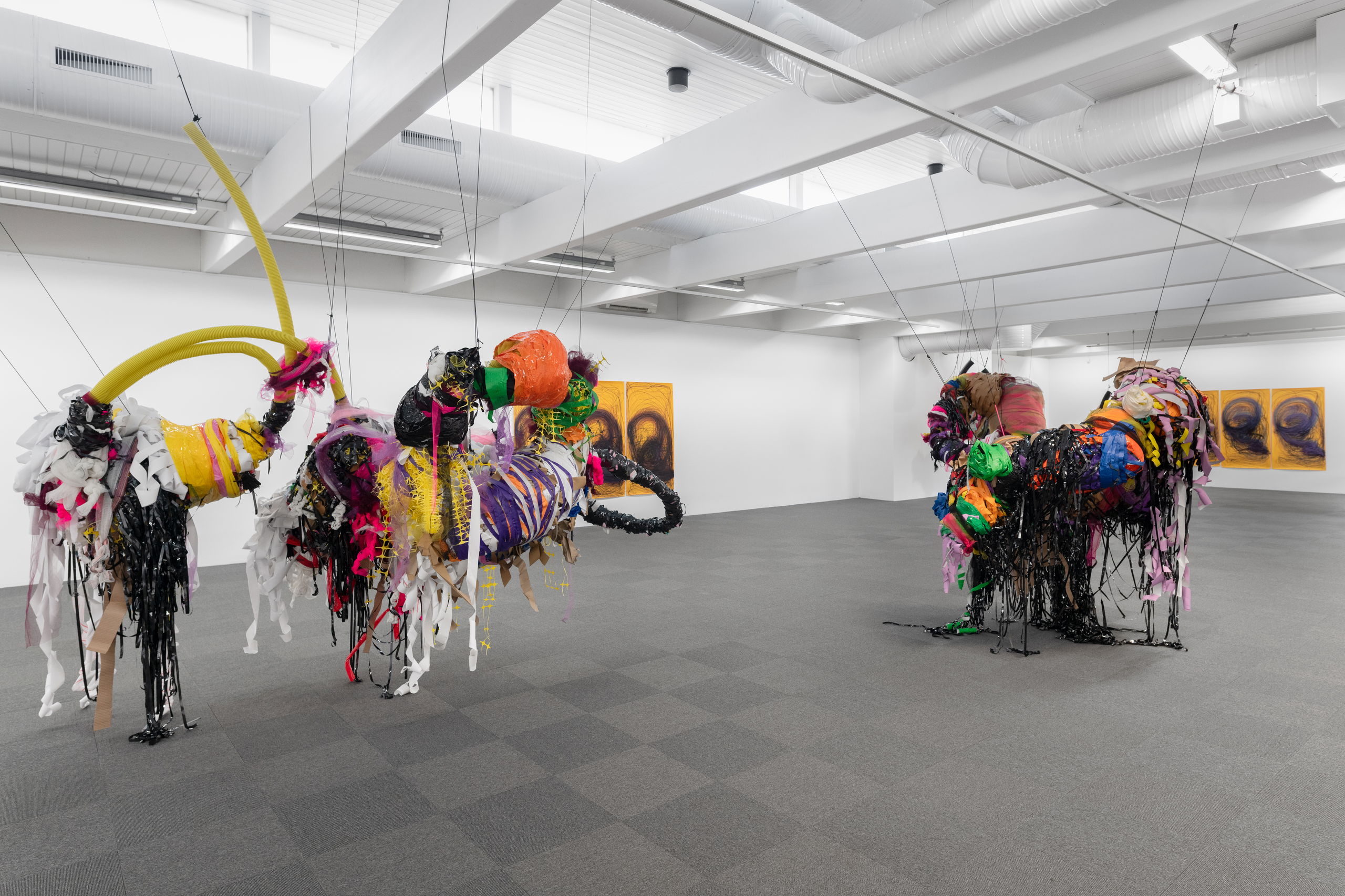
In the Kunsthall’s main gallery, a striking series of sculptures filled the space. These large-scale installations resembled enormous, pregnant cocoons, brimming with colour and enveloping forms—hallmarks of Kalu’s practice. Upon closer examination, layers of textiles revealed themselves, some tightly wrapped, others pleated together with precision. Her signature neon pinks and yellows dominated the sculptures, interspersed with a vibrant mix of other colours.
Kalu’s sculpting process begins with urgent, frenzied wrapping: fast, intense, instinctive—before transitioning into a more deliberate, measured approach. In the early stages, artist and material seem to merge as she rapidly builds, models, and makes intuitive decisions on form and colour. As the initial burst of energy subsides, she shifts to careful consideration of how the materials work together. Her sculptures incorporate everyday, often discarded materials such as Blockbuster videotapes, textiles, fabrics, tape, and drainage pipes. While their affordability plays a role in their selection, every material is deliberately chosen and their abundance aligns with Kalu’s energetic and prolific process.
The act of binding, pleating, and layering speaks to Kalu’s process of creation: a balance of urgency and care, of instinct and intention. Her sculptures appeared to nestle, nurture, and protect. Kalu’s creations are a loving manipulation of materials; through the binding and pleating of fibres, she brought and held them together. The concept of care sit at the heart of her practice, seen in the careful cultivation of something until it is ready to enter the world. This notion may have resonated with the experience of motherhood—the devotion poured into nurturing an idea, a concept, or a life.
Kalu’s works are visually distinct, yet they are not created in order to achieve a specific aesthetic. Rather, they were physical responses; intuitive, immediate, deeply personal. Each work captured a moment, a state of being, an imprint of time in the artist’s studio. The momentary nature of her work was particularly evident in her drawings, displayed in the smaller galleries.
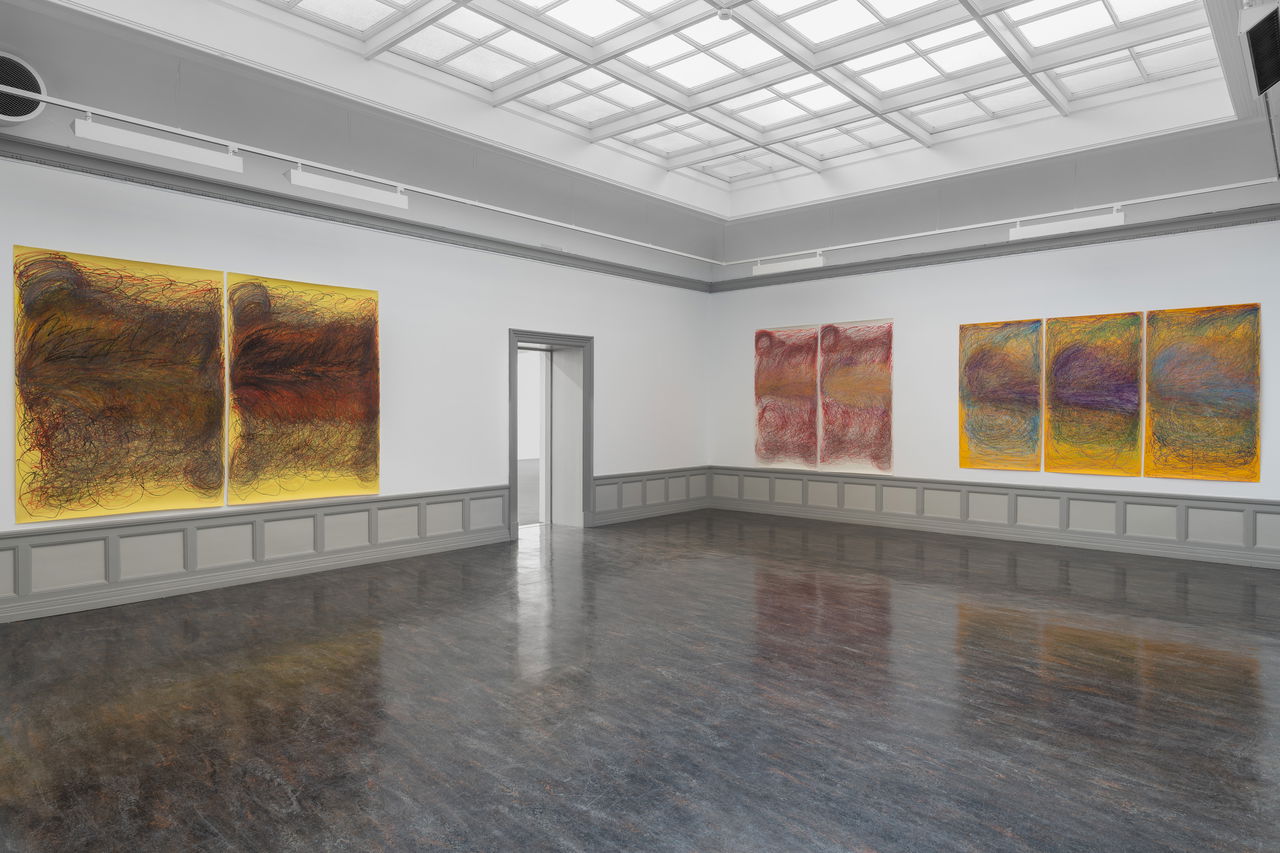
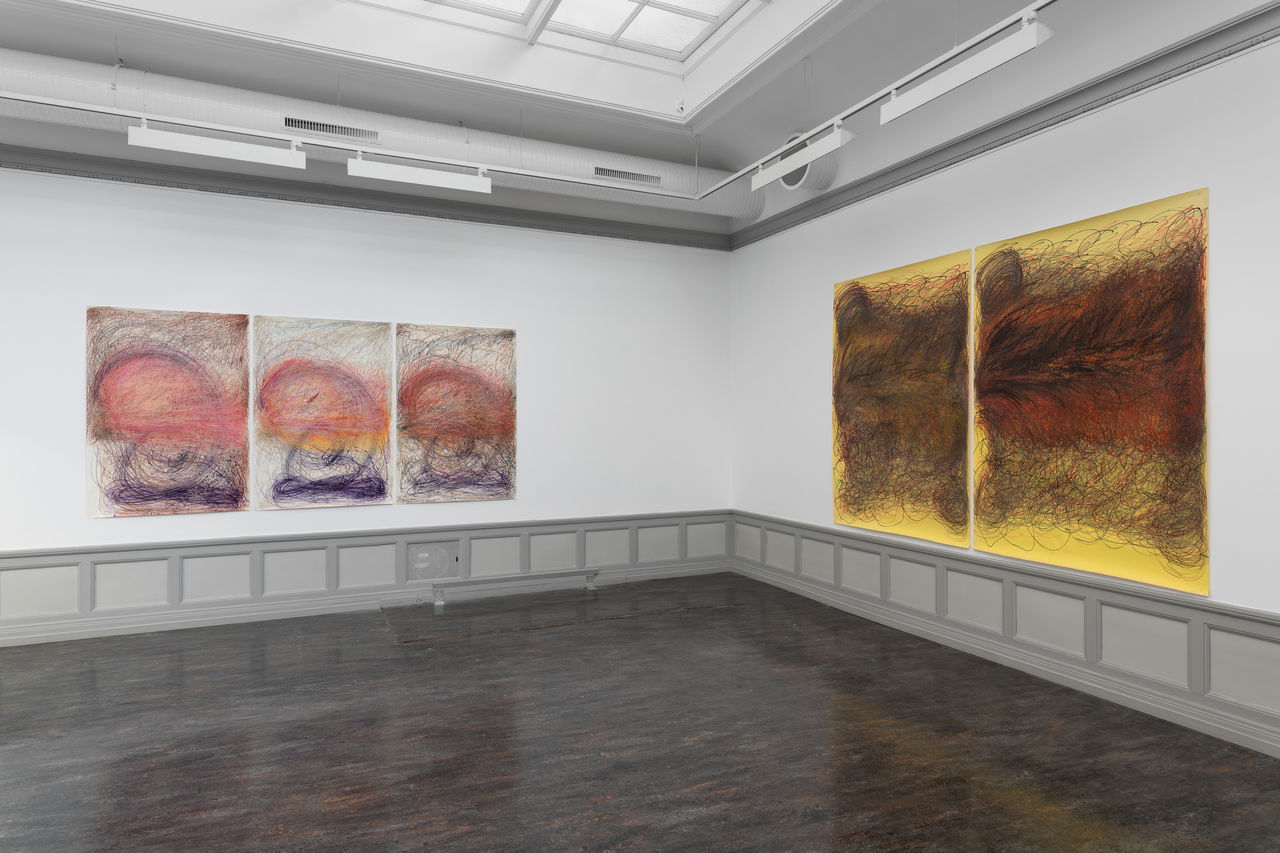
The sophistication of her drawings was defined by expressive, rhythmic lines. Kalu often drew with her eyes closed, responding mainly to the sound of the pen, pencil, graphite, or oil pastel meeting the paper. Here, an almost internal rhythm drove her. These works spoke to presence, each mark existing as a record of the moment in which it was created.
Her drawings, often created in sequences of two, three, or more panels, may have appeared identical at first glance, but each contained subtle differences. Kalu exhausted a form through repetition, then moved on, rarely returning to a previous motif. Repetitive motion, often associated with autism, was a defining element of her sculptures and drawings. For viewers, this repetition could be meditative, inducing a sense of calm and focus. Some works evoked the warmth and security of the womb, while others exploded outward, reaching beyond their confines. The layering of colours and forms invited us to experience the work through sensation rather than analysis.
Kalu’s practice is inextricably linked to her unique perspective and experience. As a Black woman with limited verbal abilities and a learning disability, her work offered visitors an opportunity to see the world through a different lens. For 25 years, she had been supported by ActionSpace, a UK-based organisation that provides learning disabled artists with the resources, opportunities, and studio assistance needed to develop their work. However, Kalu’s works do more than offer a window into her world, they challenge us to reconsider how we navigated our own. They pose questions about perception and movement, and act as an invitation to reflect on how we moved through life and how we care for ourselves and others. The beauty of these works lay in their generosity and in the invitation to participate that they extend to us.
When encountering Kalu’s work, viewers are often met with a feeling of joy. Her sculptures exude freedom of movement and an electric interplay of colour. They are inherently related to her body, shaped by the reach of her arms and her movement around them. At Kunsthall Stavanger, Kalu’s sculptures were suspended from the ceiling, mirroring the way she constructed them in her studio. This setup allowed her to work from all angles, inside and out, her arms continuously enveloping the form. As viewers, we too were invited to move around and within the sculptures, to experience the embrace and care infused into them.
Kalu’s works offer a rare generosity: a space for participation, interpretation, and immersion. In experiencing Kalu’s art, we did not just witness a moment of creation; we stepped into it, bringing our own presence and our own moment into conversation with hers.
Curated by Kristina Ketola Bore.
The exhibition was generously supported by Arts and Culture Norway, Bergesenstiftelsen, and The Norwegian Association of Art Societies.
Kunsthall Stavanger would like to thank ActionSpace for the collaboration.
Nnena Kalu (b. 1966, Glasgow) lives and works in London, UK. Her practice is rooted in two-dimensional works, sculptures and installations. For 25 years, she has been supported by ActionSpace, a UK-based organisation that provides learning disabled artists the resources, opportunities and studio assistance to develop their work. Kalu has grown her practice at ActionSpace’s studio at Studio Voltaire and is an important member of both Studio Voltaire and ActionSpace’s artistic communities.
Kalu's work was included in the 2024 edition of Manifesta 15. Other recent exhibitions include Conversations, Walker Art Gallery, Liverpool, UK (2024); Arcadia Missa, London (2024); Infinite Drawing, Deptford X, London, UK (2022); Studio Voltaire Elsewhere, London, UK (2020); Wrapping, Humber Street Gallery, East Yorkshire, UK (2019); Allied Editions, House of Voltaire, Frieze, London, UK (2022); To all the Kings who have no Crowns, Carl Freedman Gallery, Margate, UK (2022). Kalu’s work is included in the collections of Tate (UK) and the Arts Council (UK). Kalu is the winner of the Mosaic Art Award 2025.
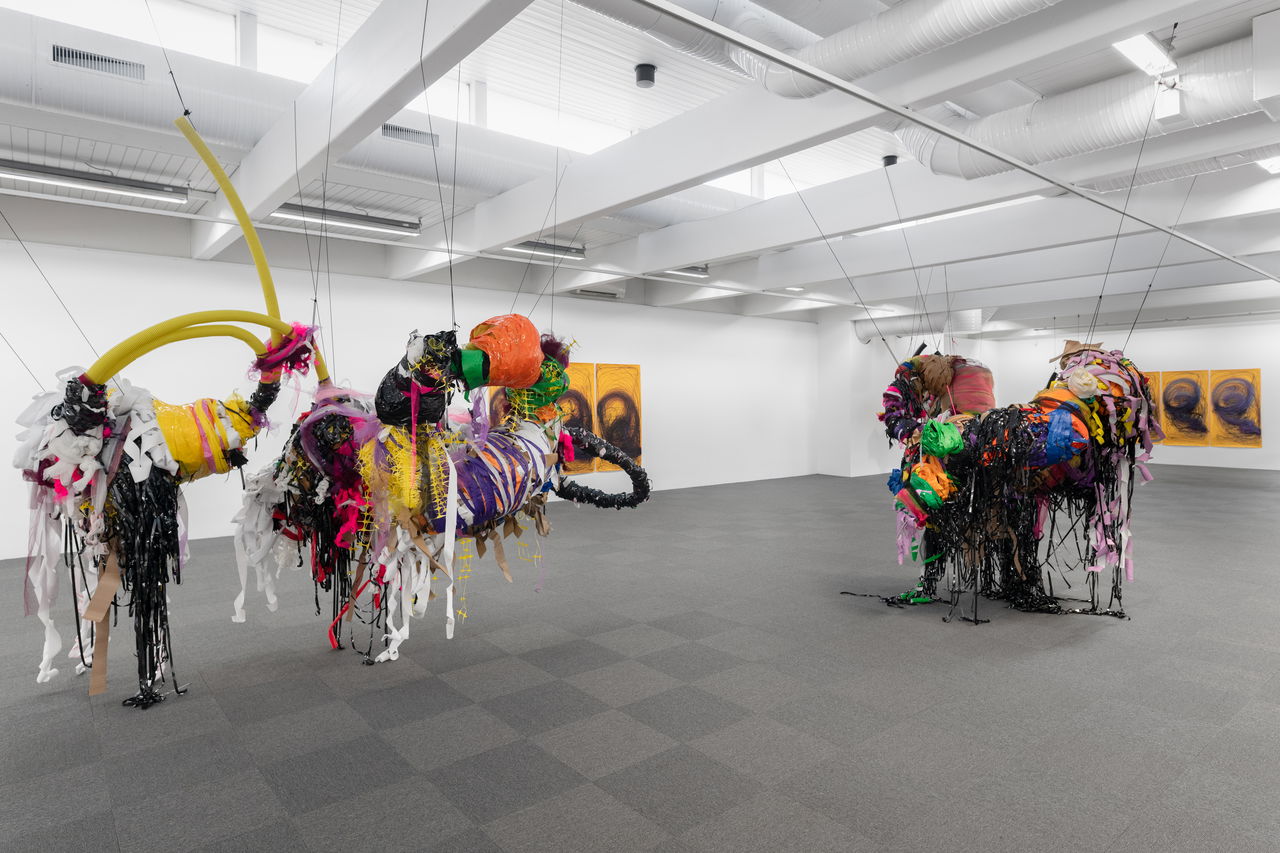
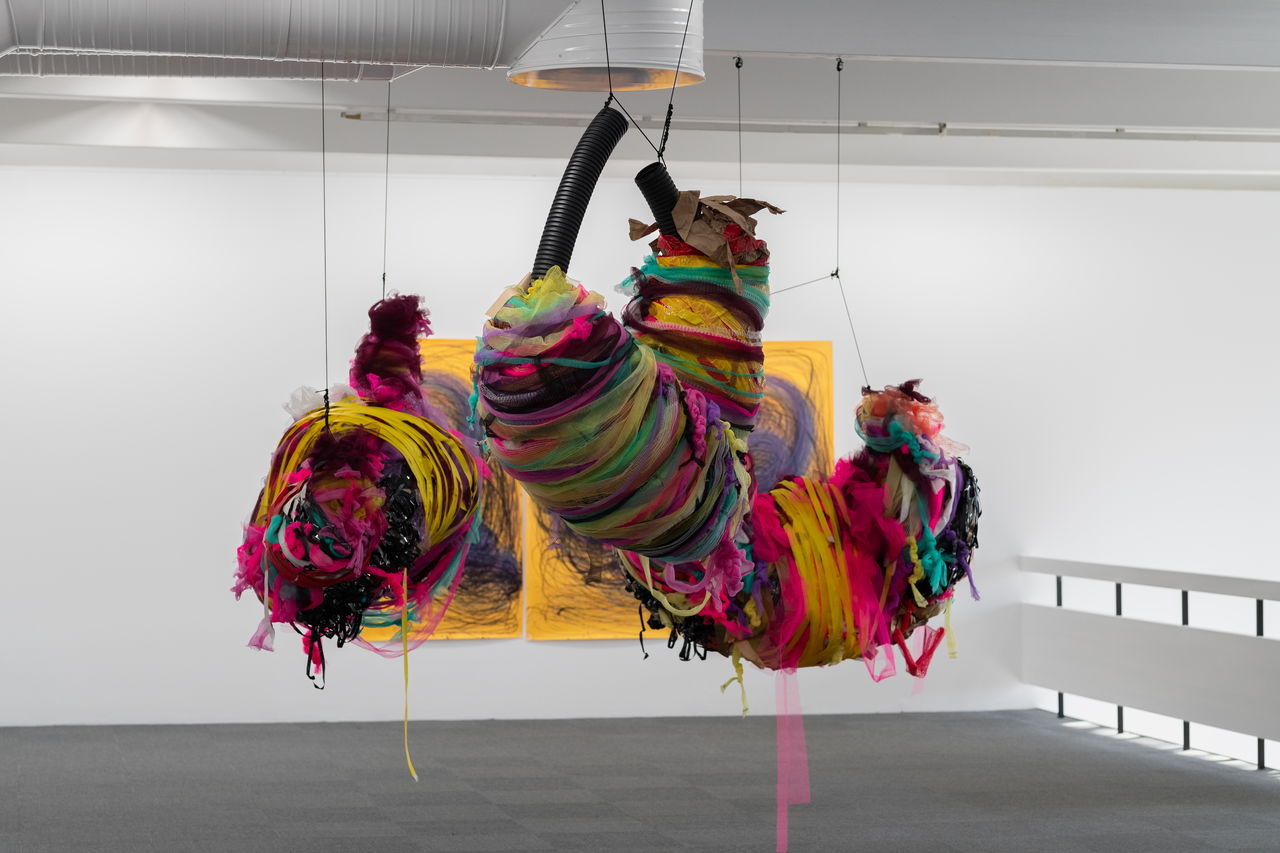
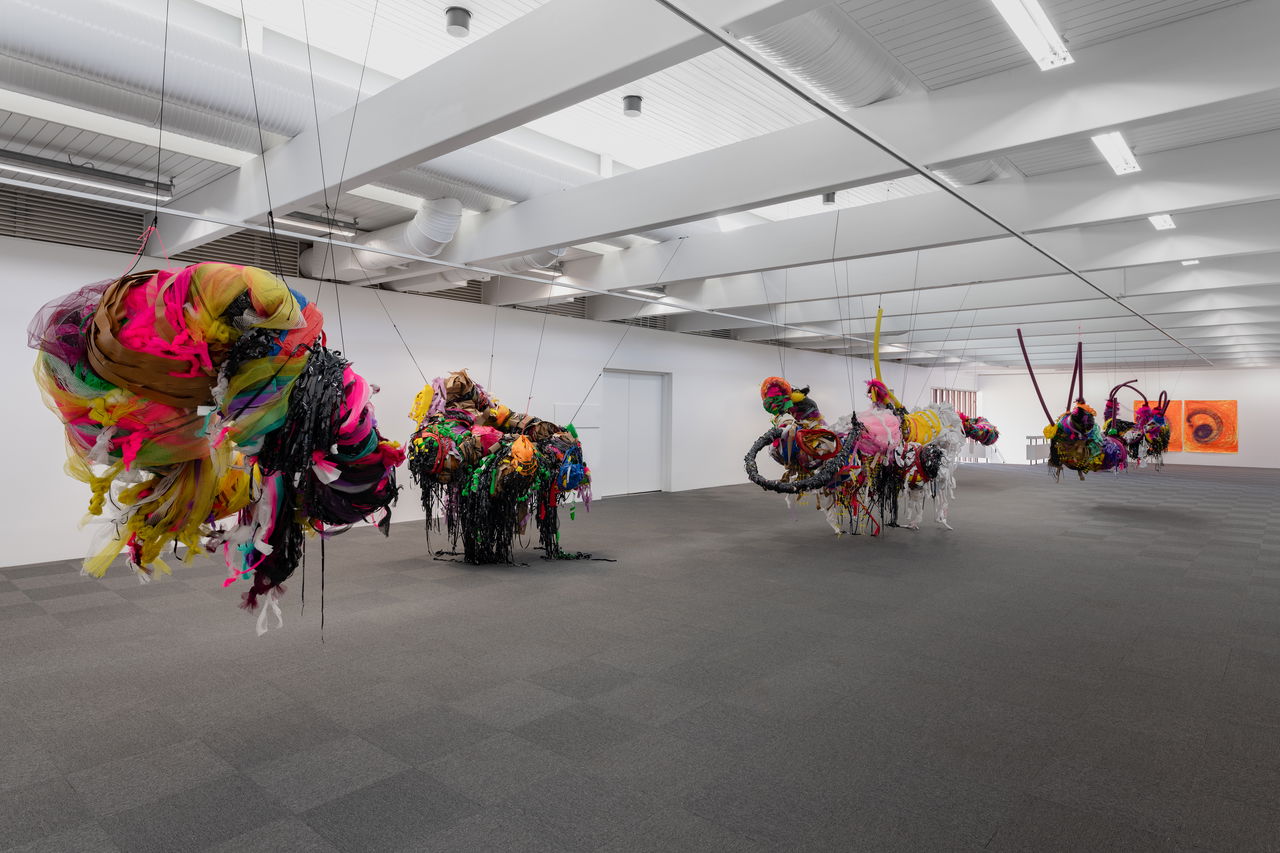
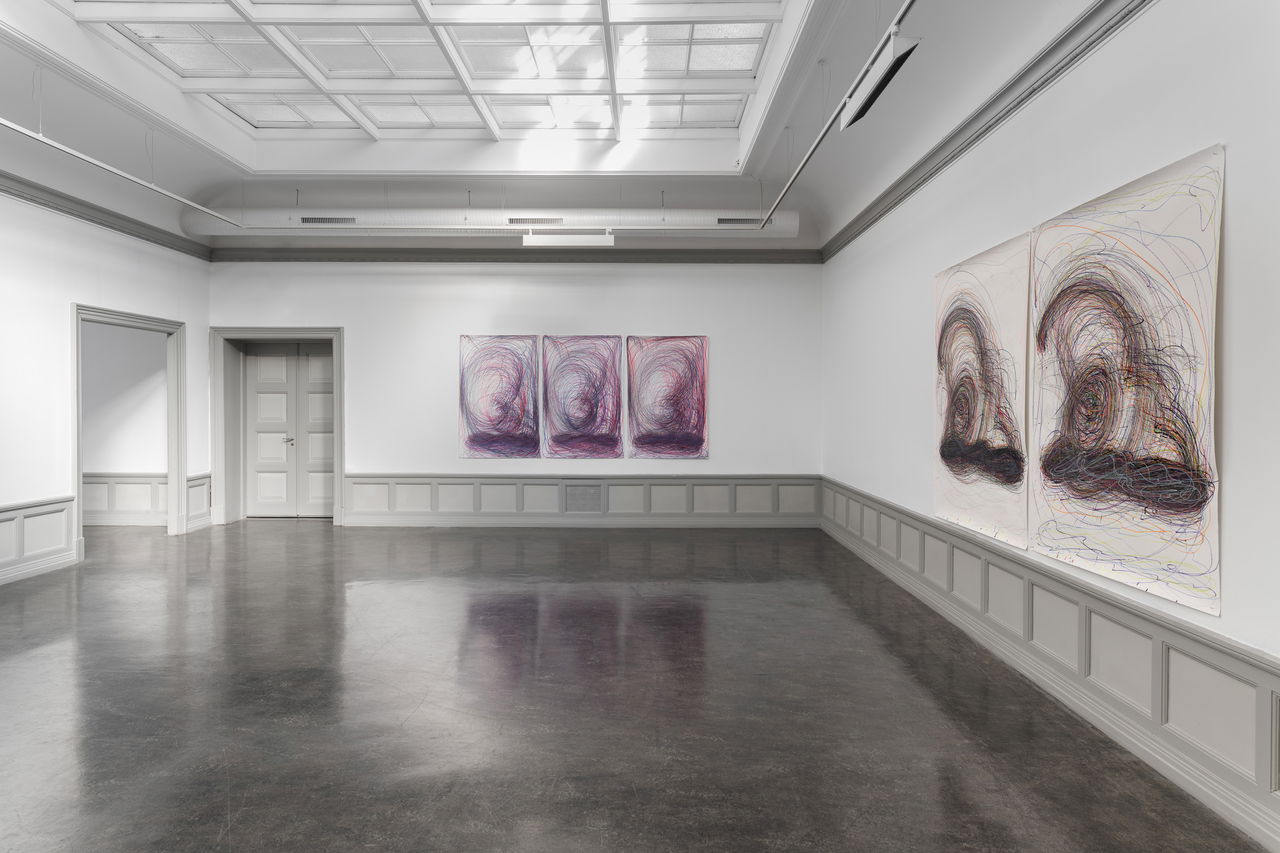
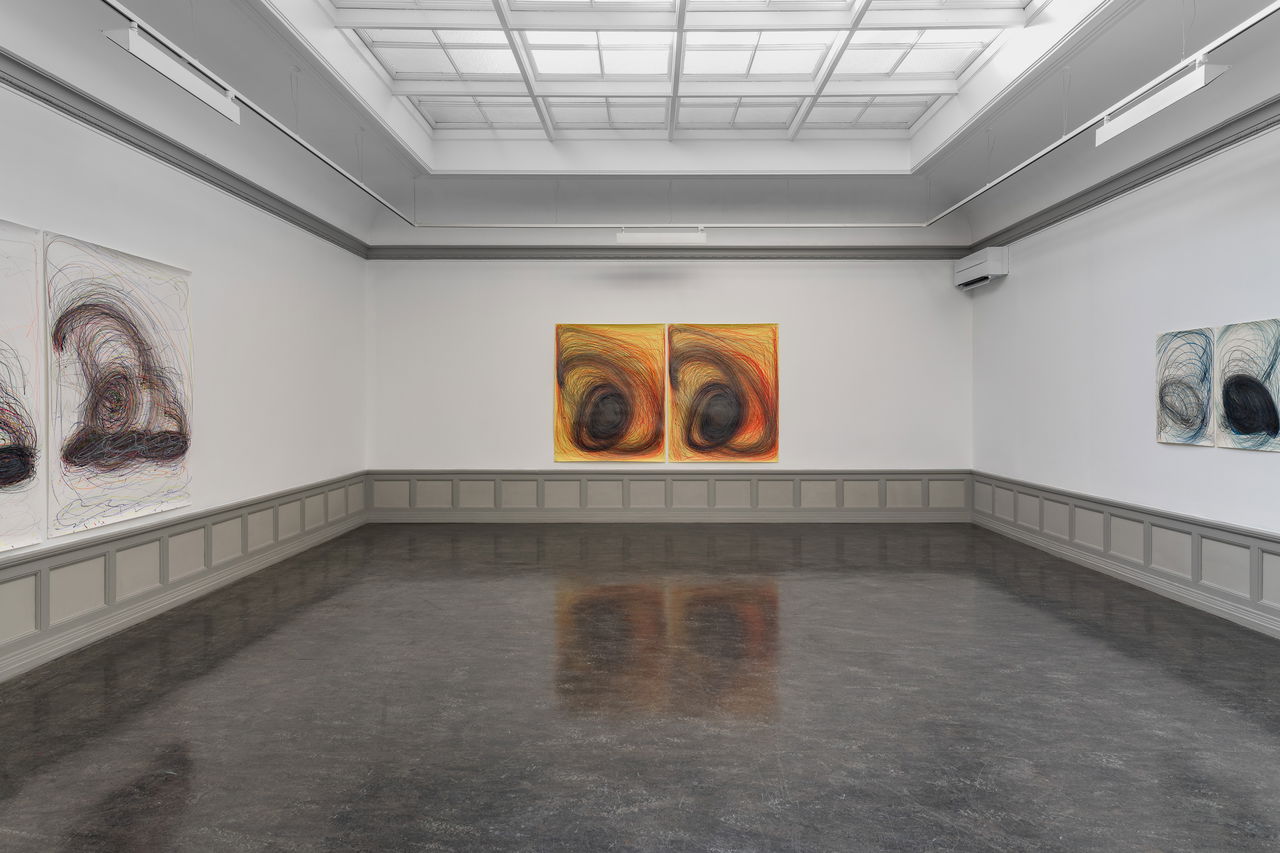
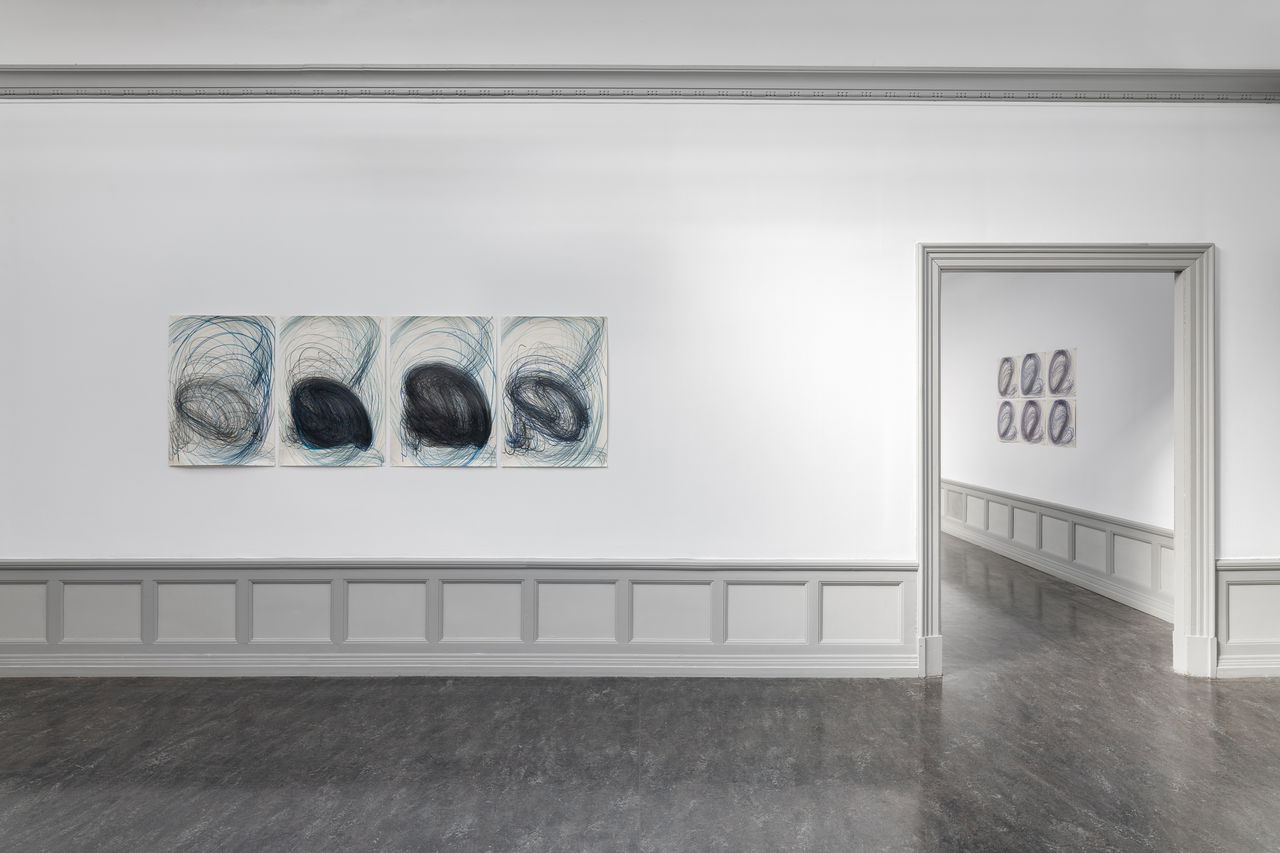
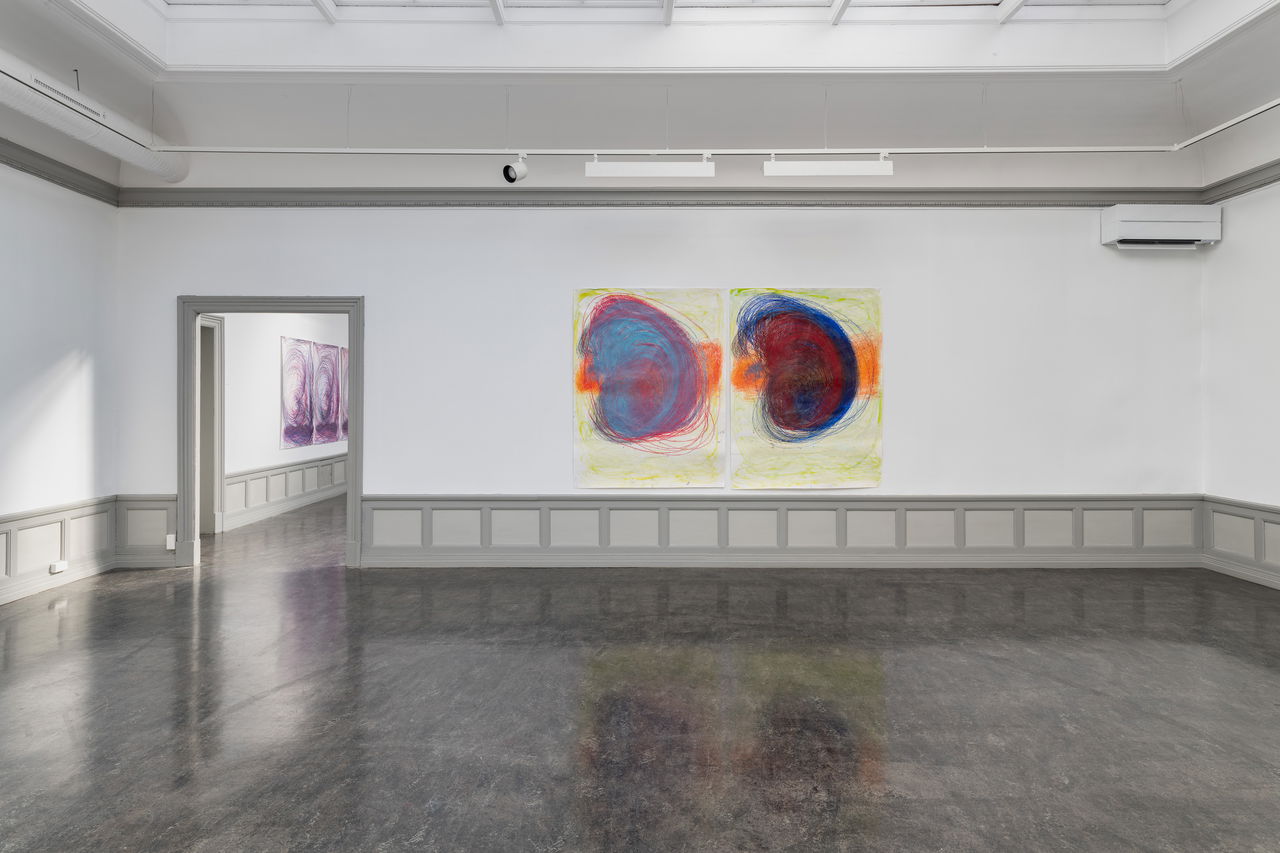
Nnena Kalu, Creations of Care (2025), installation view. Photo: Erik Sæter Jørgensen / Kunsthall Stavanger.
Nnena Kalu, Creations of Care (2025), installation view. Photo: Erik Sæter Jørgensen / Kunsthall Stavanger.

Nnena Kalu, Creations of Care (2025), installation view. Photo: Erik Sæter Jørgensen / Kunsthall Stavanger.
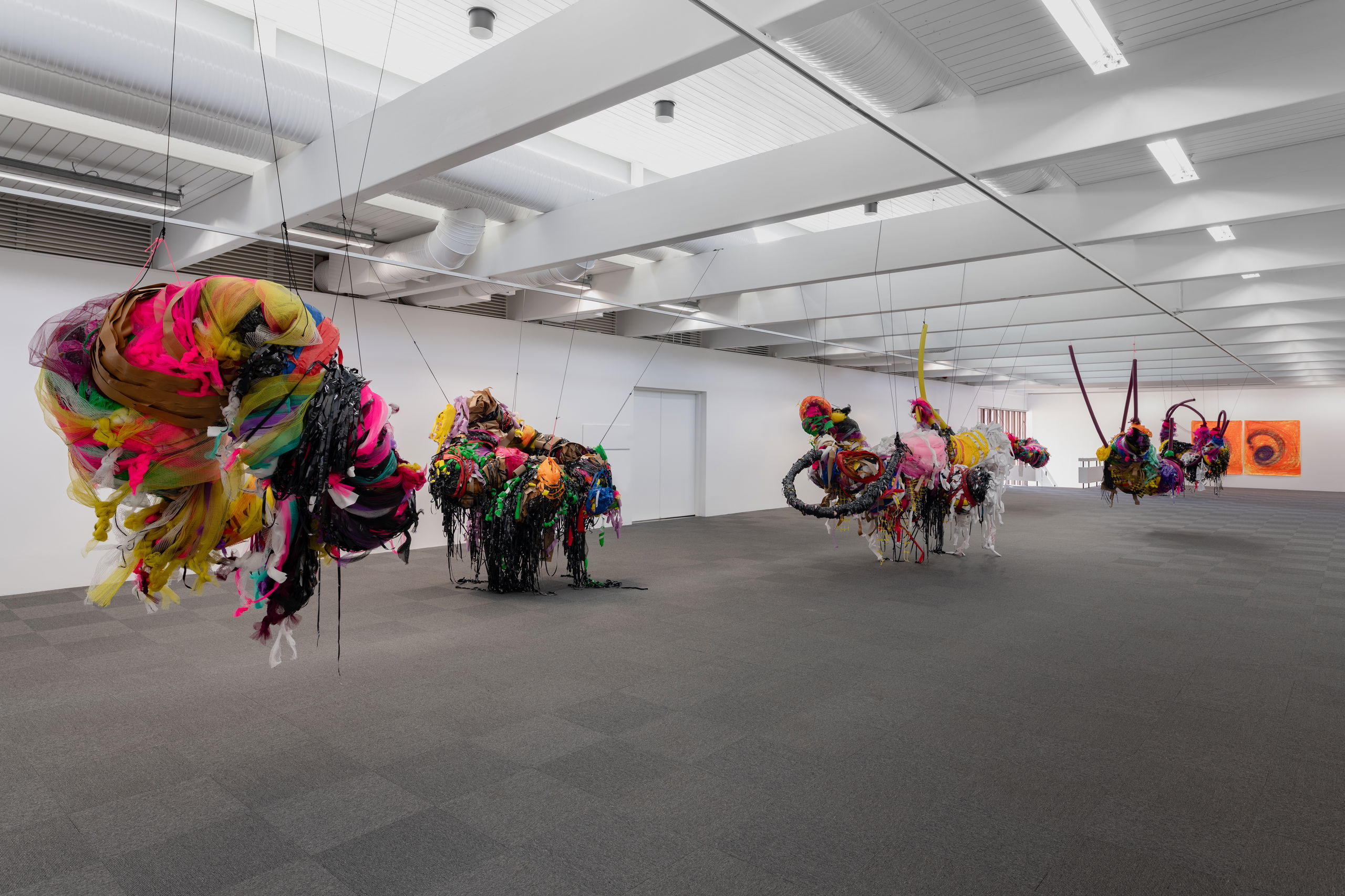
Nnena Kalu, Creations of Care (2025), installation view. Photo: Erik Sæter Jørgensen / Kunsthall Stavanger.
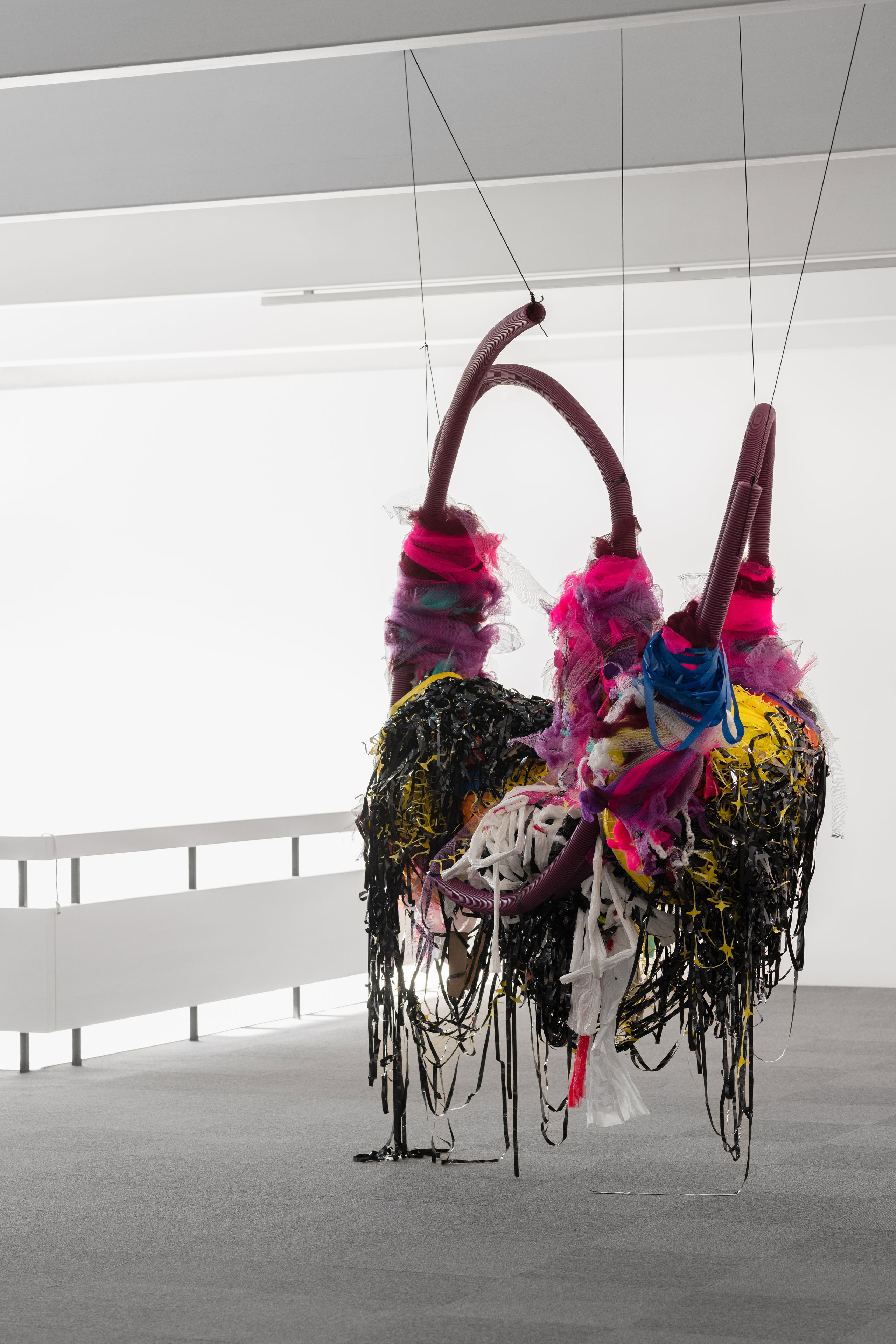
Nnena Kalu, Creations of Care (2025), installation view. Photo: Erik Sæter Jørgensen / Kunsthall Stavanger.

Nnena Kalu, Creations of Care (2025), installation view. Photo: Erik Sæter Jørgensen / Kunsthall Stavanger.
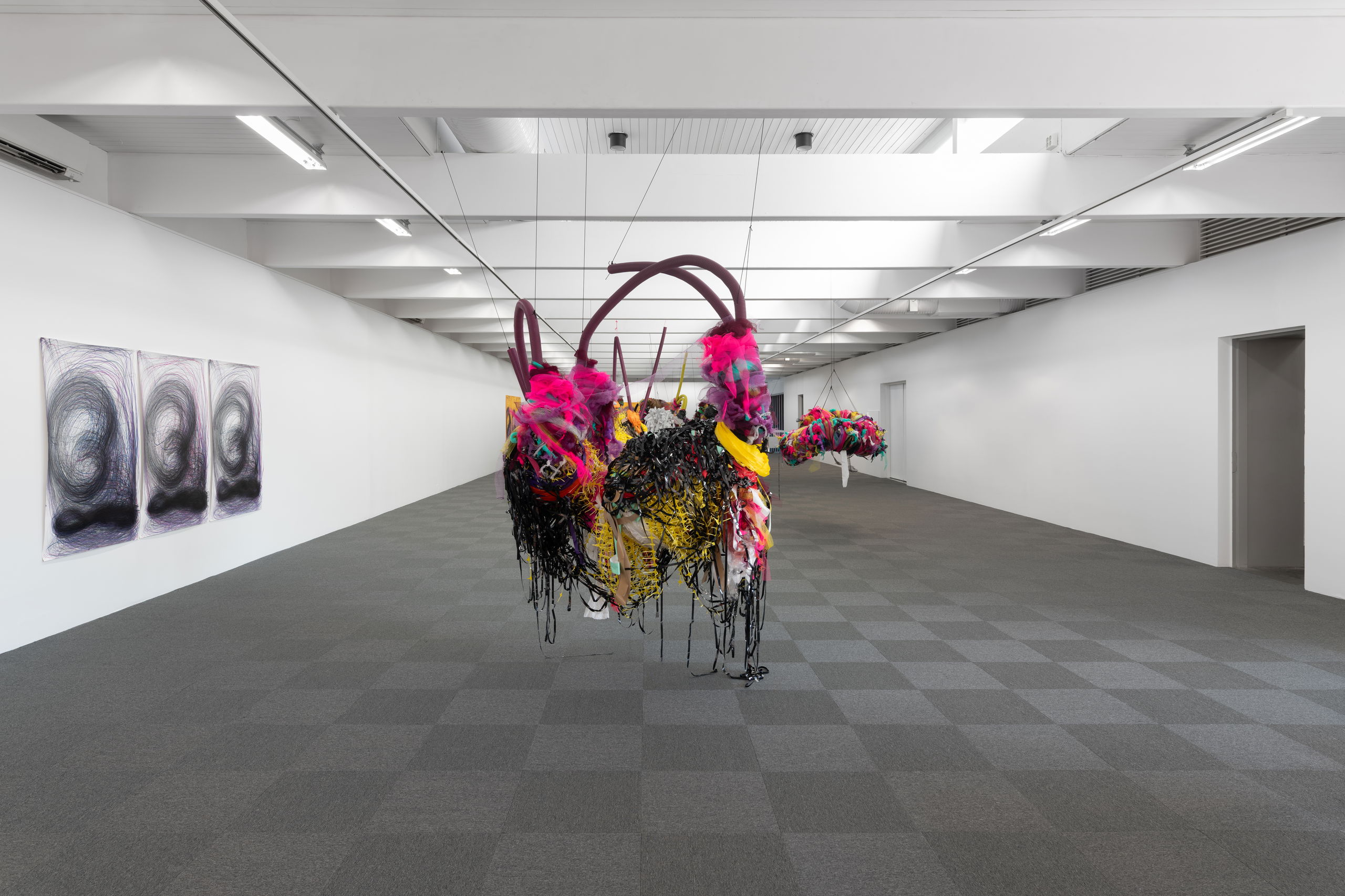
Nnena Kalu, Creations of Care (2025), installation view. Photo: Erik Sæter Jørgensen / Kunsthall Stavanger.
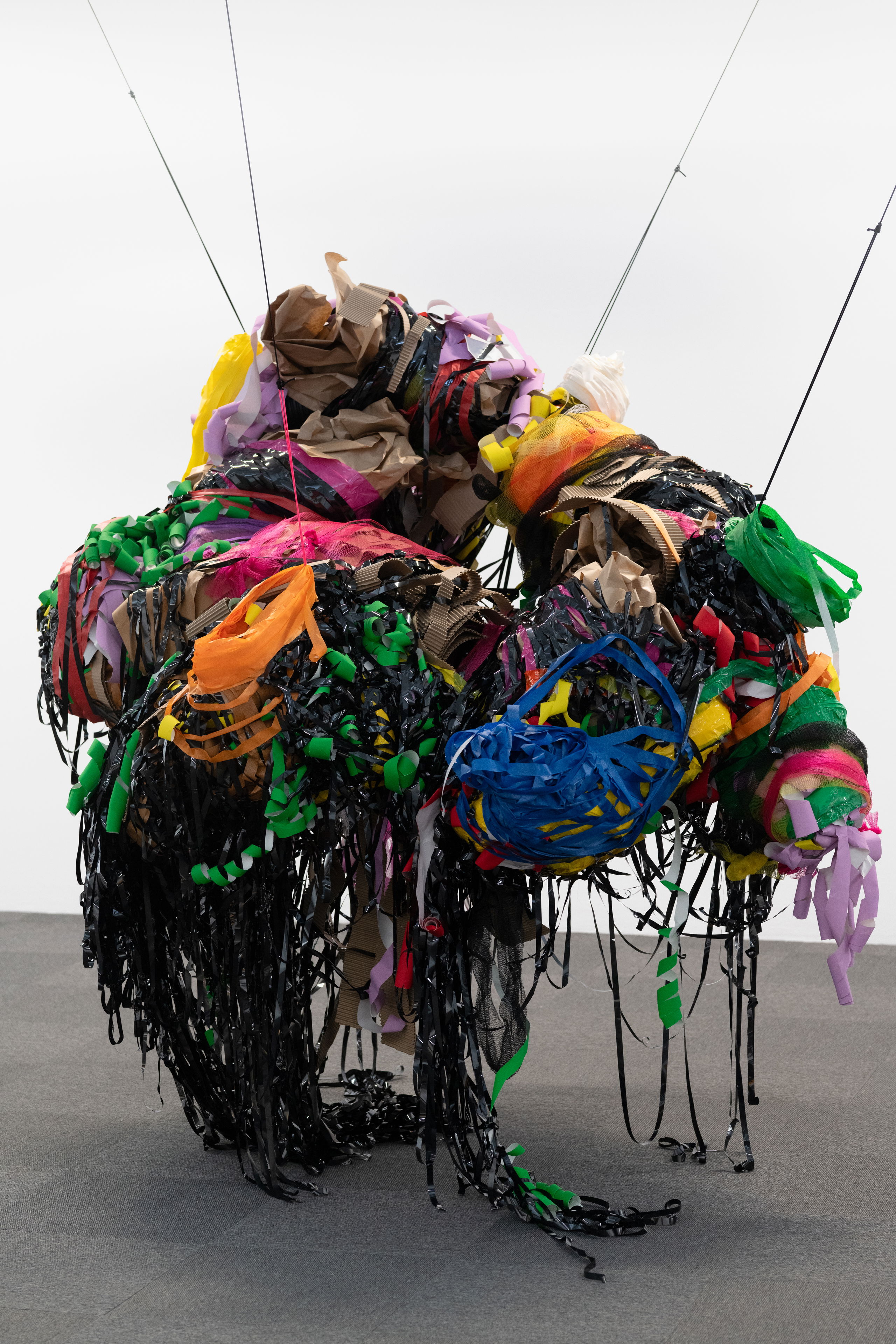
Nnena Kalu, Creations of Care (2025), installation view. Photo: Erik Sæter Jørgensen / Kunsthall Stavanger.
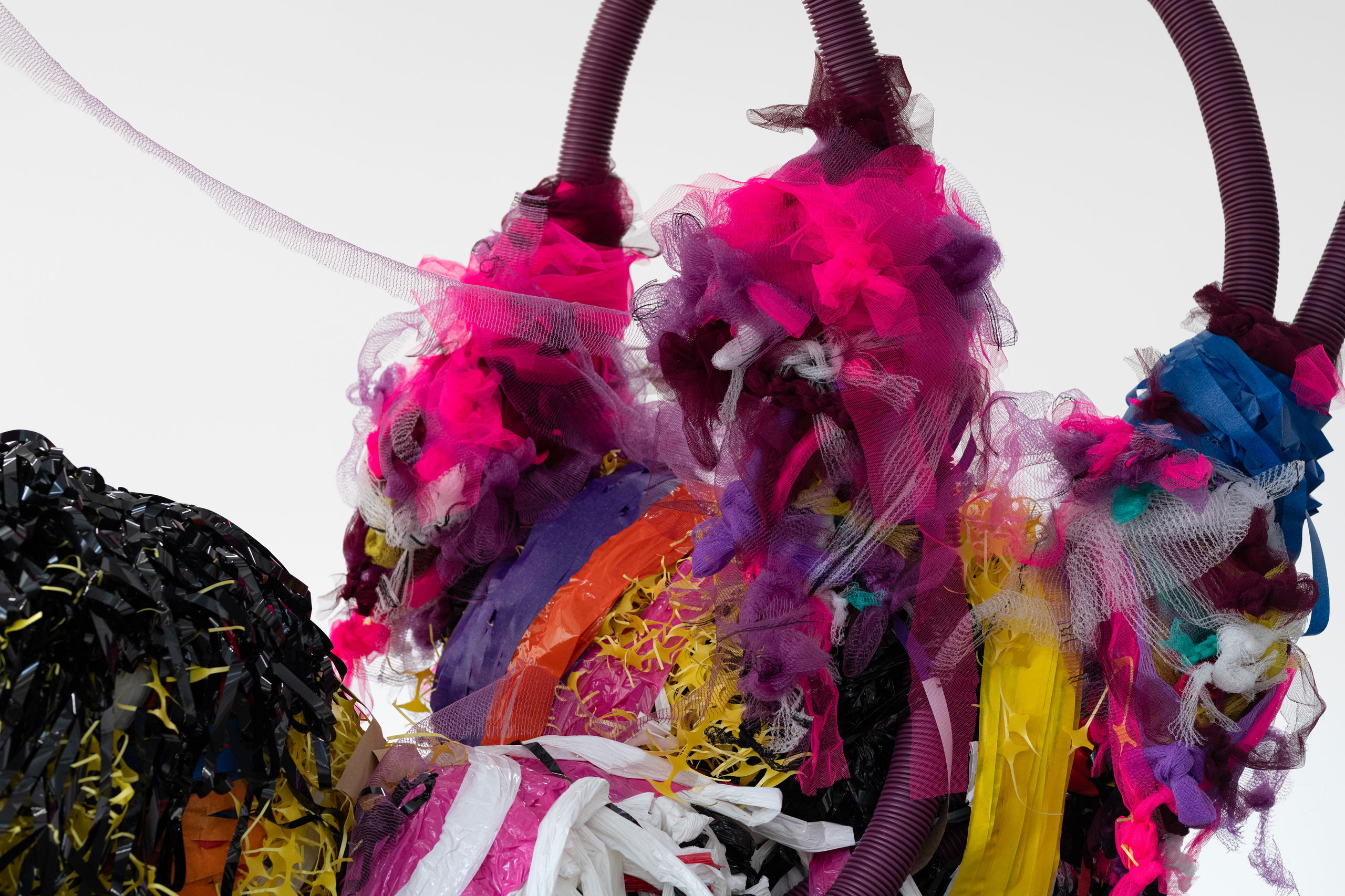
Nnena Kalu, Creations of Care (2025), installation view. Photo: Erik Sæter Jørgensen / Kunsthall Stavanger.
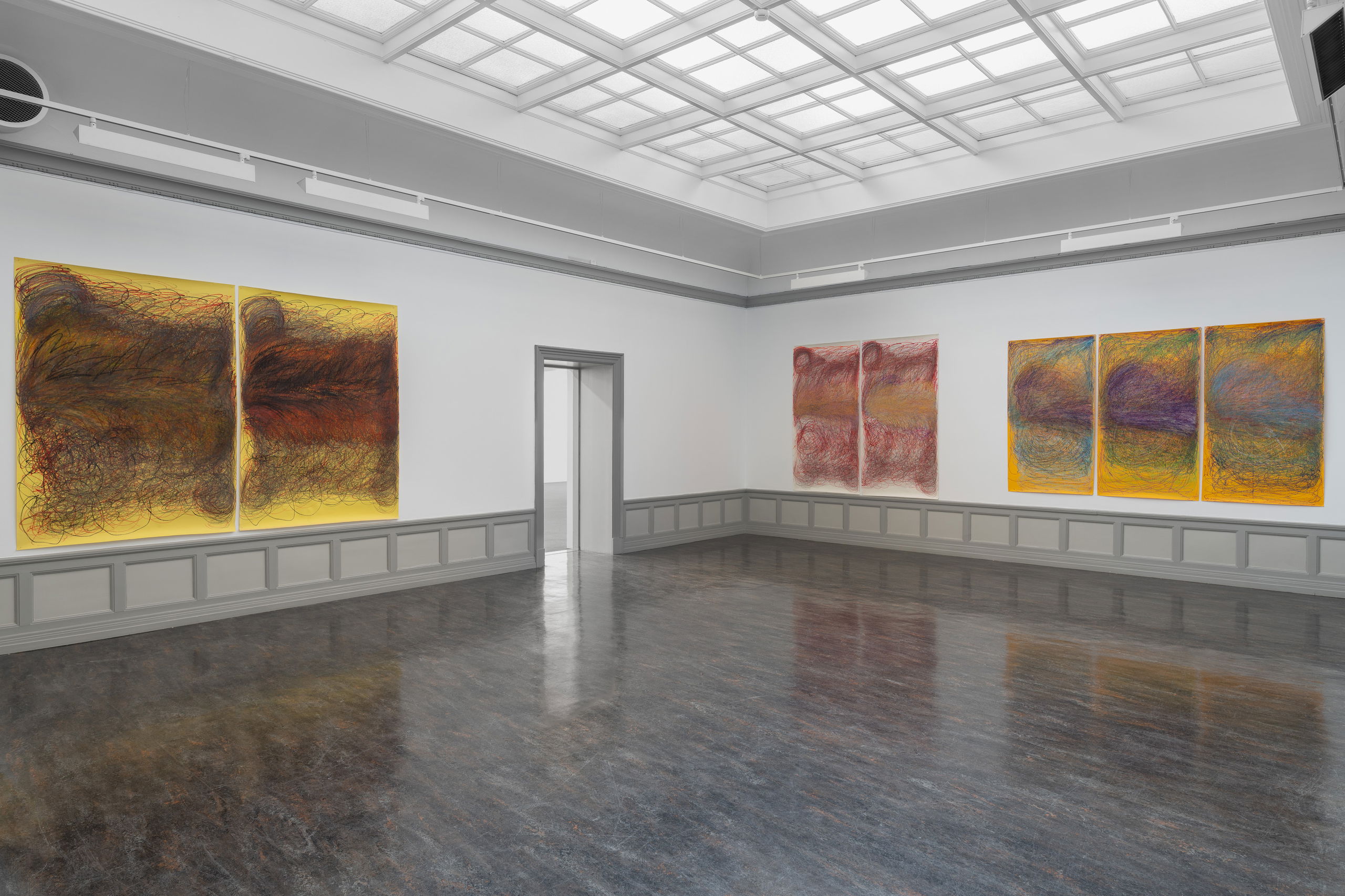
Nnena Kalu, Creations of Care (2025), installation view. Photo: Erik Sæter Jørgensen / Kunsthall Stavanger.
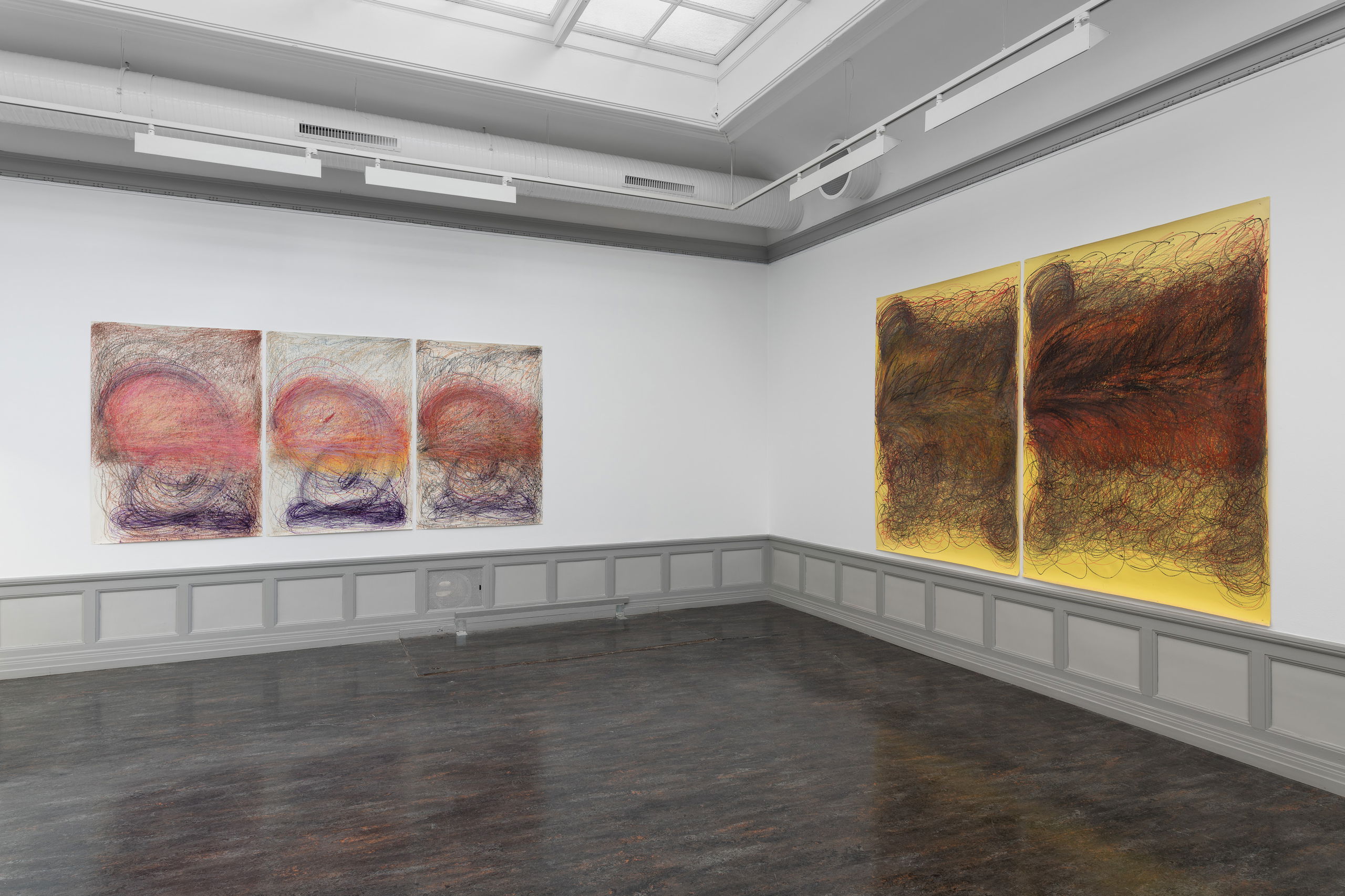
Nnena Kalu, Creations of Care (2025), installation view. Photo: Erik Sæter Jørgensen / Kunsthall Stavanger.
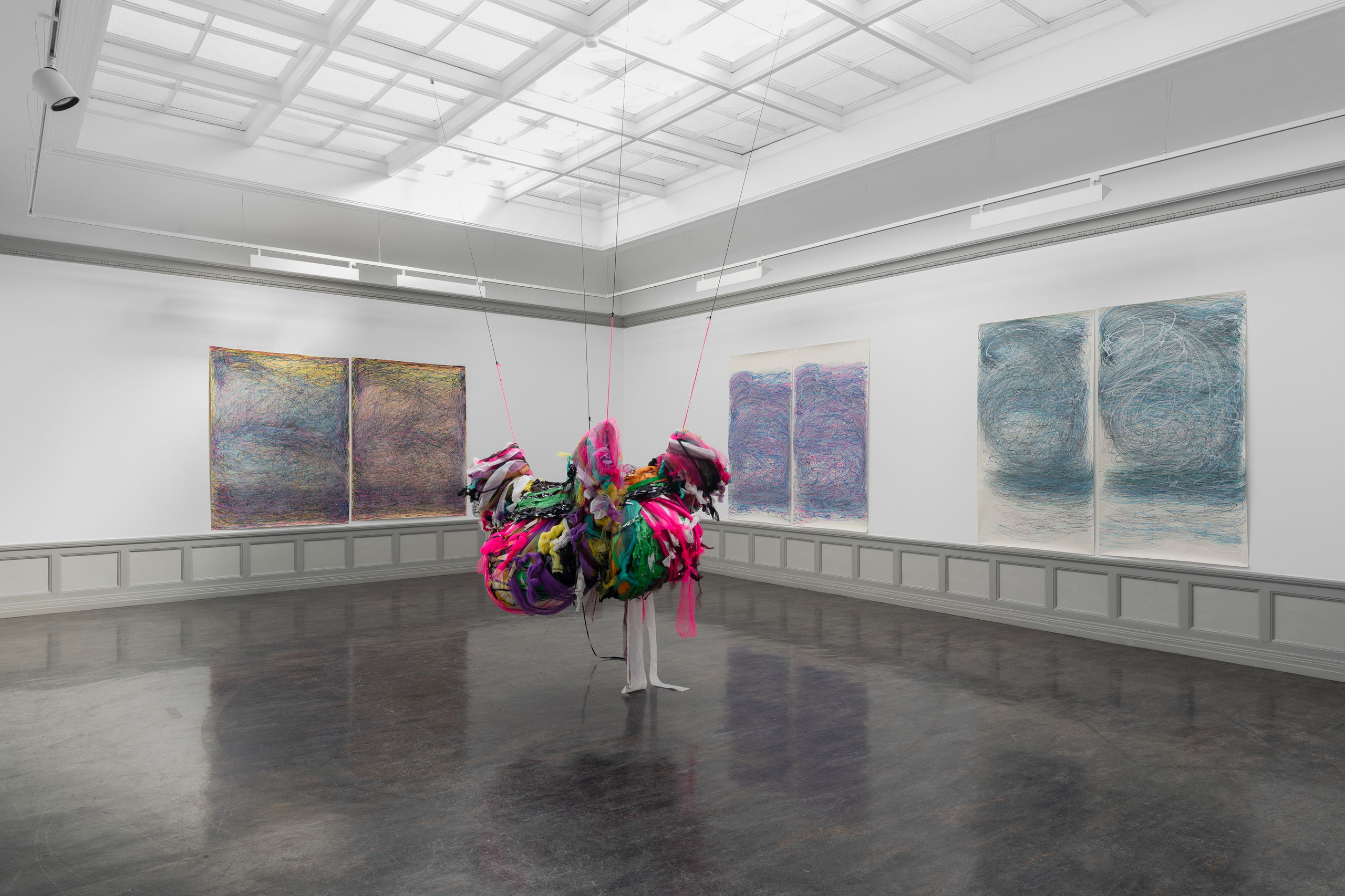
Nnena Kalu, Creations of Care (2025), installation view. Photo: Erik Sæter Jørgensen / Kunsthall Stavanger.
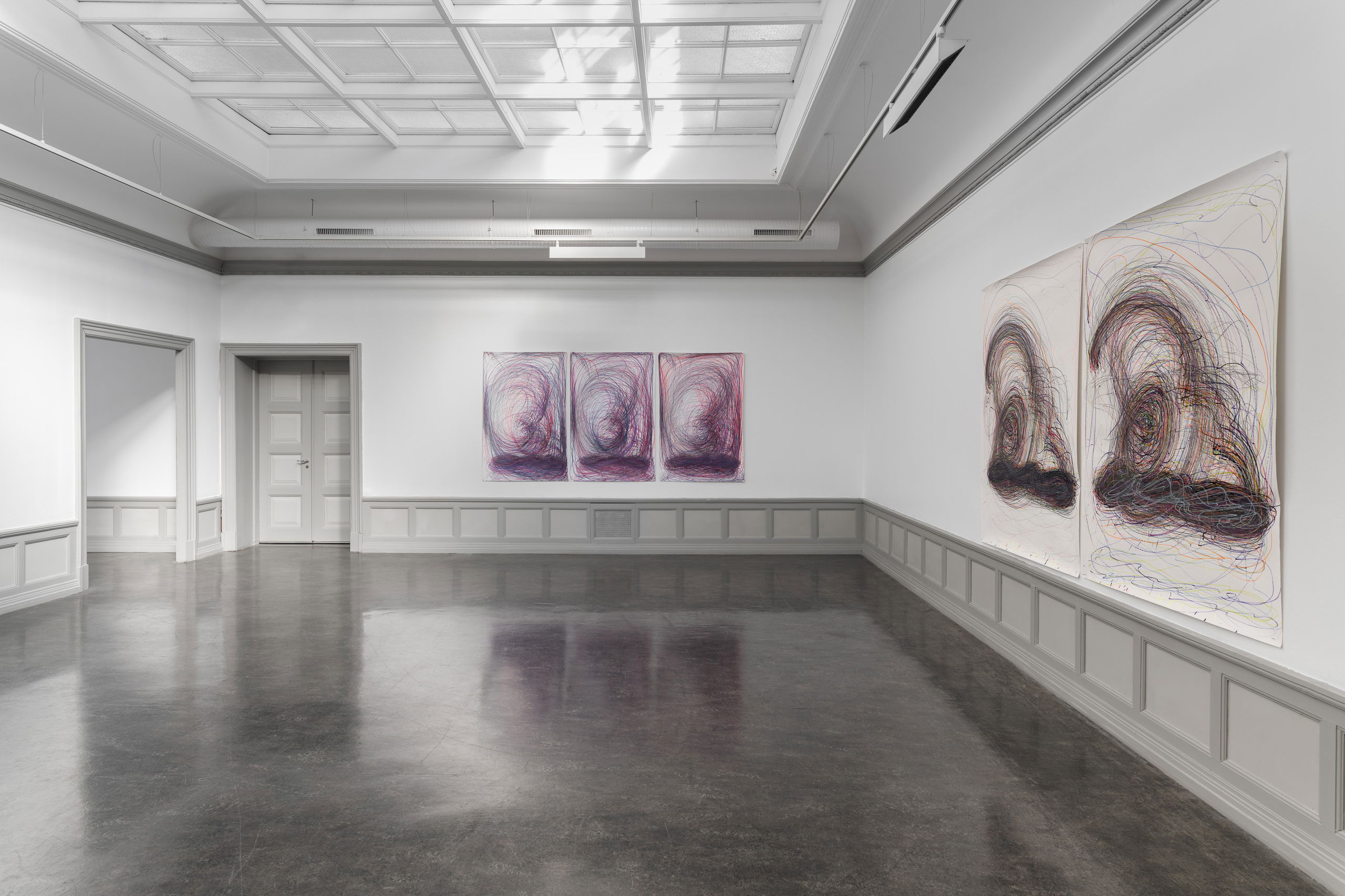
Nnena Kalu, Creations of Care (2025), installation view. Photo: Erik Sæter Jørgensen / Kunsthall Stavanger.
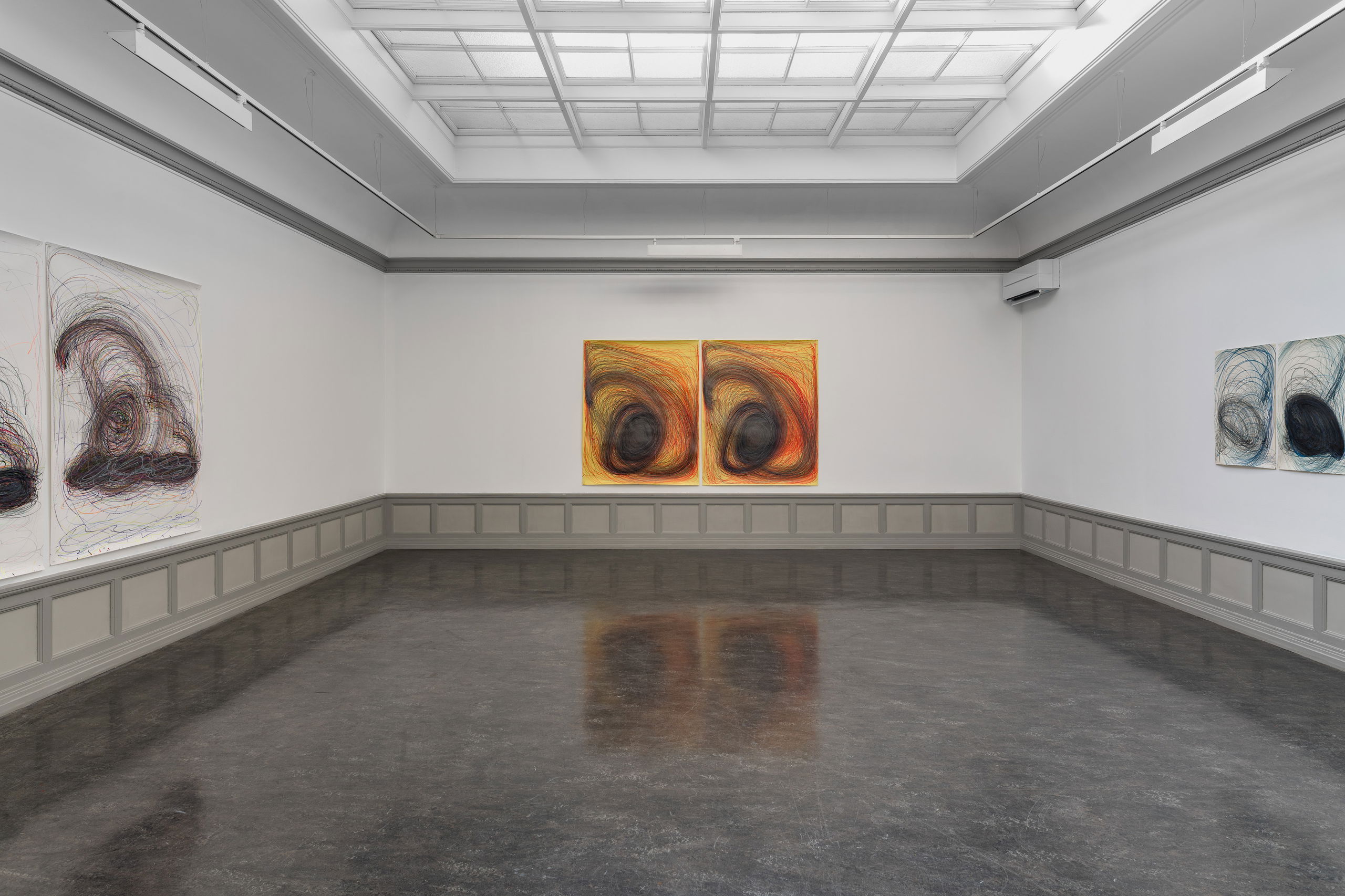
Nnena Kalu, Creations of Care (2025), installation view. Photo: Erik Sæter Jørgensen / Kunsthall Stavanger.
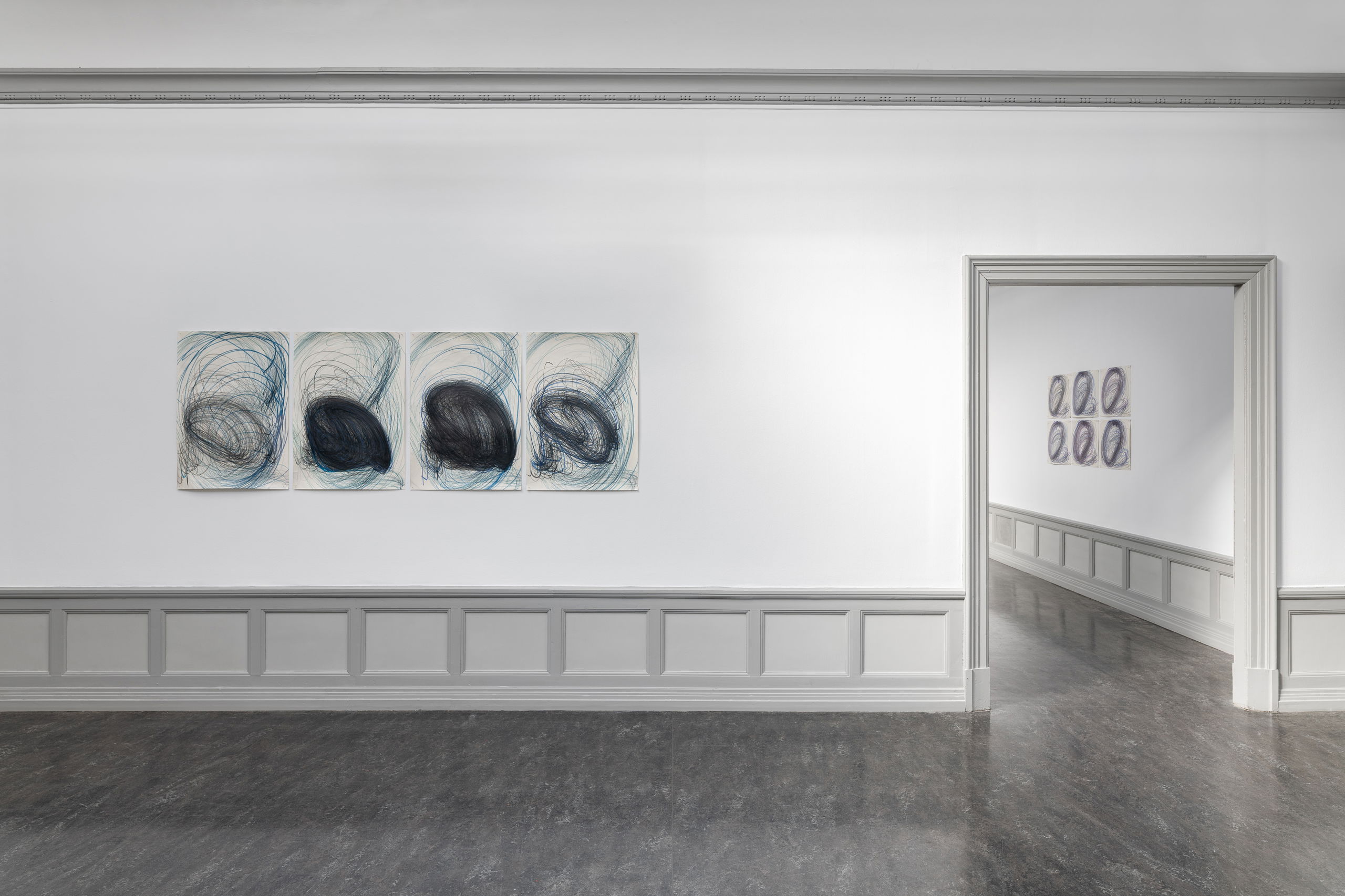
Nnena Kalu, Creations of Care (2025), installation view. Photo: Erik Sæter Jørgensen / Kunsthall Stavanger.
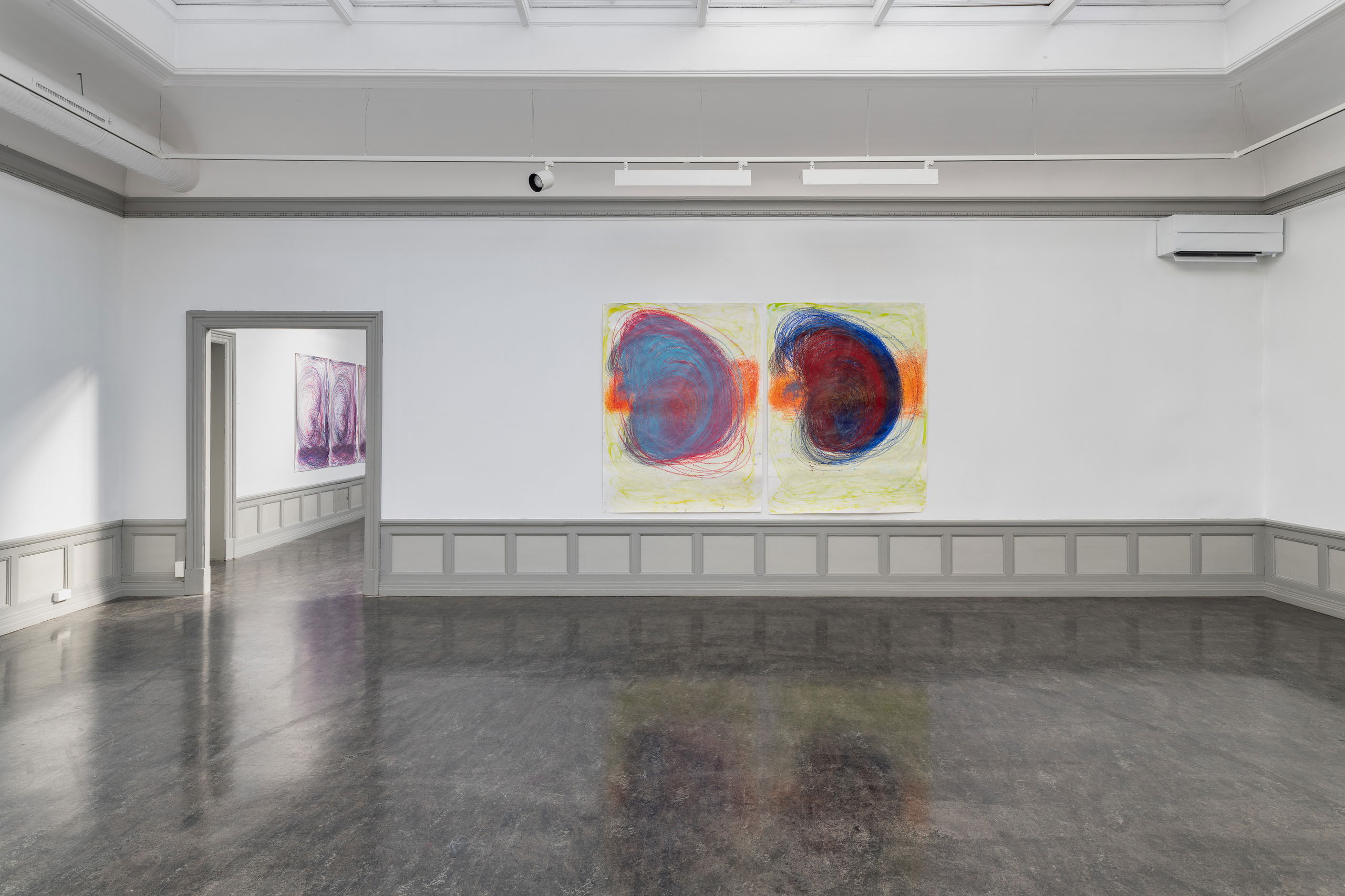
Nnena Kalu, Creations of Care (2025), installation view. Photo: Erik Sæter Jørgensen / Kunsthall Stavanger.
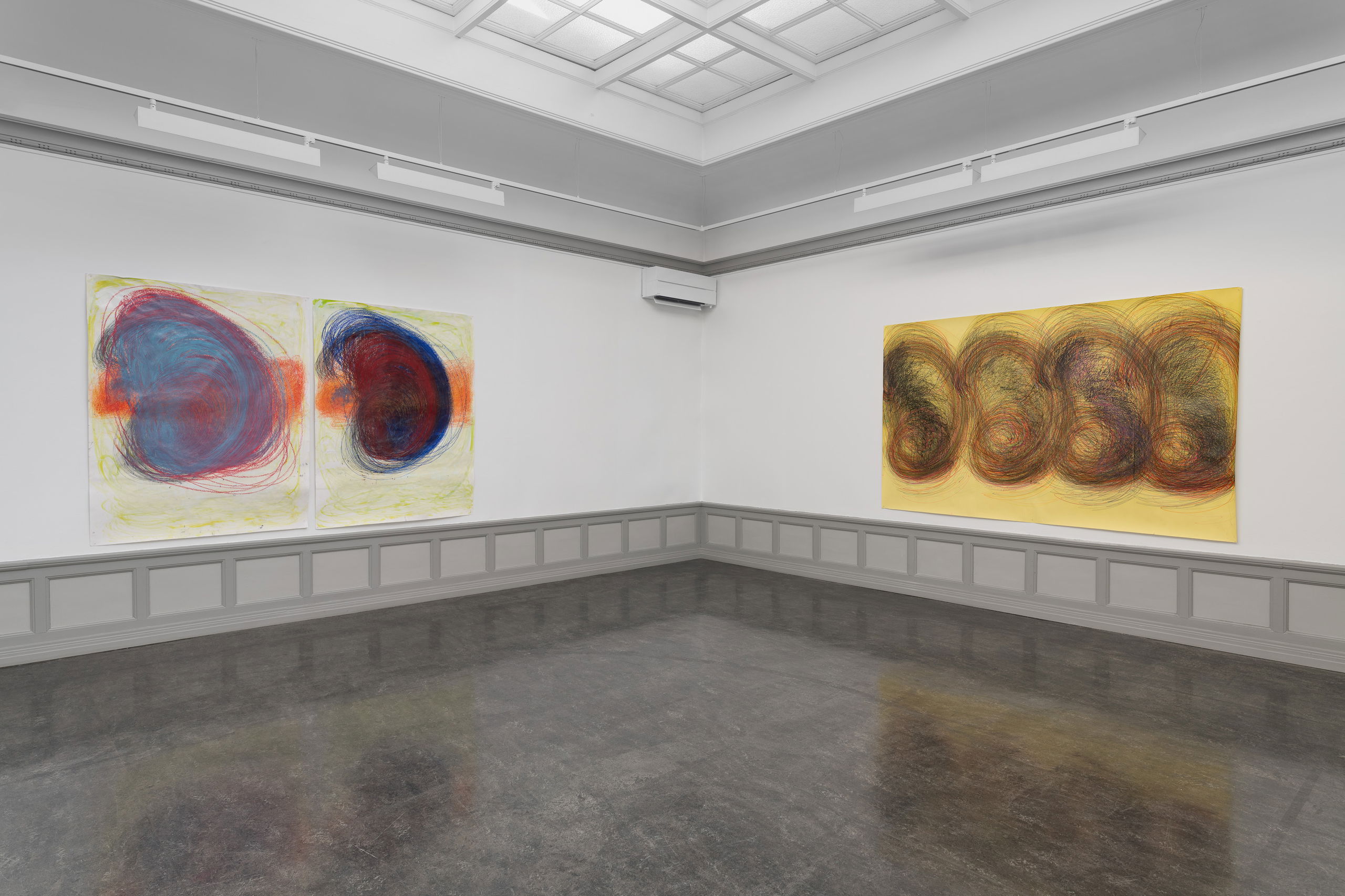
Nnena Kalu, Creations of Care (2025), installation view. Photo: Erik Sæter Jørgensen / Kunsthall Stavanger.
I utstillingen Creations of Care jobber den britiske kunstneren Nnena Kalu med skulpturer og tegning. I fokus er spørsmål rundt omsorg og hvordan vi velger å se verden.
Hovedtemaene i Nnenas utstilling inkluderer:
Omsorg
Opplevelser av verden rundt oss
Avtrykk av tid
Her er en kort introduksjon til utstillingen. Dersom du vil lese mer kan du hente utstillingsdokumentet i resepsjonen.
Nnenas arbeider er dynamiske, de består av uttrykksfulle bevegelser, eksplosiv energi og dyptgående omsorg. I denne utstillingen kan vi oppleve storskala skulpturer og serier av tegninger og malerier.
I vårt hovedgalleri viser Nnena en serie imponerende skulpturer som minner om enorme, gravide kokonger. Når du går nærmere kan du se lag på lag med tekstiler og plast, som enten er tett viklet eller presist flettet.
Omsorg er et gjennomgående tema i Nnenas arbeid. Gjennom handlinger som å binde, flette og bygge lag, skaper hun en metafor for den kjærlige og omhyggelige prosessen som ligger bak hvert kunstverk. I skulpturene bruker hun ofte hverdagslige materialer som videokassetter, tekstiler, tape og dreneringsrør. At disse materialene er billige og lett tilgjengelige er en del av hvorfor de brukes, men samtidig er hvert materiale nøye valgt av Nnena.
Arbeidene til Nnena er fysiske responser, og er intuitive, umiddelbare og dypt personlige. Kalu tegner ofte med øynene lukket, mens hun responderer på lyden av penn, blyant, grafitt eller oljepastell mot papiret. Her drives hun av en nesten intern rytme. Verkene skapes fra en intens tilstedeværelse, hvor hvert avtrykk og merke eksisterer som et bevis på øyeblikket det ble skapt.
Tegningene til Nnena er ofte laget i sekvenser av to, tre eller flere paneler. Ved første øyekast kan de virke identiske, men hvert panel inneholder subtile forskjeller. For oss som beskuere blir de en invitasjon til å forestille oss Nnena i studio, til å forestille oss hvordan arbeidet bygges opp, og å se hvordan penn, pastell, maling, grafitt blir nærmest et skulpturelt materiale i Nnenas hender.
I tegningene jobber Nnena periodevis med en spesifikk form som hun repeterer fram til hun er ferdig med den, etter det vender hun sjelden tilbake til et tidligere motiv. Repetitiv bevegelse, ofte assosiert med autisme, er et definerende element i skulpturene og tegningene.
Nnenas arbeid kan ikke skilles fra hennes unike perspektiv og erfaring. Som en svart kvinne med begrensede verbale evner og en utviklingshemming, tilbyr hennes arbeid oss som besøkende muligheten til å se verden gjennom et annet perspektiv. En del av appellene til disse verkene ligger i deres generøsitet og tilbudet om deltakelse de strekker ut til oss.
Nnena Kalu (f. 1966, Glasgow) bor og arbeider i London, Storbritannia. Hennes praksis er forankret i todimensjonale verk, skulpturer og installasjoner. I 25 år har hun jobbet med støtte fra ActionSpace, en britisk organisasjon som gir kunstnere med utviklingshemminger ressurser, muligheter og studiohjelp for å utvikle sitt arbeid. Kalu har studio hos ActionSpace i Studio Voltaire, og er et viktig medlem av både Studio Voltaire og ActionSpace sine kunstneriske fellesskap.
Kalu var deltagende kunstner i Manifesta 15 (2024). Nylige utstillinger inkluderer Conversations, Walker Art Gallery, Liverpool, UK (2024); Arcadia Missa, London (2024); Infinite Drawing, Deptford X, London, Storbritannia (2022); Studio Voltaire Elsewhere, London, Storbritannia (2020); Wrapping, Humber Street Gallery, East Yorkshire, Storbritannia (2019); Allied Editions, House of Voltaire, Frieze, London, Storbritannia (2022); To all the Kings who have no Crowns, Carl Freedman Gallery, Margate, Storbritannia (2022).
Kalus verk er del av Tate Collection (Storbritannia) og the Arts Council Collection (Storbritannia). Kalu er vinner av Mosaic Art Award 2025.